
Table of Contents
- Introduction: My First Day at the Gym Was a Disaster
- What Weight Loss at the Gym Actually Means
- How Many Days a Week Should Beginners Go to the Gym?
- Beginner-Friendly Gym Workout Plan for Weight Loss
- Best Gym Machines for Beginners Trying to Lose Weight
- Cardio vs. Strength Training
- Should Beginners Do HIIT?
- 5 Compound Exercises Every Beginner Should Master
- Nutrition Basics for Gym Beginners
- Breaking the Mental Gym Barrier
- Why Weight Loss Plateaus Happen
- Common Beginner Gym Mistakes
- Sample 4-Week Gym Workout Schedule
- How Long Does It Take to See Results?
- Fitness Apps and Wearables
- What Happens After Your First Month
- Final Thoughts
- About the Author
- FAQs: Gym Workout for Weight Loss Beginners
Disclaimer: This article is for informational and educational purposes only. It is not a substitute for professional medical advice, diagnosis, or treatment. Always consult your physician or a qualified healthcare provider before starting any new exercise or diet program, especially if you have a pre-existing medical condition, injury, or health concern. Individual results may vary.
Introduction: My First Day at the Gym Was a Disaster
I still remember walking into the gym for the first time. I had on a brand-new pair of sneakers, a water bottle I had literally bought that morning, and absolutely zero idea what I was doing. I walked in, looked at the rows of treadmills, dumbbells, and machines that looked like medieval torture devices, and almost walked right back out.
I spent 40 minutes on the treadmill that day at a medium pace, went home, ate a massive sandwich because I was “starving after working out,” and then didn’t go back for two weeks because I was so sore I could barely sit down.
Sound familiar?
Here’s what nobody tells you when you’re a beginner trying to lose weight at the gym: most of what you think you know is either wrong or incomplete. The gym doesn’t have to be terrifying, the weight doesn’t have to come off in a week, and you don’t have to kill yourself on the treadmill every single session.
This guide is everything I wish someone had told me on Day 1. If you’ve been searching for the right gym workout for weight loss beginners, you’re in the right place. We’re going to cover real exercises that actually work, a weekly plan, nutrition basics, the mistakes most beginners make, and the mental side of sticking with it long enough to actually see results.
What “Weight Loss at the Gym” Actually Means (And Why Most Beginners Get It Wrong)
Before we talk about exercises, let’s get one thing straight: there’s a big difference between weight loss and fat loss.
Weight loss just means the number on the scale goes down. That can happen from losing water, muscle, or fat. Fat loss is what you actually want — reducing body fat while keeping or even building lean muscle.
Why does this matter for your gym workout plan?
Because muscle burns more calories at rest than fat does. So if you only do endless cardio and ignore strength training, you might lose weight on the scale, but you’ll also lose muscle — and that slows down your metabolism over time. That’s why so many people hit a plateau a few months in and wonder what went wrong.
The best gym workout for weight loss beginners combines both cardio and strength training. Not one or the other — both. This combination is what gets your body burning calories during the workout AND between sessions.
How Many Days a Week Should Beginners Go to the Gym for Weight Loss?
This is one of the most common questions and one of the most over-answered ones too. You’ll read everything from “3 days” to “6 days.” Here’s my honest take after years of training and helping others start their fitness journey:
Start with 3 to 4 days a week.
Not 6 days. Not every day. Three to four days is enough for real fat-loss results while giving your body time to recover and rebuild. Here’s a simple weekly structure that works:
3-Day Beginner Schedule:
- Monday: Full-body strength training
- Wednesday: Cardio + core
- Friday: Full-body strength training
4-Day Beginner Schedule:
- Monday: Full-body strength
- Tuesday: Cardio (moderate intensity)
- Thursday: Full-body strength
- Saturday: Cardio + flexibility/stretching
Rest days are not lazy days — they’re recovery days. Your muscles actually grow and get stronger when you rest, not when you’re in the gym. Skipping rest days is one of the fastest routes to burnout and injury for beginners.
The Beginner-Friendly Gym Workout Plan for Weight Loss (Week by Week)
Here’s a realistic, structured gym workout for weight loss beginners built week by week. You don’t need to do everything perfectly on Day 1. Focus on showing up and learning the movements.
Week 1 to 2: Foundation Phase (Learning the Movements)
Goal: Get comfortable in the gym, learn form, build the habit.
Session A — Full-Body Strength (45 minutes)
Warm-up: 10 minutes on treadmill at a brisk walking pace (3.5–4 mph)
- Goblet squat (bodyweight or light dumbbell): 3 sets × 10 reps
- Seated cable row or resistance band row: 3 sets × 12 reps
- Dumbbell chest press (flat bench): 3 sets × 10 reps
- Lat pulldown machine: 3 sets × 12 reps
- Plank hold: 3 sets × 20–30 seconds
- Standing dumbbell shoulder press: 2 sets × 12 reps
Cool-down: 5–10 minutes of light stretching
Session B — Cardio + Core (30–40 minutes)
- Treadmill: 20–25 minutes at a pace where you can still hold a conversation (Zone 2 cardio)
- Stationary bike: 10 minutes easy
- Dead bug exercise: 3 sets × 10 reps per side
- Bird dog: 3 sets × 10 reps per side
That’s it for the first two weeks. Nothing fancy. The goal is to get comfortable with the machines, learn how to use the equipment safely, and start building consistency.
Week 3 to 4: Progressive Phase (Adding Intensity)
Once you’ve got the basics down, it’s time to add a little more challenge. You’ll add a couple of exercises and push slightly heavier on your weights.
Session A — Full-Body Strength (50 minutes)
- Romanian deadlift (light dumbbells): 3 sets × 10 reps
- Leg press machine: 3 sets × 12 reps
- Incline dumbbell press: 3 sets × 10 reps
- Seated cable row: 3 sets × 12 reps
- Dumbbell lateral raises: 3 sets × 12 reps
- Plank: 3 sets × 30–40 seconds
- Glute bridge: 3 sets × 15 reps
Session B — Cardio + Core (35–45 minutes)
- Treadmill intervals: Walk 2 minutes, jog 1 minute, repeat for 20 minutes
- Elliptical: 10 minutes at moderate intensity
- Bicycle crunches: 3 sets × 15 reps
- Leg raises: 3 sets × 12 reps
Week 5 to 8: Momentum Phase (Building Real Habit + Progressive Overload)
By now, the gym doesn’t feel as scary. You’ve got your routine, you know which machines you like, and you’ve probably started noticing small changes. This is where you start to slowly increase the weight you’re lifting (this is called progressive overload) and add a bit more cardio intensity.
The goal is to increase the challenge slightly every 1–2 weeks — either by adding a small amount of weight, adding one more rep, or reducing rest time between sets. This is what drives continuous fat loss and muscle retention.
Session A — Upper/Lower Split (55–60 minutes)
Upper Body Day:
- Barbell or dumbbell bench press: 4 sets × 8–10 reps
- Seated cable row: 4 sets × 10 reps
- Dumbbell shoulder press: 3 sets × 10 reps
- Lat pulldown (wider grip): 3 sets × 10 reps
- Dumbbell bicep curl: 2 sets × 12 reps
- Tricep pushdown (cable): 2 sets × 12 reps
- Plank: 3 sets × 40–50 seconds
Lower Body Day:
- Barbell back squat or goblet squat (heavier): 4 sets × 8 reps
- Romanian deadlift (dumbbell or barbell): 4 sets × 8 reps
- Leg press machine: 3 sets × 12 reps
- Walking lunges: 3 sets × 10 reps per leg
- Glute bridge or hip thrust: 3 sets × 15 reps
- Calf raises: 3 sets × 15 reps
Session B — Cardio + HIIT Introduction (40–50 minutes)
- Treadmill HIIT: Walk 90 seconds, jog/run 60 seconds — repeat 10 rounds (25 minutes total)
- Rowing machine: 10 minutes at moderate intensity (excellent full-body cardio)
- Stationary bike cool-down: 5–10 minutes easy
By Week 7–8 you should be noticeably stronger on every movement than you were in Week 1. Add 2.5–5 lbs to your main lifts whenever the last set starts feeling easy. That’s progressive overload in practice — and it’s what separates people who keep losing fat from people who plateau.
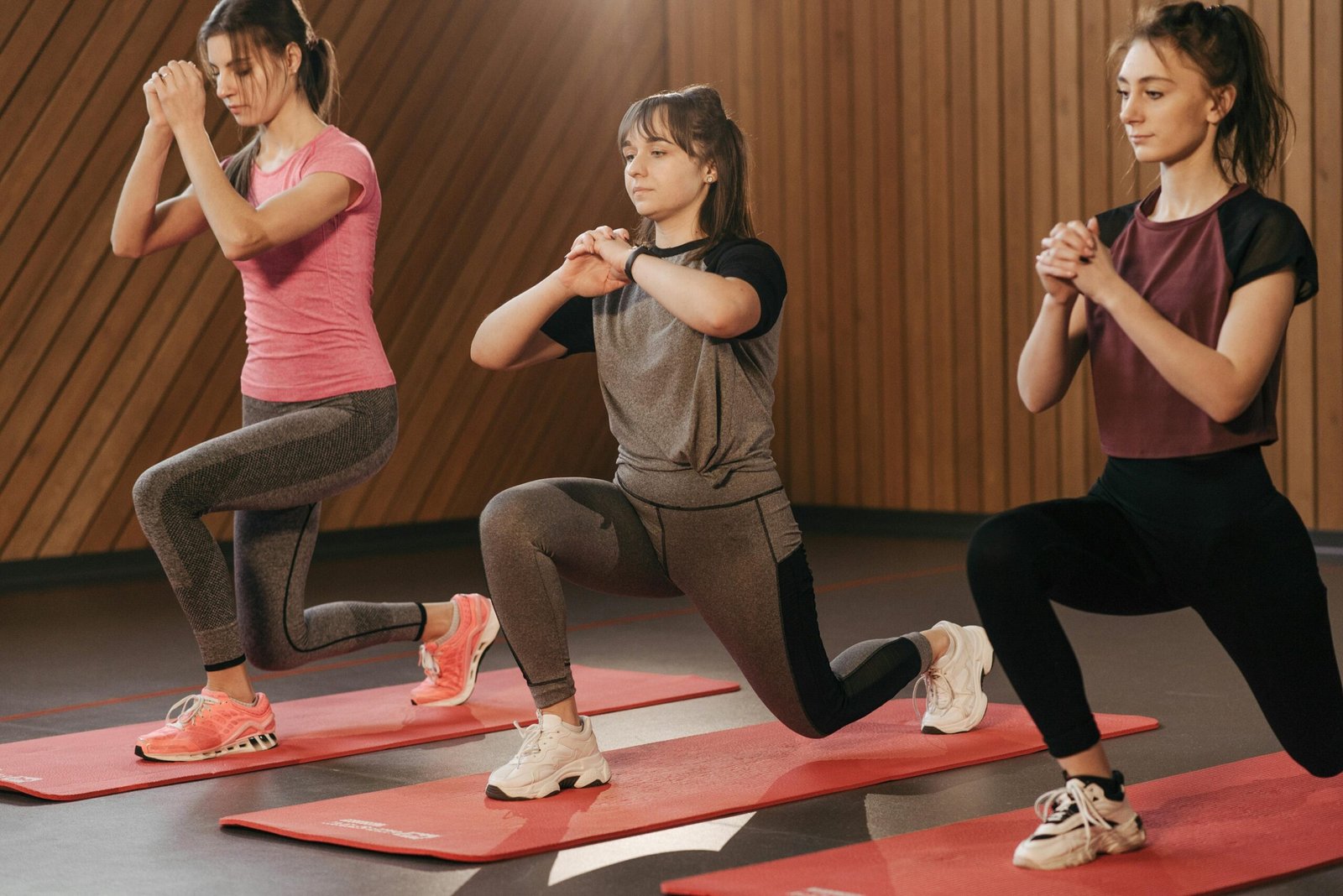
The Best Gym Machines for Beginners Trying to Lose Weight
Not all gym machines are equal for beginners. Here are the ones worth your time when you’re just starting:
Treadmill — The most beginner-friendly cardio machine. Use it for brisk walking in the first few weeks before progressing to jogging. Brisk walking burns more fat than most people realize and is easy on the joints.
Stationary Bike — Low-impact, great for people with knee or joint sensitivity. Excellent for steady-state cardio sessions that support fat burning.
Elliptical Machine — Full-body cardio that works both the upper and lower body simultaneously. Easy on the joints and great for burning calories without high injury risk.
Lat Pulldown Machine — One of the safest ways to work your back as a beginner. Great for building pulling strength and improving posture.
Leg Press Machine — Teaches the squatting pattern safely before you move to free-weight squats. Works quads, hamstrings, and glutes.
Cable Machine (Seated Row) — Fantastic for upper back, rear deltoids, and biceps. Machines with cables are generally safer than free weights when you’re learning form.
Smith Machine (for Squats/Press) — Controversial in fitness circles, but genuinely useful for beginners learning the movement patterns before moving to a barbell.
Cardio vs. Strength Training: What Burns More Fat for Beginners?
One of the biggest debates in beginner fitness. Let me give you the real answer.
Cardio burns more calories during the session itself. A 30-minute treadmill run might burn 250–400 calories. It feels productive and you sweat a lot, which makes people feel like it’s working.
Strength training burns fewer calories during the workout (usually 150–300 calories for a 45-minute session), but it builds muscle. And muscle tissue burns more calories at rest — even when you’re sitting on the couch watching TV. This is called your resting metabolic rate, and strength training raises it.
So which should you do?
Both. Seriously, stop picking sides. A 2023–2025 fitness research summary noted that combining strength training with cardio can dramatically accelerate fat loss compared to doing either one alone. The winning formula for beginners is 2–3 strength sessions per week combined with 1–2 cardio sessions.
If you’re really pressed for time, prioritize strength over steady-state cardio. You’ll get more bang for your buck in the long run.
Here’s a quick side-by-side comparison to clear things up:
| Factor | Cardio | Strength Training |
|---|---|---|
| Calories burned during workout | Higher (250–400 per session) | Moderate (150–300 per session) |
| Calories burned after workout | Low | High (elevated metabolism for 24–48 hrs) |
| Muscle preservation | Low | High |
| Long-term fat loss | Moderate | High |
| Joint impact | Moderate to high (running) | Low to moderate |
| Best for beginners? | Yes — start here | Yes — add from Week 1 |
| Time to see results | 2–4 weeks | 4–8 weeks |
The takeaway is simple: cardio gets you moving and burning calories now. Strength training rebuilds your body so it burns more calories permanently. You need both.
The HIIT Question: Should Beginners Do High-Intensity Interval Training?
HIIT is everywhere right now — YouTube, Instagram, fitness apps, group classes. And it is genuinely effective for fat loss. But here’s the thing: it’s probably not right for your first 4–6 weeks.
High-intensity interval training places significant demands on your cardiovascular system and your muscles simultaneously. If you’ve never trained before and you start sprinting on Day 1, you’re setting yourself up for injury, excessive soreness, and a very fast burnout.
Start with moderate, steady-state cardio (Zone 2 training — the pace where you can hold a conversation). After 4–6 weeks once your base fitness improves, you can start adding short HIIT intervals.
A simple beginner HIIT introduction: on the treadmill, walk briskly for 2 minutes, jog for 1 minute, repeat 6–8 times. That’s a legitimate HIIT session that doesn’t destroy your joints or leave you unable to walk the next day.
The 5 Compound Exercises Every Beginner Should Master for Weight Loss
If you’re going to learn anything from this guide, let it be this section. These five compound exercises use multiple muscle groups at once, which means they burn more calories, build more muscle, and give you a lot more results per rep than isolation exercises like bicep curls.
1. Squat Targets: Quads, hamstrings, glutes, core. Start with bodyweight squats, then progress to goblet squats with a dumbbell before moving to barbell squats. Squats are the king of lower-body fat loss exercises.
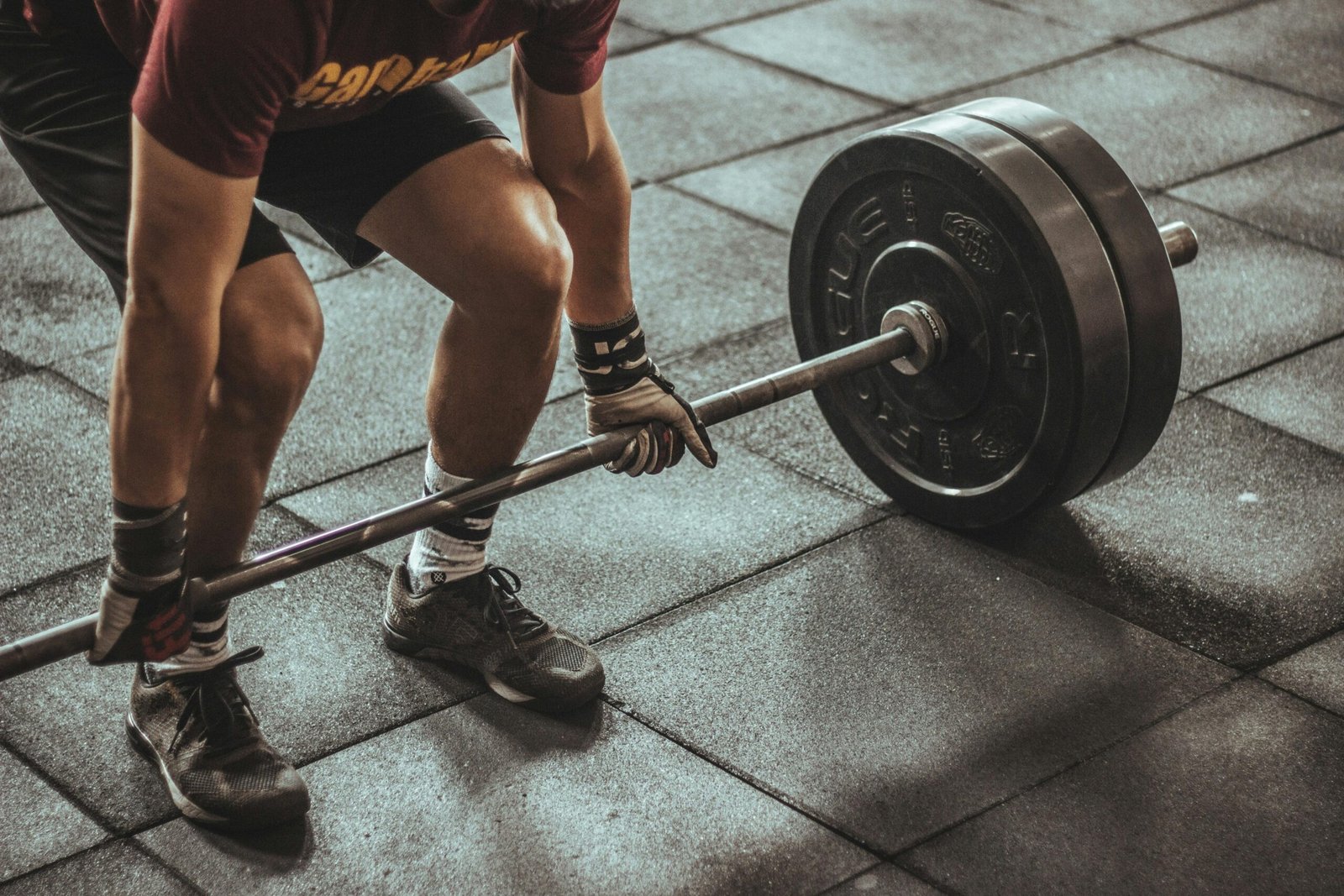
2. Deadlift (Romanian or Conventional) Targets: Hamstrings, glutes, lower and upper back, core. The deadlift engages almost every muscle in your body. Start light, focus on the hip hinge movement pattern, and increase weight gradually.
3. Bench Press or Dumbbell Chest Press Targets: Chest, triceps, front deltoids. Great for upper-body strength and muscle building. Use dumbbells before a barbell as a beginner — they require more stabilization and are more forgiving on your joints.
4. Bent-Over Row or Seated Cable Row Targets: Upper and mid-back, biceps, rear deltoids. Rows balance the pushing muscles you develop with pressing exercises and are critical for posture — especially if you sit at a desk all day.
5. Overhead Press (Dumbbell Shoulder Press) Targets: Shoulders, triceps, upper chest. Great for building shoulder definition and overall upper-body strength. Keep your core tight and avoid arching your lower back.
Master these five movements and you have the foundation of any effective gym workout for weight loss beginners — no complicated programming required.
Nutrition Basics for Gym Beginners Who Want to Lose Weight
I won’t write a diet plan here because this isn’t a nutrition article, but I’d be doing you a disservice if I skipped this section entirely. Because here’s the hard truth: you cannot out-train a bad diet.
That’s not meant to be discouraging — it’s liberating. It means you don’t need to spend three hours in the gym. You just need to pair smart training with basic smart eating.
Key nutrition principles for gym beginners targeting fat loss:
Eat in a moderate calorie deficit — You need to burn more calories than you consume. But don’t slash calories aggressively. A 300–500 calorie daily deficit is sustainable. Too drastic a cut and you’ll lose muscle, feel terrible, and quit.
Prioritize protein — Protein helps preserve muscle while you’re losing fat. Aim for around 0.7–1 gram of protein per pound of bodyweight per day. Good sources include chicken, eggs, Greek yogurt, cottage cheese, lentils, fish, and protein shakes if needed.
Don’t skip carbohydrates — Carbs are your workout fuel. Whole grains, fruits, sweet potatoes, and oats give you the energy to train hard. Cutting carbs completely as a beginner is a recipe for fatigue and miserable workouts.
Eat around your workouts — Try to have a small meal or snack with carbs and protein 1–2 hours before your session. After your workout, eat protein and some carbs within 30–60 minutes to support recovery.
Hydrate consistently — Not just during workouts. Dehydration affects performance, recovery, and even hunger signals. Start with 2–3 liters of water per day and adjust based on your activity level.
Tracking apps like MyFitnessPal or Cronometer can be genuinely useful for beginners who’ve never paid attention to their food intake before. Even tracking for 2–3 weeks builds awareness of what you’re actually eating.
A Unique Angle Nobody Covers: The Mental Gym Barrier and How to Break Through It
Here’s something that almost no fitness blog talks about but that absolutely derails people starting a gym workout for weight loss beginners plan: gym anxiety is real, and it’s one of the biggest reasons people quit before they see results.
Walking into a gym — especially a commercial gym — can be intimidating. People seem to know what they’re doing. Equipment looks complicated. You’re worried about being judged.
Here are the honest, practical strategies that actually help:
Go during off-peak hours. Most gyms are quietest between 10 a.m. and 2 p.m. on weekdays, and after 8 p.m. in the evenings. Avoid 6–8 a.m. and 5–7 p.m. if you want fewer people around while you’re still learning.
Have a plan before you walk in. The absolute worst feeling is standing in the middle of the gym floor with no idea what to do next. Write your workout on your phone before you arrive. Know exactly what you’re doing, in what order, and how many sets.
Use apps and video demos. Apps like Strong, FitBod, or even YouTube channels like Athlean-X or Jeff Nippard provide clear video demonstrations of every exercise. Watch a video of the exercise on your phone before you walk up to the machine. This cuts out 90% of the “I don’t know how to use this” anxiety.
Earbuds in, world out. Music changes everything. Build a high-energy playlist before your first session. It’s not just about entertainment — studies show that listening to music during workouts can improve performance and reduce perceived effort.
Remember: everyone was a beginner once. Even the person who looks like they own the place started out just like you. Most gym-goers are completely focused on their own workout and genuinely don’t notice what you’re doing. They’re in their own zone.
The Progress Plateau: Why You Might Stop Losing Weight and What to Do
After a few weeks, the scale might stop moving. This is incredibly common and incredibly discouraging for beginners. But it’s almost always fixable.
Here’s why it happens and what to do:
Your body adapted. Your body is designed to adapt to stress. If you’ve been doing the same workout at the same weight and pace for 4–6 weeks, your body got more efficient at it — meaning it burns fewer calories doing the same thing. Solution: progressive overload. Add weight, add reps, or reduce rest time.
You’re eating more than you think. Exercise increases appetite. What often happens is that people eat slightly more after they start going to the gym — without realizing it — and unknowingly wipe out their calorie deficit. Track your food for a week to get honest data.
You’re building muscle at the same time as losing fat. This is actually a good thing but it makes the scale confusing. Muscle is denser than fat. You might be losing fat and gaining muscle simultaneously, which means the scale barely moves — but your body is changing. Take measurements and progress photos, not just scale weight.
You need more sleep. Insufficient sleep raises cortisol, a stress hormone that promotes fat storage and muscle breakdown. If you’re sleeping less than 7 hours a night, that’s very likely affecting your weight loss results regardless of how well you train.
Common Beginner Gym Mistakes That Kill Weight Loss Results
Let me save you from the mistakes I and most beginners make. These are the ones that most often derail a gym workout for weight loss beginners in the first 30 days:
1. Only doing cardio and avoiding the weights section. Cardio alone is not the most effective long-term strategy for fat loss. The weights area is where you’ll see the most sustainable, long-term changes to your body composition.
2. Going too hard too fast. Jumping into six-days-a-week training in your first week is not dedication — it’s a fast path to injury and burnout. Start with three to four days and earn your way up.
3. Skipping the warm-up. I was guilty of this for months. A 5–10 minute warm-up increases blood flow to muscles, improves range of motion, and significantly reduces injury risk. It’s not optional.
4. Lifting too heavy with bad form. Your ego is not your friend in the gym. Using a weight you can’t control with proper form puts enormous stress on joints and tendons. Drop the weight, nail the form, then slowly add weight over time.
5. Comparing yourself to others in the gym. The person next to you might have been training for five years. Their bench press or treadmill speed has absolutely nothing to do with where you should be at week two. Your only competition is last week’s version of you.
6. Ignoring nutrition and expecting exercise to do all the work. As mentioned earlier — you cannot out-train a bad diet. The gym accelerates fat loss; your nutrition makes it possible.
7. Not tracking progress properly. If you’re only using the scale, you’re missing the picture. Track measurements (waist, hips, chest), take monthly progress photos, and note strength improvements (how much you can lift, how many reps you can do). These tell the real story.
Sample 4-Week Gym Workout Schedule for Weight Loss Beginners
Here’s a ready-to-use gym workout for weight loss beginners across four weeks. Print it, save it to your phone, or write it in a notebook.
Week 1:
- Monday: Session A (Full Body Strength)
- Wednesday: Session B (Cardio + Core)
- Friday: Session A (Full Body Strength)
- Other days: Rest or light walking
Week 2:
- Monday: Session A (Full Body Strength)
- Tuesday: 20-minute brisk walk
- Thursday: Session B (Cardio + Core)
- Saturday: Session A (Full Body Strength)
Week 3:
- Monday: Session A (Full Body Strength — add slightly more weight)
- Wednesday: Session B (Cardio with 8 treadmill intervals)
- Friday: Session A (Full Body Strength)
- Sunday: Active recovery (yoga, stretching, foam rolling)
Week 4:
- Monday: Session A (Full Body Strength)
- Tuesday: 25-minute cardio
- Thursday: Session B (Core + intervals)
- Saturday: Session A (Full Body Strength)
By the end of four weeks you’ll have built a legitimate gym habit, improved your strength on the major movements, and started the process of real, sustainable fat loss.
Real Talk: How Long Does It Take to See Weight Loss Results from the Gym?
This is the question everyone wants answered, and unfortunately, there’s no single number. But here’s a realistic expectation:
In the first two to three weeks: You’ll feel more energetic, possibly a little less bloated, and your muscles will feel slightly more toned. The scale may not move much — your body is adjusting.
By weeks four to six: If your nutrition is on point, most beginners notice measurable fat loss — typically 1 to 2 pounds per week in a healthy, sustainable deficit.
By week eight to twelve: This is where it becomes visible to other people too. Clothes fit differently. Strength numbers are noticeably up. Energy levels are consistent.
Be realistic. Be patient. The most effective gym workout for weight loss beginners isn’t the hardest one — it’s the one you actually stick to. Two to three pounds per week is not healthy or sustainable — one pound per week is the gold standard for keeping muscle while losing fat. It’s slower than you want it to be. It’s also the approach that actually works long-term.
How to Use Fitness Apps and Wearables to Maximize Your Gym Results
Technology makes sticking to a gym workout for weight loss beginners easier than it’s ever been. Here are the tools genuinely worth using:
MyFitnessPal or Cronometer — For tracking food intake and understanding your calorie and macronutrient picture. Life-changing when you first start paying attention to nutrition.
Strong App or FitBod — For logging your gym workouts. These apps track the weight and reps you use for each exercise, show you your progress over time, and tell you when to increase the weight. This removes all the guesswork from progressive overload.
Apple Watch, Garmin, or Fitbit — For tracking steps, heart rate during cardio, and overall daily activity. Aim for 7,000–10,000 steps per day on top of your gym sessions. Non-exercise movement (called NEAT — Non-Exercise Activity Thermogenesis) makes a bigger difference to weekly calorie burn than most people realize.
YouTube for form guides — Before any new exercise, watch a 2–3 minute YouTube tutorial. Channels like Athlean-X, Jeff Nippard, and Renaissance Periodization are science-based, beginner-friendly, and free.
What Happens to Your Body After the First Month in the Gym
Most articles give you the workout plan. Almost none of them tell you what to actually expect physiologically during your first month of a gym workout for weight loss beginners — and understanding this prevents a lot of unnecessary panic.
Week 1: Your muscles are being stressed in new ways. Delayed Onset Muscle Soreness (DOMS) kicks in 24–48 hours after your first session. You might not be able to walk normally after leg day. This is completely normal and gets dramatically better after the first two weeks.
Week 2: Your nervous system starts adapting. You’ll suddenly feel like the exercises are getting slightly easier — not because you got stronger, but because your brain and muscles are communicating more efficiently. This is a neurological adaptation.
Week 3–4: Real muscle fiber adaptations begin. You start getting genuinely stronger. Your workout performance improves noticeably. This is when beginners often see their first visible physical changes — particularly reduced bloating and slightly better muscle definition.
Month 2 onwards: This is where actual body recomposition starts. Muscle is actively being built, fat is being burned, and your resting metabolism is increasing.
Final Thoughts: The Real Secret to Weight Loss at the Gym
Here’s the unsexy truth I’ve learned after years of training and watching hundreds of beginners succeed and fail:
The people who lose weight and keep it off at the gym are not the ones with the most aggressive programs or the most complicated diets. They’re the ones who showed up three to four times a week, did the basics well, ate with some intention, and didn’t quit when the scale didn’t move for two weeks.
You don’t need the perfect program. You don’t need fancy supplements. You don’t need to go to the gym six days a week at 5 a.m.
You need a plan you can actually follow. You need to be consistent more than you’re perfect. And you need to give your body the time it takes — because real, lasting fat loss doesn’t happen in two weeks. It happens in three to six months of showing up.
The gym is one of the best tools available to you. Use this gym workout for weight loss beginners guide as your starting point, adjust as you learn what works for your body, and don’t let perfect be the enemy of good enough.
Go. Show up. Do the work. The results follow.
Written with real-world gym experience. Always consult a qualified fitness professional or medical provider before beginning a new exercise program.
About the Author
A fitness and nutrition blogger with over 6 years of hands-on experience in strength training, fat loss, and beginner coaching. Started as a complete gym beginner — lost 28 lbs in the first year through consistent training and smarter eating, not extreme diets or daily two-hour sessions. Has since helped dozens of friends, family members, and online readers build their own gym workout for weight loss beginners from scratch. Certified in basic nutrition principles and passionate about making fitness accessible, realistic, and sustainable for everyday people.
FAQs: Gym Workout for Weight Loss Beginners
Q: How long should my gym session be as a beginner?
A: For the first four to six weeks, 45 to 60 minutes is ideal. Don’t try to do two-hour sessions. Quality and consistency matter more than duration.
Q: Should I do cardio before or after weights?
A: Do weights first, then cardio. This ensures your energy is available for strength training (which requires more coordination and effort), and cardio after weights taps more effectively into fat stores when your glycogen is partially depleted.
Q: Can I lose belly fat specifically from gym workouts?
A: Spot reduction is a myth — you cannot choose where your body loses fat from. However, a combination of strength training, cardio, and a calorie deficit will reduce overall body fat, including abdominal fat, over time.
Q: What should I eat before going to the gym?
A: A light meal with carbohydrates and protein about 1–2 hours before training is ideal. Examples: oatmeal with a boiled egg, banana with peanut butter, or brown rice with chicken. Avoid heavy, high-fat meals right before training.
Q: I’m a complete beginner with no gym experience. Where do I literally start?
A: Walk up to the treadmill on Day 1. Brisk walk for 20 minutes. Look around the gym. Come back Day 2 and try 2–3 machines. Use the method in this guide and build from there. Seriously — start simpler than you think you need to.
Q: Is it better to train in the morning or evening for weight loss?
A: The best time to train is whenever you’ll actually do it consistently. Some research suggests slightly better fat oxidation in the morning fasted state, but the effect is minor. Consistency beats timing every time.
Q: How much water should I drink during gym sessions?
A: Aim for at least 500ml (around 17oz) during a 45–60 minute workout. More if you sweat heavily or train in a warm environment.
Q: Do I need a personal trainer as a beginner?
A: Not mandatory, but incredibly valuable for the first 2–4 sessions to learn form on the major movements. Even a single session with a trainer to go through squats, deadlifts, and pressing patterns can prevent months of bad habits and injury risk.
Q: Will I gain muscle while losing weight as a beginner?
A: Yes — this is actually one of the unique advantages of being a beginner. “Newbie gains” allow your body to simultaneously lose fat and build muscle, especially in the first three to six months of consistent training.
Q: How do I know if I’m using the right weight?
A: Pick a weight where the last 2–3 reps of each set feel genuinely challenging but you can still complete them with good form. If the last rep feels like it might kill you, it’s too heavy. If you finish the set and feel like you could do 10 more, it’s too light.