Quick and Effective 15 minute workout at home
You don’t need an hour at the gym or expensive equipment to see real progress. Research confirms the health advantages of short duration aerobic exercise are surprisingly powerful. Many people skip exercising altogether because they feel a quick home workout session is useless, but it is time to drop that all-or-nothing mindset. In the time it takes to brew a pot of coffee, you can finish a routine that leaves you energized for the day.
According to fitness experts, just a quarter of an hour is enough to create a “metabolic spark.” Think of this concept like turning the dial up on your body’s internal furnace. A brief session safely gets your heart pumping, gradually improving metabolic rate with short workouts. This gentle jumpstart wakes up your system without leaving you completely exhausted.
Forget the intimidating image of gasping for air until you feel sick. This simple, equipment-free 15-minute beginner cardio workout is designed specifically for real living rooms. You can warm up, move safely, and cool down at your own comfortable pace.
Setting Your ‘Home Gym’ in the Space of a Yoga Mat
You might assume you need an empty garage to get moving, but effective indoor cardio routines for small spaces require surprisingly little room. If you can lie down comfortably without bumping your toes, you have enough space for a 15 minute at home workout. Creating this functional workout zone just means carving out a safe, temporary spot.
Use these basic home fitness tips to prep your area in under two minutes:
- Clear space: Push coffee tables or stray toys just out of arm’s reach.
- Hydrate: Keep a glass of water nearby for small sips rather than gulping.
- Check footing: Wear supportive shoes, or ensure you are on a non-slip mat if barefoot.
- Set a timer: Use your phone so you aren’t constantly watching the clock.
With your mini-gym ready, you can easily gauge your intensity without fancy gadgets using the “Talk Test.”

The ‘Talk Test’: How to Gauge Your Intensity Without Fancy Gadgets
Getting your heart rate up during a 15 minute cardio workout at home doesn’t require an expensive smartwatch. Fitness professionals use Relative Perceived Exertion (RPE), which simply means rating how hard the movement feels to you. Instead of staring at a screen, tune into your breath and notice if your body feels comfortably warm.
The easiest way to measure this effort is the “Talk Test.” To find your ideal target heart rate zones for aerobic health, pay attention to your speech. You should be moving briskly enough to say a short sentence, but you couldn’t sing a song. If you are gasping for air, slow down, and if you can chat effortlessly, pick up the pace slightly.
Trusting these physical cues makes simple bodyweight heart rate elevation techniques much safer and more effective for beginners. After confidently measuring your effort, picking your pacing style between HIIT and Steady State is the next step.
HIIT vs. Steady State: Choosing Your 15-Minute Path
Picking your pace for a 15 minute exercise routine comes down to how your internal battery feels today. If your energy is low, “steady state” cardio is your best friend. This simply means moving at one continuous, comfortable pace—like a brisk walk around your living room—where you pass the “Talk Test” the entire time.
On days you feel more energetic, try HIIT (High-Intensity Interval Training). This involves short bursts of working a little harder, followed by periods of rest. When looking at HIIT vs steady state cardio for weight loss, both work beautifully for beginners:
- Steady State: Easier on the joints and highly approachable for daily habits, but takes slightly longer to break a sweat.
- HIIT: Incredibly time-efficient for busy schedules, but requires brief bursts of heavier effort.
Between those harder HIIT bursts, you will use “active recovery.” Instead of sitting down on the couch, you keep moving gently—like slowly marching in place—to let your heart rate drop safely. This same gentle stepping is perfect for active recovery and cooling down after exercise. A 3-minute engine warm-up safely prepares your body and protects your joints before you begin.
The 3-Minute ‘Engine Warm-Up’ to Protect Your Joints
Think of your body like a car on a cold morning. Before attempting low-impact aerobic exercises for beginners, you must warm the engine. Executing a proper warm-up routine for high-energy sessions increases blood flow and wakes up your nervous system to prevent strain. We achieve this using “dynamic stretching”—which simply means stretching while actively moving rather than holding a pose perfectly still.
Since this approach is ideal for indoor cardio routines for small spaces, clear a spot on your rug for this easy three-minute sequence:
- Gentle marching (60 seconds): Lift your knees slightly to find a comfortable rhythm.
- Arm circles (60 seconds): Draw big, slow circles backward to loosen your shoulders.
- Torso twists (60 seconds): Gently rotate your upper body side-to-side.
With your joints safely lubricated, move right into the 10-minute “no-equipment” circuit.
The ‘No-Equipment’ Circuit: A Step-by-Step 10-Minute Routine
Circuit training is a simple method where you perform different exercises back-to-back. When building a 15 minute beginners at home workout, this continuous loop is the secret to building endurance quickly. Think of it like running an efficient errand route where you keep moving smoothly from one stop to the next without sitting down in between.
People often wonder what are the best no-equipment fat burning moves, but the answer is simply anything that safely elevates your heart rate using multiple muscles. During this block, use the “Talk Test” to gauge your effort: you should be working hard enough to speak a sentence, but not sing a song.
Set a timer and perform each movement for 45 seconds, taking a 15-second breathing break between them to recharge your battery:
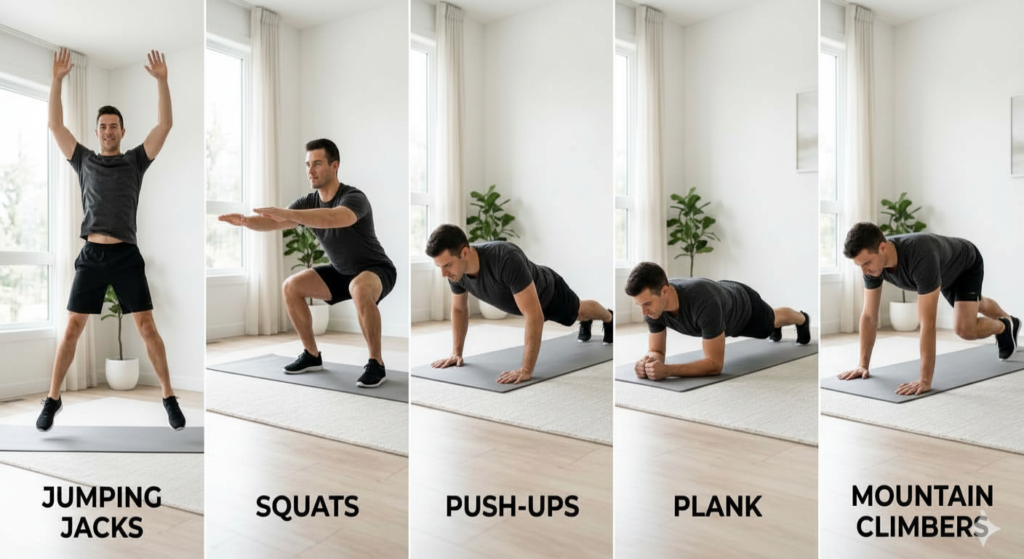
- High Marches: Lift your knees toward your waist, pumping your arms to engage your core and legs.
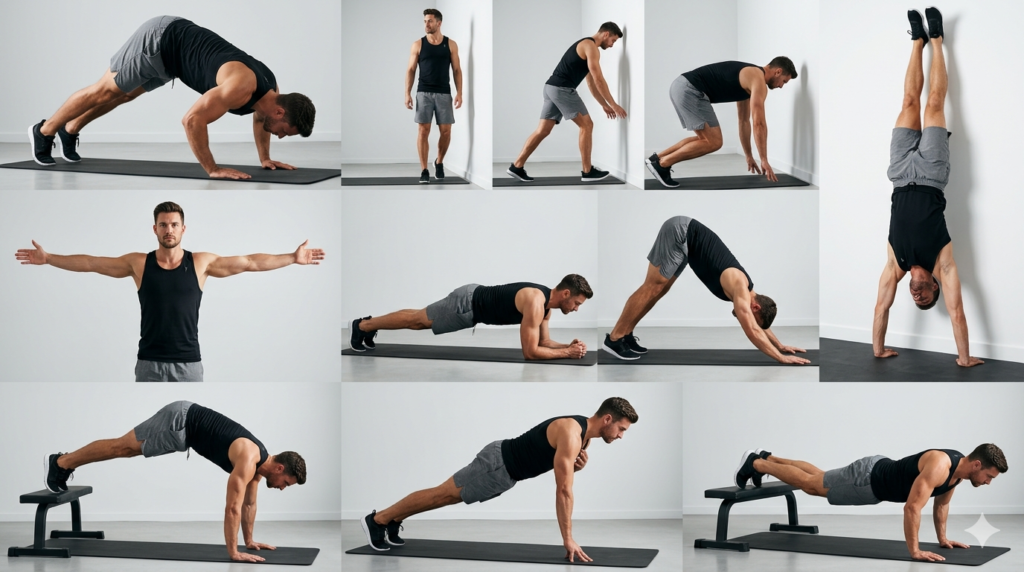
- Wall Push-ups: Lean into a wall and push back smoothly, working your chest and arms.
- Side Steps: Take wide, purposeful steps left to right, waking up your outer thigh muscles.
- ‘Invisible Chair’ Squats: Sit back slightly as if searching for a seat, firing up your glutes.
Completing these four moves equals one full circuit. Rest for one minute, then repeat the loop twice more for a fantastic 15-minute exercise session. If any of these motions feel awkward or you worry about stomping too loudly, simple modifications can create a quiet, joint-friendly routine. Optional finisher: if you prefer core work on some days, try a simple 15 minute ab workout at home using planks, dead bugs, and bird-dogs.

Quiet Cardio: Modifications for Apartment Living and Sensitive Knees
Living in a shared building or dealing with achy knees shouldn’t mean skipping your workout. If jumping makes you worry about noise complaints, you simply need low-impact aerobic exercises for beginners. Keeping one foot on the floor at all times elevates your heart rate beautifully without the pounding.
Swapping heavy footsteps for controlled motions is the secret to quiet cardio exercises for apartment living. Try these three simple adjustments to protect your joints and your lease:
- Step-jacks: Step one foot out to the side while raising your arms to enjoy easy, beginner-friendly modifications for jumping jacks.
- Shallow squats: Bend your knees just a few inches instead of dropping down fully, keeping the effort in your muscles instead of your joints.
- Seated knee-to-chest: Sit on a sturdy chair and alternate pulling each knee toward your torso for an effective, zero-impact core movement.
Your heart will still be pumping hard even without the jumping, so bringing it down safely is crucial. After your modified circuit, a two-minute cool down is mandatory to recharge your battery safely.
The ‘Battery Recharge’: Why the 2-Minute Cool Down is Mandatory
Stopping abruptly after a 15-minute exercise routine is like slamming the brakes on the highway. Because your blood is pumping fast, freezing suddenly can leave you feeling dizzy. Instead, we prioritize active recovery and cooling down after exercise to gently ease your body back to normal. Safely managing this transition helps with lowering resting heart rate through regular movement over time.
To safely bring your internal engine to an idle, spend two minutes completing these motions:
- Slow walking in place: Take gentle steps while letting your arms hang loosely by your sides.
- Overhead reaching breaths: Inhale deeply while reaching toward the ceiling, then exhale while lowering your arms.
With this routine finished, building a consistent habit ensures long-term success even when motivation fails.
Building the Habit: How to Stay Consistent When Motivation Fails
Relying on pure willpower is the hardest way to figure out how to stay consistent with home fitness. Instead of hoping you feel motivated, try a clever trick called “habit stacking.” This just means attaching your new routine to something you already do every single day. By making movement automatic, you will quickly notice the everyday health advantages of short duration aerobic exercise, like deeper sleep and brighter morning energy.
To make this work for your busy schedule, set yourself up for success. Here is how you can easily build the habit:
- Pair it up: Do your routine right after your morning coffee.
- Remove barriers: Set your comfortable clothes out before bed.
- Track success: Mark a “done” on a physical wall calendar every time you finish.
Increasing cardiovascular endurance at home doesn’t require a major lifestyle overhaul—just small steps that create a new 15-minute baseline for a healthier life.
Your New 15-Minute Baseline for a Healthier Life
You no longer need to wonder how to fit exercise into a busy day. You now have a complete 15 minute beginners at home cardio workout ready to go right in your living room. Your only goal this week is simple: commit to this routine just three times. Trying it on Monday, Wednesday, and Friday is the perfect starter schedule to build momentum without feeling overwhelmed.
Every time you finish this 15 minute workout at home, you build a stronger, more efficient heart. Soon, you will experience the quiet superpower of lowering resting heart rate through regular movement, meaning your body actually works less hard just to exist. You already have the tools, the time, and the space to make this happen. Clear a small spot on your floor, turn on your favorite upbeat song, and claim your fifteen minutes today.

Q&A
Question: How do I know I’m working at the right intensity without a heart-rate monitor?
Short answer: Use the Talk Test and your perceived effort. You should feel comfortably warm and able to speak a short sentence, but not sing; if you’re gasping, slow down, and if you can chat easily, pick up the pace slightly. This simple cueing keeps effort in the safe, effective aerobic zone for beginners.
Question: Should I choose HIIT or steady state for my 15 minutes?
Short answer: Pick based on how your “internal battery” feels today—both approaches work for beginners. Steady state is gentler on joints and easy to sustain, while HIIT is time-efficient with brief harder bursts followed by active recovery (like marching in place). Switch between them across the week as energy allows.
Question: What does the full 15-minute session look like from start to finish?
Short answer: Prep your space (clear clutter, water nearby, safe footing, set a timer), then do a 3-minute warm-up: 60s gentle marching, 60s arm circles, 60s torso twists. Next, the 10-minute no-equipment circuit: 45s work/15s breathe for High Marches, Wall Push-ups, Side Steps, and “Invisible Chair” Squats (that’s one circuit); rest 1 minute and repeat the loop two more times, using the Talk Test to guide effort. Finish with a 2-minute cool down: slow walking in place and overhead reaching breaths. Optional on some days: a simple core finisher (planks, dead bugs, bird-dogs).
Question: I live in an apartment or have sensitive knees—how can I modify this?
Short answer: Keep it low impact by keeping one foot on the floor and using controlled, quiet movements. Swap jumps for step-jacks, use shallow squats, and try seated knee-to-chest for zero-impact core work. Wear supportive shoes or use a non-slip mat to protect joints and reduce noise.
Question: How do I stay consistent when motivation dips?
Short answer: Use habit stacking—attach the workout to something you already do (e.g., right after morning coffee), lay out clothes the night before, and mark a “done” on a wall calendar. Start with three sessions this week (Monday/Wednesday/Friday works well) to build momentum and enjoy the everyday benefits of short aerobic sessions, like better energy and, over time, a healthier resting heart rate.