Jump to: What Is a Female Fat Loss Workout Plan? | Biggest Fat Loss Mistakes | 6-Week Workout Plan | HIIT vs Strength Training | Weekly Schedule | Cycle Syncing | Nutrition | Progress Tracking | Equipment | Why the Scale Is Not Moving | FAQ
Disclaimer: This article is for informational and educational purposes only. It does not replace medical, nutritional, or professional fitness advice. Always consult a qualified healthcare provider or certified personal trainer before starting any new program — especially if you have hormonal conditions, injuries, or are pregnant or postpartum.
What Is a Female Fat Loss Workout Plan — And Why Does It Work Differently for Women?
Quick Answer: A female fat loss workout plan is a structured mix of strength training, cardio, and nutrition — designed to reduce body fat while preserving lean muscle, built around the hormonal realities of a woman’s body.
Here is the first thing to get clear on: fat loss and weight loss are not the same thing.
Weight loss means the number on the scale drops. That number includes water, muscle tissue, and fat — all mixed together. Fat loss means you are specifically reducing stored body fat while keeping your lean muscle intact.
That difference is everything.
It is the gap between looking “smaller” and looking lean, defined, and genuinely strong.
Women’s bodies are biologically wired to store fat more readily than men’s. Estrogen encourages fat storage — especially around the hips, thighs, and lower belly. That is not a flaw. It is how female hormones support reproductive health.
But it does mean your strategy needs to work with your biology, not just push harder against it.
Women also carry less lean muscle mass than men on average. Since muscle burns calories even at rest, less muscle means a slower baseline metabolism. And the most powerful thing you can do to change that long-term is build and preserve lean muscle. Everything in this plan is built around that one goal.
Female Fat Loss Workout Plan: The Step-by-Step Guide That Actually Works
Three years ago I was doing cardio five days a week.
Treadmill. Elliptical. Spin class on weekends.
The scale hadn’t moved in six weeks. I was exhausted and always hungry. Honestly, I was starting to think something was broken inside me.
Then a trainer pulled me aside and said something that completely rewired how I train:
“You’re not working out for fat loss. You’re working out for calorie burn. Those are two completely different goals.”
That one line changed everything. And if you’ve been doing the same cardio routine with nothing to show for it — this female fat loss workout plan is where you need to start.
The Number One Mistake Women Make When Trying to Lose Fat
Before we get into the workouts, let’s be completely honest about something.
If you are doing only cardio and eating in a large calorie deficit — you are almost certainly losing muscle right alongside fat.
This is the skinny fat trap. The scale drops, but your body doesn’t feel firm, toned, or defined. And because you’ve lost muscle, your metabolism slows down. So when you ease up on the extreme diet or pull back the cardio — the fat returns faster than it left.
The answer is not more cardio.
It is a smarter combination of progressive strength training, strategic cardio, and enough protein to protect the muscle you are actively building. That is the foundation of every effective female fat loss workout plan.
The Complete 6-Week Plan Framework
Here is how this plan works:
- Strength training — 3 to 4 days per week
- HIIT cardio — 1 to 2 days per week
- Low-intensity cardio or active recovery — 1 to 2 days per week
- Full rest — at least 1 day per week
Total sessions per week: 5 to 6 Session length: 45 to 60 minutes
This is built for women at beginner to intermediate fitness levels who want to burn body fat, build lean muscle definition, and actually keep the results — without surviving on 1,200 calories or training twice a day.
What Is the 3-3-3 Rule for Fat Loss?
Before we get into the phases, a quick answer to something that comes up constantly in women’s fitness searches.
The 3-3-3 rule for fat loss is a simple daily framework:
- 3 balanced meals per day with protein, carbs, and healthy fat in each
- 3 litres of water spread across the day
- 3 sessions of intentional movement per week as a minimum baseline
It is not a magic formula — but it works as a starter framework for women who are overwhelmed by the complexity of fat loss advice and just need somewhere to begin.
Think of it as the floor, not the ceiling. This plan goes well beyond the 3-3-3 baseline — but if you are brand new and three sessions a week is where you are starting, that is a completely valid place to start. Build from there.
Phase 1 — Weeks 1 and 2: Build Your Foundation
The first two weeks are not about destroying yourself.
They are about learning movement patterns, waking up muscles that have been dormant (especially the glutes), and preparing your body for heavier work in Phase 2.
Do not rush this phase. The women who skip the foundation work are almost always the ones who plateau or get hurt six weeks later.
Day 1 — Full Body Strength (3 Sets x 10 to 12 Reps)
Goblet Squat Activates quads, glutes, and core all at once. Go lighter than you think you need to in the beginning. Depth and control matter far more than load at this stage.
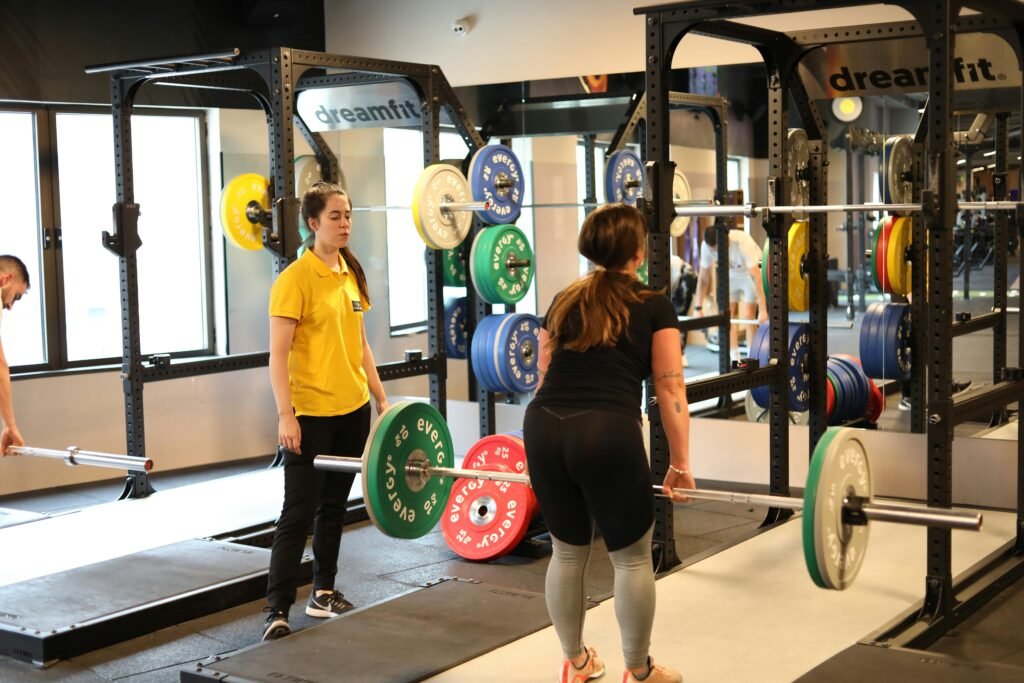
Romanian Deadlift (RDL) One of the best movements in any female fat loss workout plan. Targets the hamstrings, glutes, and lower back. Hinge at the hips — do not round at the waist. Keep the back flat the whole way through.
Dumbbell Bench Press A lot of women skip upper body entirely. That is a mistake. More muscle anywhere on your body means a higher resting metabolic rate — more calories burned at rest, around the clock.
Seated Cable Row Targets the mid-back and biceps. Most women never train their back properly, and it shows up as poor posture and weaker performance in everything else. Pull with your elbows, not your hands.
Plank Hold — 3 sets, 30 to 45 seconds each Core stability underpins every other movement in this plan. This is not throwaway filler. Do it every session.
Day 2 — HIIT Cardio (25 to 30 Minutes Total)
Start with 5 minutes of easy movement — light jogging, slow cycling, or brisk walking.
Then alternate:
- 20 seconds of maximum effort (sprint on a treadmill, assault bike, jump rope, or rowing machine)
- 40 seconds of active rest (slow walk or easy pedaling)
Repeat for 10 to 12 rounds. Finish with 5 minutes of easy walking and stretching.
Why this works better than regular cardio: HIIT triggers something called Excess Post-Exercise Oxygen Consumption — the afterburn effect. Your metabolism stays elevated for up to 24 hours after the session ends. A long treadmill walk simply cannot produce that effect to the same degree.
What Workout Burns the Most Fat for Females?
This is one of the most searched questions on the topic — and the honest answer might surprise you.
The workout that burns the most fat for females is not the one that burns the most calories in a single session.
It is the one that burns the most calories across the entire week, including the hours after you finish training.
That is why the combination of strength training plus HIIT wins over cardio alone every single time.
Here is how it breaks down:
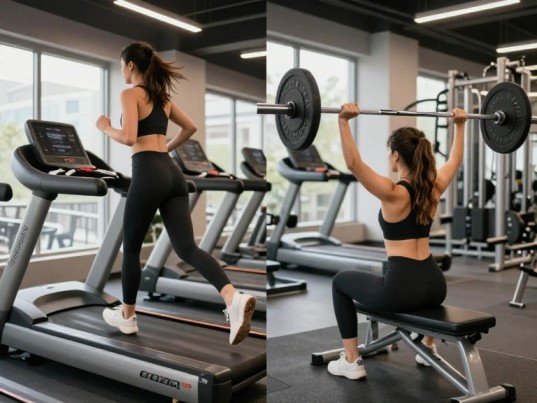
A 45-minute HIIT session burns around 400 to 600 calories during the workout itself — and then triggers EPOC, keeping your metabolism elevated for up to 24 hours after. A heavy strength session burns 300 to 500 calories during the session — but the muscle it builds raises your resting metabolic rate permanently, so you burn more calories at rest every single day.
Steady-state cardio burns calories in the moment and stops when you do.
So the real answer? Heavy compound lifting combined with HIIT cardio is the most fat-burning combination for women. That is exactly why this plan is built the way it is. and we also have 10 min cardio exercise.
Day 3 — Active Recovery
Walk for 30 to 45 minutes. Stretch. Foam roll.
This is not optional — it is when your body actually repairs muscle and oxidises fat at the cellular level. The women who skip rest days are almost always the ones who plateau first. Build the recovery in.
Phase 2 — Weeks 3 to 6: Progressive Overload and Real Fat Burning
Now we increase intensity.
You should be lifting more weight — or hitting more reps — than in weeks 1 and 2. This is called progressive overload, and it is the single most important training principle for women working on fat loss.
Muscles only become stronger and more metabolically active when they are challenged beyond their current comfort zone. If the weight never changes, neither will your results.
Day 1 — Lower Body (Glutes and Quads)
| Exercise | Sets | Reps | Note |
|---|---|---|---|
| Barbell Squat or Goblet Squat | 4 | 8 to 10 | Heavier than Phase 1 |
| Hip Thrust or Glute Bridge | 4 | 12 | Do not skip this one |
| Walking Lunge | 3 | 12 each leg | Single-leg work fixes imbalances |
| Leg Press | 3 | 12 | Quad complement to squats |
| Standing Calf Raise | 3 | 15 | Easy to skip, easy to regret later |
The glutes are the largest muscle group in the human body. Training them directly means more calories burned at rest and the toned, defined lower body most women are training toward.
Day 2 — Upper Body (Back, Shoulders, and Arms)
| Exercise | Sets | Reps | Note |
|---|---|---|---|
| Lat Pulldown | 4 | 10 | Back width and better posture |
| Push-Up or Dumbbell Press | 4 | 10 | Chest and tricep compound movement |
| Dumbbell Lateral Raise | 3 | 12 | Shoulders shape the overall silhouette |
| Cable Tricep Pushdown | 3 | 12 | Triceps are two thirds of the arm |
| Dumbbell Bicep Curl | 3 | 12 | Completes the arm balance |
Day 3 — Full Body Fat Burning Circuit
This is where strength meets conditioning.
Do each movement for 40 seconds, rest 20 seconds, complete 3 full rounds. Rest 2 minutes between rounds.
Kettlebell Swing Push-Up Squat Jump (or bodyweight squat if needed for joints) Dumbbell Bent-Over Row Reverse Lunge Mountain Climber
Total time: about 35 minutes. The calorie burn from this session rivals a much longer cardio session — without the boredom or the stress on your joints.
Day 4 — Low Intensity Steady-State Cardio (LISS)
40 to 50 minutes of brisk walking, easy cycling, or swimming at a comfortable, conversational pace.
This is your aerobic base work. It supports fat oxidation at lower heart rates, helps your body recover from harder training days, and keeps cortisol in check. It should feel genuinely easy — not a grind.
Your Complete 6-Week Weekly Schedule
| Day | Session | Duration | Effort Level |
|---|---|---|---|
| Monday | Lower Body Strength | 50 min | Hard |
| Tuesday | HIIT Cardio | 30 min | Very Hard |
| Wednesday | Upper Body Strength | 50 min | Hard |
| Thursday | Active Recovery or Walk | 40 min | Easy |
| Friday | Full Body Circuit | 40 min | Hard |
| Saturday | LISS Cardio | 45 min | Easy to Moderate |
| Sunday | Full Rest | — | — |
Cycle Syncing: The Strategy Almost No Fat Loss Plan Talks About
Here is something the top articles on this topic almost never mention.
Your menstrual cycle directly affects how your body responds to training — every single week.
Ignore it, and you will keep having randomly terrible training weeks with no explanation. Work with it, and you will train smarter, recover faster, and stop feeling like your own body is your enemy.
This approach is called cycle syncing.
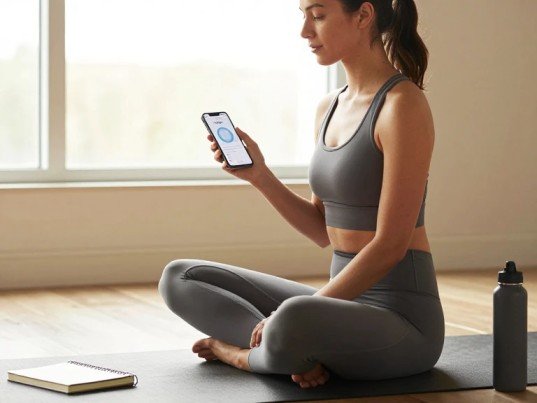
Menstrual Phase — Days 1 to 5 Both estrogen and progesterone are at rock bottom. Energy is low for most women. This is not the week to chase personal records. Walk, stretch, do yoga. Rest without guilt.
Follicular Phase — Days 6 to 13 Estrogen starts climbing. Energy picks up, mood improves, and your body becomes highly receptive to strength training. This is your green light for heavy lifting, high-intensity cardio, and pushing performance limits.
Ovulatory Phase — Days 14 to 16 Both estrogen and testosterone peak simultaneously. Many women report feeling genuinely their strongest during this short window. Use it well.
Luteal Phase — Days 17 to 28 Progesterone rises and your body shifts toward preferring fat as a fuel source — which actually favours fat loss. But fatigue and inflammation also increase. Moderate strength training and steady cardio work well here. Pull back HIIT intensity. That is not weakness — that is smart training.
Apps like Clue or Flo make tracking easy. Once you start, you will wonder how you ever trained without this information.
Nutrition: The Part That Makes or Breaks Everything
You cannot out-train a bad diet.
I tried for a solid two years. It does not work.
Here is what actually does.
Keep your calorie deficit modest. Aim for 300 to 500 calories below your TDEE — Total Daily Energy Expenditure. Going further than that might seem like it would speed things up. It won’t. Extreme restriction tells your body to slow metabolism and use muscle for fuel. The deficit ends up working against you.
Use tdeecalculator.net or the MacroFactor app to find your accurate TDEE.
Protein is the most important nutritional variable — full stop. Women in a fat loss phase should be eating 0.7 to 1 gram of protein per pound of bodyweight daily. Protein preserves lean muscle during a calorie deficit, keeps you fuller between meals, and carries a thermic effect — your body burns 25 to 30% of protein calories just through digestion. No other macronutrient does that.
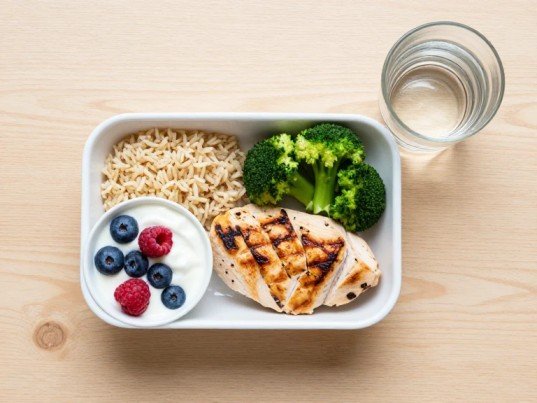
Rotate through: eggs, Greek yogurt, chicken breast, canned tuna, cottage cheese, lentils, edamame, protein shakes.
Carbohydrates are not your enemy. Cutting carbs entirely — especially while training hard — tanks your energy, destroys recovery, and disrupts hormonal function. Women are particularly sensitive to this effect. Eat quality carbs timed around your training: oats, sweet potatoes, brown rice, fruit, and vegetables.
Water matters more than most people realise. Aim for 2 to 3 liters per day, more on training days. Even mild dehydration impairs fat oxidation and makes every workout feel harder than it should.
Sample One-Day Meal Plan (Around 1,700 Calories and 165g Protein)
| Meal | What to Eat | Protein |
|---|---|---|
| Breakfast | 3 scrambled eggs and 1 cup Greek yogurt and mixed berries | Around 38g |
| Morning Snack | Cottage cheese and an apple | Around 20g |
| Lunch | Grilled chicken breast and brown rice and roasted vegetables | Around 40g |
| Pre-Workout | Rice cakes and almond butter | Around 6g |
| Dinner | Baked salmon and sweet potato and steamed broccoli | Around 38g |
| Evening | Casein protein shake or string cheese | Around 25g |
Daily total: approximately 167g protein at around 1,750 calories.
Progress Tracking: Stop Relying Entirely on the Scale
The scale is one data point. It is not the whole picture.
Here is a tracking system that actually tells you what is happening in your body:
| What to Track | How Often | How to Do It |
|---|---|---|
| Bodyweight | Weekly | Same morning, after bathroom, before food |
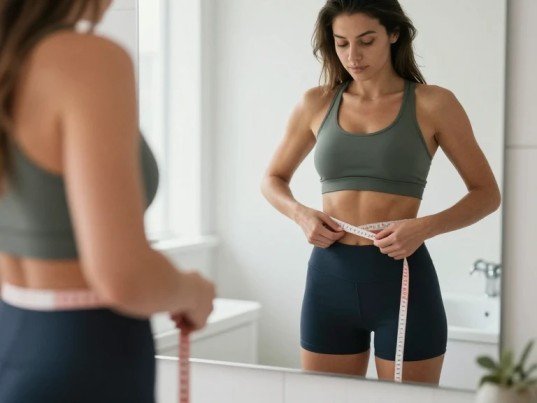
| Body measurements | Weekly | Tape measure — waist, hips, thighs, chest |
| Progress photos | Every 4 weeks | Same lighting, angle, and outfit each time |
| Strength benchmarks | Every 6 to 8 weeks | Log your squat, deadlift, push-up numbers |
| Energy and mood | Daily | A quick 1 to 5 score in your notes app |
When the scale is flat but your measurements are shrinking and your lifts are climbing — that is body recomposition. Fat loss and muscle gain happening simultaneously. It shows up everywhere except the scale.
Which Body Part Loses Fat First?
This question comes up constantly, and the answer is — it depends on your genetics.
There is no universal rule, and there is no exercise or diet trick that targets fat loss in a specific area (spot reduction is a myth, full stop). But there are general patterns that research and real-world experience both confirm.
Most women tend to lose fat first from the face, neck, and arms.
From there, fat tends to reduce in the chest and upper back area before the more hormonally stubborn zones — hips, thighs, and lower belly — start to respond.
The lower abdomen and hips are the last areas to lean out for most women, specifically because estrogen encourages fat storage in these regions as a biological priority.
This is frustrating. It is also completely normal.
The practical takeaway: do not judge your progress by how your belly looks at week three. Check your face. Check your arms. Check how your jeans fit in the waistband. Fat is coming off — it is just coming off in an order your body decides, not you.
Stay consistent, trust the process, and the more stubborn areas will follow in time.
The Mistakes That Quietly Kill Your Results
Lifting too light because you are scared of bulking. Women do not produce enough testosterone to build large, bulky muscle. What lifting with real challenge actually does is create the lean, defined look you are training toward. If 15 reps feels easy, the weight is too light. Go heavier.
Skipping the warm-up. Five to ten minutes of dynamic movement before lifting reduces injury risk and measurably improves how well your muscles activate during actual work sets. Cold muscles do not fire properly. The warm-up is part of the session — not optional.
Treating sleep as a bonus. Growth hormone — the hormone responsible for fat metabolism and muscle repair — is predominantly released during deep sleep. Poor sleep raises cortisol, which promotes fat storage and breaks down muscle tissue. Seven to nine hours per night is a training variable. Treat it like one.
Eating way too little. Severe restriction tells your body to slow metabolism and use muscle tissue as fuel. Women consistently underestimate how much food training actually requires. Eating too little will stall fat loss — not accelerate it.
Quitting at week four. This one is painful to write because it happens constantly. Most women stop right before visible results start emerging. Body composition changes happen at the cellular level for weeks before appearing in the mirror. Commit to six full weeks. Then assess.
How Did Alia Bhatt Lose Weight? (And What Women Can Actually Learn From It)
Alia Bhatt’s transformation has been widely covered, and for good reason — the results were visible and the approach was actually grounded in real training principles rather than crash dieting.
Alia worked with celebrity trainer Yasmin Karachiwala and reportedly lost significant weight through a structured mix of Pilates for core and postural strength, dedicated strength training, and a nutrition overhaul focused on whole foods and controlled portions rather than extreme calorie restriction.
What is worth taking from her approach:
She did not do endless cardio. She prioritised resistance-based training and body movement quality. Her diet was disciplined but not starvation-level — high protein, reduced processed food, controlled portions.
She also had a professional trainer and full-time nutritional support, which most of us do not have. So the realistic lesson is not to copy her exact routine — it is to apply the same principles at your own level.
Structured strength training. Protein-forward nutrition. A calorie deficit that is sustainable, not punishing. Consistency over intensity.
That is what actually drove her results. And those are exactly the principles this plan is built around.
Equipment: What You Actually Need
At the Gym Barbell and squat rack, dumbbells in a range of weights, a cable machine, and resistance bands for warm-ups and glute activation.
At Home Adjustable dumbbells — Bowflex SelectTech and PowerBlock are widely used — plus a resistance band set and optionally a pull-up bar for back development.
Tracking Apps Worth Installing MyFitnessPal or Cronometer for food and macro logging. Strong or Hevy for workout tracking and progressive overload. Clue or Flo for cycle tracking. Apple Watch, Garmin, or Polar for heart rate during cardio.
Why the Scale Is Not Moving — The Honest Breakdown
This is the most common frustration, and it almost always has a logical explanation.
You may be building muscle while losing fat. The scale stays flat even as your body is reshaping underneath it. Your clothes feel different before the number changes. This is actually the ideal outcome — not a problem.
Or you are eating more than you think. Research shows people underestimate calorie intake by 20 to 40% on average — even careful, health-conscious people. Track everything honestly for two weeks and see what comes up.
Or you are in the luteal phase of your cycle and retaining water hormonally. This is temporary and has nothing to do with your actual fat loss progress.
Before changing anything — give the plan two to three weeks of genuine, consistent execution first.
What Actually Gets Results
The women who get the best results from a fat loss plan are not the most intense women in the gym.
They are the most consistent.
They show up on tired days. They eat protein even when they are completely bored of chicken. They do not quit at week four when the mirror has not changed yet. And they do not spiral every time the scale does something unpredictable.
This female fat loss workout plan gives you the structure: progressive strength training that builds a faster metabolism, strategic cardio that burns fat without eating muscle, nutrition that supports your body instead of fighting it, and a hormone-aware framework that most plans pretend does not exist.
Start where you are right now. Lift a little heavier than feels comfortable. Sleep like your results depend on it — because they genuinely do. Track your cycle and let it guide your intensity. Give it six full, honest weeks before you make any judgments.
It is not complicated. It just requires actually doing it consistently.
Author Bio: Written by a fitness blogger with 6 years of hands-on experience in body recomposition training for women. Personal experience combined with evidence-based principles from exercise physiology and sports nutrition research. Always consult a qualified professional before starting any new fitness or nutrition program.
Frequently Asked Questions
How many days a week should women work out for fat loss?
Most women see optimal fat loss results with 4 to 5 training days per week — structured as 3 to 4 strength sessions and 1 to 2 cardio sessions. More than 6 days without adequate recovery can elevate cortisol, disrupt hormonal balance, and produce diminishing returns.
Is strength training or cardio better for female fat loss?
Strength training produces superior long-term fat loss outcomes. It builds lean muscle, which raises resting metabolic rate and increases calories burned at rest around the clock. Cardio supports calorie expenditure and cardiovascular health, but does not remodel body composition the way resistance training does. The most effective approach uses both.
How long does it take to see results from a female fat loss workout plan?
Most women notice improvements in energy and physical performance within 2 to 3 weeks. Visible body composition changes typically appear between weeks 6 and 8 with consistent effort. Significant transformations of 10 or more pounds of fat loss generally take 3 to 6 months.
Can this fat loss workout plan be done at home without a gym?
Yes. Bodyweight exercises — push-ups, squats, hip thrusts, lunges, mountain climbers — combined with resistance bands and dumbbells replicate the majority of this plan effectively. The principles of progressive overload, protein intake, calorie deficit, and recovery remain identical regardless of location.
What should women eat on rest days versus training days?
On training days, higher carbohydrate intake around the training window improves performance and recovery. On rest days, slightly lower carbohydrate intake is appropriate since energy demand is reduced. Total daily protein should remain consistent every day. This is called calorie cycling, and while optional, it can meaningfully improve workout quality and recovery speed.
Can women with PCOS or hypothyroidism follow this plan?
Yes, with appropriate modifications and medical guidance. Both conditions affect hormonal environment and can slow the rate of fat loss. Strength training and an anti-inflammatory dietary pattern have shown benefits for both PCOS and hypothyroid cases in research settings. Working alongside a healthcare provider to optimize hormone levels will improve results significantly and safely.
Is it safe to work out during menstruation?
For most healthy women, yes. Light to moderate exercise during menstruation can reduce cramping and improve mood through endorphin release. On heavier flow days, reduce intensity if needed. There is no evidence-based reason to avoid exercise during the menstrual phase unless significant pain or a diagnosed condition is present.
What is the best cardio for female fat loss?
HIIT cardio produces the highest calorie burn per minute and triggers the EPOC afterburn effect — extending elevated calorie burning for up to 24 hours post-session. LISS cardio (walking, cycling, swimming) complements HIIT by supporting active recovery and fat oxidation at lower intensities. A combination of 1 to 2 HIIT sessions and 1 to 2 LISS sessions per week is the most effective cardio approach for women targeting fat loss.