Maximize Your Gains with a 5 Day Workout Routine
Reviewed and written by Saad | Fitness & Fat Loss Coach, FitnessFlora.com | 6+ years in fat loss coaching and nutrition planning
Are you ready to transform your fitness journey? A 5 day workout routine for muscle gain might be the key. This good 5 day workout plan is designed to maximize muscle gains and boost overall fitness.
With a structured approach, you can target different muscle groups with greater precision and efficiency. This routine works well as a 5 day weight training program, allowing for focused training and adequate recovery. It can also serve as a five day weight lifting plan if you prefer barbell-focused sessions.
A 5 day a week workout plan is ideal for those committed to serious fitness goals. It offers a balanced mix of exercises. If you prefer a 5 day a week workout routine, the same framework applies with small tweaks to volume.
You’ll engage in both compound and isolation movements. This ensures comprehensive muscle development and supports a 5 day mass building workout.
The routine is flexible and can be tailored to individual needs. Whether you’re a beginner or more advanced, it suits all levels as a five day exercise plan — or as a structured 5 day exercise program when you want a clearly periodized weekly template. It even works as a 5 days exercise plan when your schedule is tight.
Consistency is crucial for success. Sticking to a 5-day schedule can yield impressive results, especially within a 5 days a week gym routine.
Nutrition and rest are also vital components. They support your body’s recovery and growth.
Ready to dive in? Let’s explore how a five day workout can help you achieve your fitness aspirations.
Why Choose a 5 Day Workout Routine?
Selecting a 5-day workout routine offers numerous benefits for muscle gain and overall fitness development. It allows you to target muscle groups individually, creating the stimulus specificity required for meaningful hypertrophic adaptation. Additionally, this structured approach provides optimal recovery time between sessions targeting the same musculature. For many, a 5 day gym routine offers a sustainable and productive training cadence.
A 5-day routine suits anyone seeking to improve strength or build muscle. It distributes training volume across the week, keeping individual sessions focused and sufficiently intense without accumulating excessive fatigue. With a workout schedule 5 day approach, each day dedicates attention to different muscles, avoiding the systemic overtraining that derails progress.
This plan is flexible and adaptable to various fitness goals. Whether your aim is hypertrophy, strength, or endurance, a 5-day routine can accommodate your needs. You can incorporate different training methodologies — periodization, supersets, or tempo manipulation — within this framework.
Key advantages include:
- Targeted muscle training with session-specific focus
- Enhanced recovery periods between sessions for the same muscle group
- Flexibility in workout types and programming methodologies
- Consistent, measurable gains over time
A well-structured schedule keeps workouts engaging and prevents the motivational stagnation that often accompanies monotonous programming.
How to Structure Your 5 Day Workout Plan
Crafting the ideal 5-day workout plan requires deliberate, evidence-informed organization — think of it as a 5 day gym workout schedule built around sound periodization principles. A balanced plan integrates both strength and hypertrophy stimulus. Each day should focus on distinct muscle groups for effective development and systemic recovery.
Begin sessions with compound, multi-joint exercises to engage the largest motor units and establish neuromuscular activation. These foundational movements build strength and intermuscular coordination. Squats, deadlifts, and bench presses are the cornerstones.
Follow compound work with isolation exercises for targeted development. These movements are critical for correcting muscular imbalances and achieving aesthetic definition. Curls and leg extensions refine specific areas that compound lifts may underserve.
An example structure:
- Day 1: Chest and Triceps
- Day 2: Back and Biceps
- Day 3: Legs and Core
- Day 4: Shoulders and Abs
- Day 5: Upper Body Push/Pull or Weak Point Training
This layout functions as a classic 5 day bodybuilding split — a 5 day workout split for muscle gain. Many experienced lifters apply a push pull workout upper body emphasis on Day 5 to address lagging muscle groups.
Ensure each session includes a structured warm-up and cool-down protocol. This practice mitigates injury risk and enhances session performance. Stretching preserves mobility and contributes to long-term musculoskeletal health.

Adjust intensity according to your current fitness level and periodization phase. Progressive overload remains the primary driver of adaptation — incrementally increase reps, load, or training density over time.
The Science Behind Muscle Gain and Recovery
Understanding muscle gain requires an appreciation of the underlying physiology. Resistance training imposes mechanical and metabolic stress on muscle fibers, producing microscopic disruption of myofibrillar architecture — the structural basis for subsequent adaptation.
Recovery is where growth actually occurs. The body initiates a repair cascade that results in thicker, stronger contractile proteins. Adequate rest and targeted nutrition are the non-negotiable inputs that fuel this remodeling process.
Protein intake is the primary nutritional lever for muscle repair, supplying the essential amino acids required for myofibrillar protein synthesis. Carbohydrates replenish depleted glycogen stores, sustaining the training intensity necessary for progressive overload.
Factors that govern muscle gain and recovery:
- Progressive Overload: Systematically increasing mechanical demand on the target musculature
- Rest Days: Allowing the inflammatory repair process to reach completion
- Nutrition: A diet calibrated to support both anabolism and recovery
- Hydration: Optimal fluid balance for cellular function and performance
Attentiveness to the body’s adaptive signals is essential. Persistent soreness, declining performance, or disrupted sleep are indicators of insufficient recovery. Respecting these signals protects long-term progress.
Essential Tips for Success on a 5 Day Split
Success with a 5-day workout split demands both strategic planning and disciplined execution. Each session should have well-defined objectives aligned with your overarching performance or physique goals.
Consistency is the primary determinant of long-term outcomes. Regular, purposeful attendance builds not only muscle and strength but the behavioral discipline that separates those who achieve lasting results from those who plateau.
Warm-up and cool-down protocols are non-negotiable components of injury-resilient training. Dynamic mobility work prepares joints and connective tissue for load; static stretching post-session restores muscle length and supports recovery.
Core success habits:
- Set Clear Goals: Define specific, measurable outcomes for each training block
- Stay Consistent: Adherence to schedule is the most underrated training variable
- Warm Up Properly: A thorough warm-up reduces injury risk and improves session performance
- Track Progress: A training log transforms subjective effort into objective data
These habits elevate your 5 day fitness plan from a short-term program into a sustainable, long-term system.
Sample 5 Day Workout Routine for Muscle Gain
A well-designed 5-day workout routine provides the training frequency and volume distribution necessary for significant hypertrophic progress. By systematically targeting different muscle groups on successive days, this routine ensures comprehensive anatomical coverage while allowing adequate inter-session recovery.
This 5 day gym workout routine integrates compound and isolation exercises within each session. Adjust loading and volume according to your training age and current capacity. Use it as a 5 day gym workout in a commercial facility, or substitute movements for available home equipment. Progressive overload applied consistently across this structure is the mechanism that drives measurable muscle gain.
Day 1: Chest and Triceps
Day one prioritizes the anterior pushing musculature. Lead with heavy compound pressing to maximize motor unit recruitment, then transition to isolation movements for the smaller synergists.
- Bench Press: 4 sets of 8 reps
- Incline Dumbbell Press: 3 sets of 10 reps
- Tricep Dips: 3 sets of 12 reps
- Chest Flyes: 3 sets of 12 reps

Maintain rigorous form throughout. Controlled eccentrics and deliberate mind-muscle connection amplify hypertrophic stimulus beyond what load alone provides.
Day 2: Back and Biceps
Day two targets the posterior chain and elbow flexors — foundational for postural integrity and a balanced physique.
- Deadlift: 4 sets of 6 reps
- Pull-Ups: 3 sets of 8 reps
- Barbell Rows: 3 sets of 10 reps
- Bicep Curls: 3 sets of 12 reps

Brace the core during all pulling movements. Deliberate scapular retraction on rows maximizes lat and rhomboid engagement.
Day 3: Legs and Core
Lower body training drives the greatest systemic anabolic response of any training day. Core work underpins performance across all other sessions.
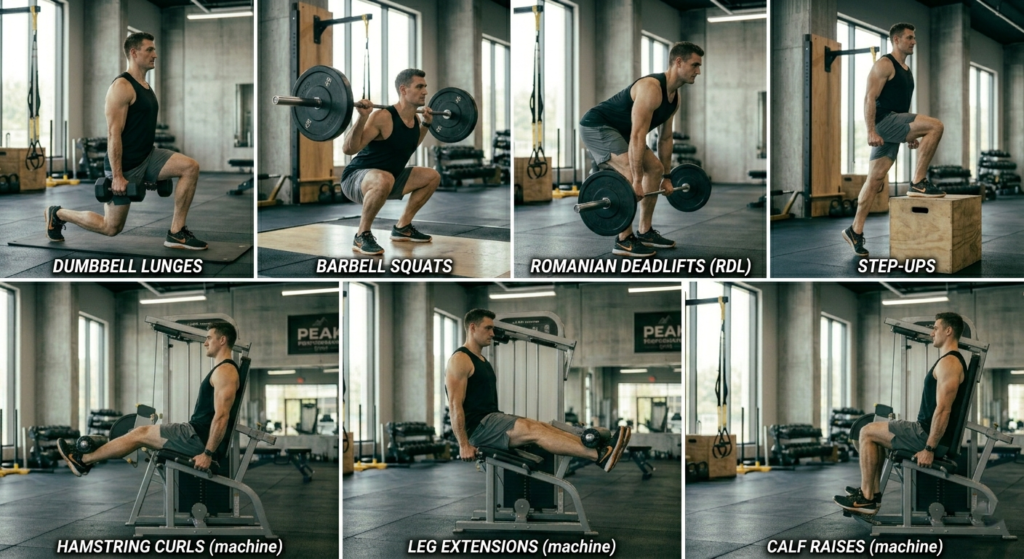
- Squats: 4 sets of 8 reps
- Lunges: 3 sets of 12 reps each leg
- Leg Press: 3 sets of 10 reps
- Planks: 3 sets of 30 seconds
Prioritize knee tracking, neutral spine, and full range of motion on all lower body movements.
Day 4: Shoulders and Abs
Well-developed deltoids contribute disproportionately to perceived upper body size and structural posture.
- Overhead Press: 4 sets of 8 reps
- Lateral Raises: 3 sets of 12 reps
- Front Raises: 3 sets of 10 reps
- Russian Twists: 3 sets of 15 reps
Execute lateral and front raises with controlled tempo. Swinging the load reduces deltoid isolation and increases injury risk.
Day 5: Upper Body Push/Pull or Weak Point Training
Use this session to either reinforce push/pull movement patterns or directly address identified muscular weaknesses and imbalances.
- Push-Ups: 3 sets of 15 reps
- Bent-Over Rows: 3 sets of 8 reps
- Tricep Kickbacks: 3 sets of 12 reps
- Face Pulls: 3 sets of 12 reps

This is the most individually customizable session in the program. Prioritize quality of movement and targeted activation over raw loading.
Customizing Your 5 Day Workout Plan
Effective customization begins with an honest audit of your current capacities, available equipment, and primary training objective. Identify muscle groups that have fallen behind relative development and allocate additional volume accordingly. This five day exercise program — equally effective as a 5 day workout plan for men or women — functions as both a 5 day workout plan to build muscle and a gym program 5 days a week.
Customization variables to consider:
- Training age (beginner, intermediate, advanced)
- Primary goal (hypertrophy, maximal strength, muscular endurance)
- Equipment availability (fully equipped gym vs. home setup)
Beginners should extend inter-set rest intervals and prioritize technical proficiency over loading. Intermediate and advanced trainees may layer in intensity techniques — drop sets, rest-pause, supersets — to sustain adaptive stimulus as they approach their genetic ceiling.
Recovery capacity is an individual variable that must be respected. Rest days and active recovery sessions are training inputs, not absences from training. Adjust volume and intensity based on objective performance data and subjective recovery quality.
Nutrition and Supplementation for a 5 Day Routine
Nutritional strategy is what converts training stimulus into measurable muscle gain. A calorically sufficient, protein-anchored diet creates the anabolic environment necessary for tissue remodeling and performance.
Center each meal around a high-quality protein source — lean meats, eggs, Greek yogurt, legumes — to sustain elevated muscle protein synthesis across the day. Carbohydrates are the primary fuel substrate for glycolytic training; prioritize whole grains, fruit, and starchy vegetables around training windows. Dietary fats from nuts, seeds, and avocados support steroidogenic hormone production and cellular membrane integrity.
Nutritional priorities:
- Distribute protein intake across all meals (target 0.7–1g per lb of bodyweight)
- Align carbohydrate intake with training volume and intensity demands
- Maintain consistent hydration — performance decrements begin before thirst signals arise

Supplements such as creatine monohydrate, whey protein, and essential amino acids have robust evidence supporting their efficacy for strength and hypertrophy outcomes. Consult a qualified nutrition professional before initiating any supplementation protocol.
Recovery, Rest, and Injury Prevention
Recovery is not passive — it is an active, programmable component of any effective 5 day weight training plan. Insufficient recovery between sessions of similar muscular demand is among the most common causes of stalled progress and overuse injury.
Incorporate a minimum of two rest or active recovery days per week. Low-intensity activities such as walking, swimming, or mobility-focused yoga accelerate clearance of metabolic byproducts and reduce perceived muscle soreness without generating additional adaptive demand.
Recovery strategies:
- Prioritize 7–9 hours of quality sleep nightly — the primary window for anabolic hormone secretion
- Integrate post-session static stretching to restore tissue extensibility
- Apply foam rolling or self-myofascial release to reduce localized muscular tension

Injury prevention is a function of technique quality and session management. Thorough warm-up protocols, controlled eccentric loading, and vigilant attention to joint mechanics substantially reduce acute and chronic injury risk. When accumulated fatigue signals emerge — declining performance, persistent soreness, disrupted sleep — treat them as data indicating a need for deload or session modification.
Tracking Progress and Staying Motivated
Objective progress tracking converts subjective effort into actionable data. A structured training log — recording exercises, sets, reps, loads, and perceived exertion — allows you to identify adaptation trends and make informed programming adjustments.
Motivation is inherently variable; systematic tracking provides structure that sustains consistent behavior even when intrinsic drive fluctuates. Reviewing measurable progress at regular intervals reinforces the connection between daily effort and long-term outcomes. Tracking keeps a five day workout on its intended trajectory.
Practical strategies:
- Establish specific, time-bound performance targets within each training block
- Mark milestone achievements with meaningful (non-food) rewards
- Conduct monthly progress reviews to assess whether programming adjustments are warranted
As objective metrics — strength numbers, body composition measurements, performance benchmarks — trend in the intended direction, motivation compounds. The discipline built through consistent tracking becomes self-reinforcing.
Conclusion: Building Your Best Self with a 5 Day Workout
A 5 day workout routine, executed with consistency and informed by sound programming principles, represents one of the most effective frameworks available for meaningful physique and performance development. The compounding effect of structured, progressive training over weeks and months produces outcomes that sporadic or unplanned effort cannot replicate.
Integrate your training with disciplined nutrition, intentional recovery, and objective progress tracking. These pillars function synergistically — the ceiling of your physical development is ultimately set by how well all three are managed in concert.
This five day workout plan cultivates more than muscular development. It instills the mental discipline, self-awareness, and long-term orientation that define genuinely fit individuals. The transformation is as much internal as it is physical.
About the Author
I am a fitness and nutrition coach with over six years of specialized experience in fat loss programming and evidence-based nutrition planning. As the founder and primary content author at FitnessFlora.com, I develops research-informed training resources for a global audience spanning beginner gym-goers to competitive physique athletes. My work bridges the gap between exercise science literature and practical, real-world application.
Frequently Asked Questions About 5 Day Workout Routines
Q: Is a 5-day workout routine too intensive for beginners?
A: Not when volume and intensity are appropriately calibrated to training age. Beginners should prioritize technical proficiency, use longer rest intervals, and allow conservative loading until movement patterns are established. With adequate recovery and nutrition, most individuals find a 5-day cadence both manageable and productive.
Q: Is five days a week ideal for weight training?
A: For most intermediate-to-advanced trainees seeking hypertrophy, yes. Five sessions provide sufficient weekly volume and frequency to drive adaptation across all major muscle groups while allowing adequate inter-session recovery.
Q: What is the best 5 day bodybuilding split for beginners?
A: The push/pull/legs framework with an additional upper body and weak point day (as outlined above) is widely considered optimal for beginners. It distributes volume evenly, limits session duration, and ensures each major muscle group receives both sufficient stimulus and recovery time.
Q: How do I set up a 5 day gym workout schedule?
A: Assign each session to a fixed day and arrange the sequence so the same muscle group is not trained on consecutive days. The Day 1–5 structure in this article is a proven template; adjust placement based on your weekly schedule and recovery patterns.
Q: Can a 5 day muscle building program be done at home?
A: Yes. Substitute barbell and cable movements with dumbbell, bodyweight, and resistance band equivalents. The training principles — progressive overload, adequate volume, structured recovery — apply regardless of equipment context.
Q: Is there a 5 day workout plan for men specifically?
A: The program as written is equally applicable to men and women. Men may favor higher absolute loads and additional upper body volume; the framework accommodates both without structural modification.
Q: Can I adapt the plan for fat loss?
A: Yes. Maintain training volume and intensity to preserve lean mass, and create a caloric deficit through dietary adjustment. Compound-dominant sessions are particularly effective for concurrent fat loss and muscle retention.
Q: What should I do on rest days?
A: Prioritize sleep, consume adequate protein, and engage in light movement — walking, mobility work, or gentle yoga. Avoid prolonged sedentary behavior, which impairs circulation and slows the recovery process.