Push Pull Legs Workout Routine: The Complete PPL Guide That Actually Works (2026)
Jump to: My Wake-Up Call |What Is PPL? |PPL Schedules |Workout Tables |Progressive Overload |Biggest Mistakes |Nutrition |PPL vs Other Splits |FAQ
By Saad | Updated: June 2026 | 13 min read Based on real gym experience and hands-on training.
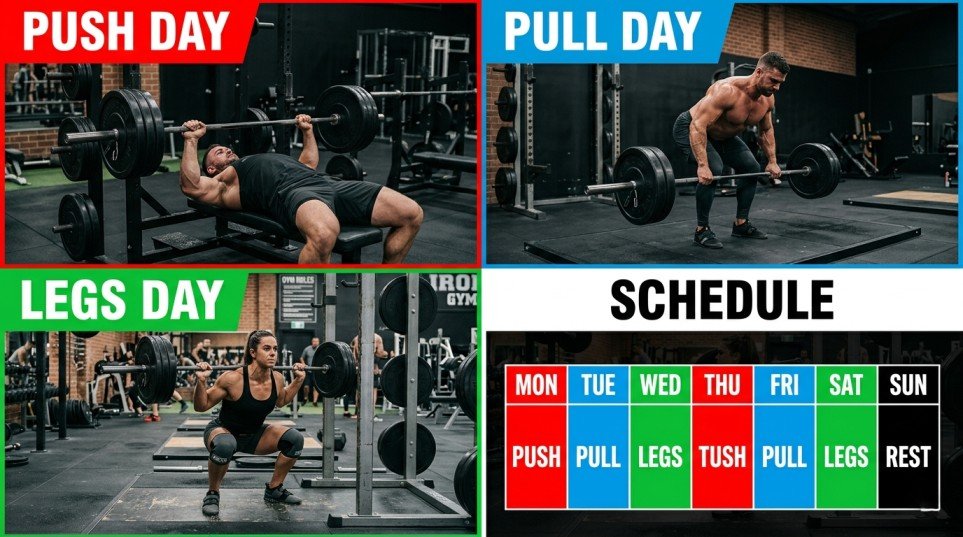
Quick Answer: The push pull legs workout routine is a training split that groups exercises by movement pattern — Push day (chest, shoulders, triceps), Pull day (back, biceps, rear delts), and Legs day (quads, hamstrings, glutes, calves). It runs as a 3-day, 5-day, or 6-day weekly plan. Beginners start with 3 days; advanced lifters use the 6-day version to hit each muscle group twice per week for maximum muscle growth and strength.
Disclaimer: This article is for general informational and educational purposes only. It is not a substitute for professional medical or fitness advice. Always consult a qualified healthcare provider or certified personal trainer before beginning any new exercise program, especially if you have pre-existing health conditions or injuries.
My 6-Month Wake-Up Call — And Why I Finally Switched to the Push Pull Legs Workout Routine
When I first started training seriously, I did what most beginners do. Chest on Monday. Arms on Tuesday. Back on Wednesday. Some shoulder stuff Thursday. Legs on Friday — if I felt like it.
Six months in, my chest was alright, my arms were decent, and my legs looked like they belonged to a different person entirely.
My shoulders were constantly aching in a way that didn’t feel like muscle soreness. It felt like damage. And I couldn’t figure out why — until I actually mapped out my week and realized I was hitting my chest three times without knowing it. Every arm day had tricep pushdowns. Every shoulder day had overhead presses. Nothing was intentional. Everything overlapped.
Then a guy at my gym asked me a simple question.
“Do you follow a structured split?”
I had no idea what that meant.
He explained the push pull legs workout routine to me in about two minutes flat. And I remember thinking — that’s it? That’s what I’ve been missing?
Turns out, yes.
If you’re spinning your wheels with a random schedule right now, or you’ve heard about PPL but never committed to it properly, this guide covers everything — real workout tables, schedule options for every experience level, nutrition basics, and the mistakes I made so you don’t have to.
What Is the Push Pull Legs Workout Routine?
Direct Answer: The push pull legs workout routine is a strength training split that organizes your workouts by movement pattern rather than by individual muscle groups. Every session focuses on one category of movement — pushing, pulling, or leg work.
Here’s how it breaks down:
Push Day — Chest, front deltoids, lateral deltoids, triceps. These are the muscles that fire when you press something away from your body.
Pull Day — Lats, traps, rhomboids, rear deltoids, biceps. These fire when you pull something toward you — rows, pull-ups, curls.
Legs Day — Quads, hamstrings, glutes, calves, hip flexors. Everything from the hips down gets its own dedicated session.
The reason this works so well is simple. Muscles that assist each other in the same movement get trained together. Then they rest together. No accidental overlap. No chest getting hit on “arm day” because you added tricep dips.
Compare that to a bro split where you bench on Monday and do overhead press on Wednesday and lateral raises on Friday — your shoulders never fully recover before you’re hitting them again. The push pull legs workout routine eliminates that problem by design.
According to the American College of Sports Medicine (ACSM), movement-pattern-based splits improve weekly training volume distribution and reduce cumulative joint fatigue compared to traditional bodypart splits — particularly for intermediate and advanced lifters. [EXTERNAL LINK: ACSM Resistance Training Guidelines — acsm.org]
The Science Behind Why the PPL Split Actually Works
Most PPL articles skip this part. That’s a shame, because once you understand the why, you train smarter.
Muscle Protein Synthesis (MPS): MPS — the process your body uses to repair and build muscle tissue — stays elevated for roughly 24 to 48 hours after a training session. In the 6-day push pull legs workout routine, you’re hitting each muscle group twice per week. That means MPS gets stimulated more frequently, which creates more opportunities for growth compared to training each muscle once weekly.
Volume quality over volume quantity: When you cram 20 sets of back work into a single pull session, your last 8 sets are performed with accumulated fatigue dragging everything down. Split that same volume across two pull days and every set gets done fresher, harder, and more effectively.
Built-in recovery windows: Push muscles rest on pull days and leg days. Pull muscles rest on push days and leg days. Each muscle group gets at least 48 to 72 hours between sessions in a 6-day structure — which lines up with current exercise science recommendations on resistance training frequency.
Who Should Use the Push Pull Legs Workout Routine?
Not every training split works for every person. Here’s who actually benefits most from PPL.
It works great for:
People with 3 to 6 months of consistent gym experience who want a proper structure for the first time. Intermediate and advanced lifters managing higher weekly volume. Beginners who want to learn foundational movement patterns from day one — the 3-day version is approachable and well-organized.
It might not be the best starting point for:
True beginners who’ve never safely performed a barbell squat or conventional deadlift. In that case, spend 4 to 6 weeks on a coached full-body program first, then transition to PPL once movement quality is solid. If you can only make the gym 2 days per week, a full-body routine will serve you better than trying to cram PPL into two sessions.
The 3-Day, 5-Day, and 6-Day PPL Schedule
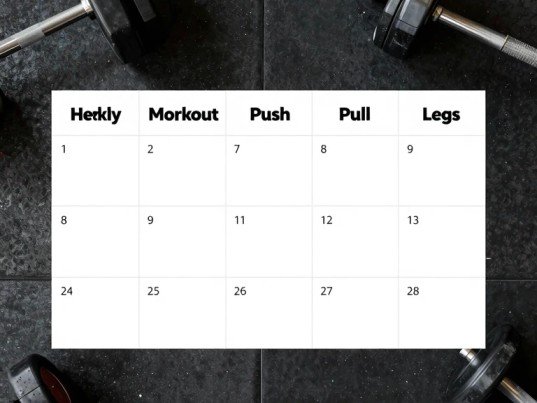
3-Day Push Pull Legs Schedule — Best for Beginners and Busy People
| Day | Workout | Muscle Groups Trained |
|---|---|---|
| Monday | Push | Chest, Shoulders, Triceps |
| Tuesday | Rest / Light Cardio | — |
| Wednesday | Pull | Back, Biceps, Rear Delts |
| Thursday | Rest / Light Cardio | — |
| Friday | Legs | Quads, Hamstrings, Glutes, Calves |
| Saturday | Rest | — |
| Sunday | Rest | — |
Each muscle group trains once per week with plenty of recovery in between. This is the right starting point if you’re new to PPL or coming back after a break.
5-Day PPL Schedule — Intermediate, Higher Frequency
| Day | Workout |
|---|---|
| Monday | Push |
| Tuesday | Pull |
| Wednesday | Legs |
| Thursday | Push |
| Friday | Pull |
| Saturday & Sunday | Rest |
Push and pull get hit twice per week. Legs stay at once. This is a good middle ground when you want more frequency but can’t commit to 6 days.
6-Day PPL Schedule — Advanced, Maximum Weekly Volume
| Day | Workout | Primary Emphasis |
|---|---|---|
| Monday | Push A | Flat pressing, chest focus |
| Tuesday | Pull A | Deadlift, horizontal pulling |
| Wednesday | Legs A | Squat, quad emphasis |
| Thursday | Push B | Incline pressing, shoulder focus |
| Friday | Pull B | Pull-up, vertical pulling |
| Saturday | Legs B | Hinge, hamstring and glute focus |
| Sunday | Rest | Full recovery |
Every muscle group trains twice per week. This version only works well if sleep, nutrition, and life stress are actually manageable. If those aren’t in order, start at 3 days and build from there.
Full Push Pull Legs Workout Tables — Exercises, Sets, and Reps
These are complete, ready-to-use workouts — not vague exercise lists. The push pull legs workout routine below covers both the beginner 3-day structure and the advanced A/B split for the 6-day version.
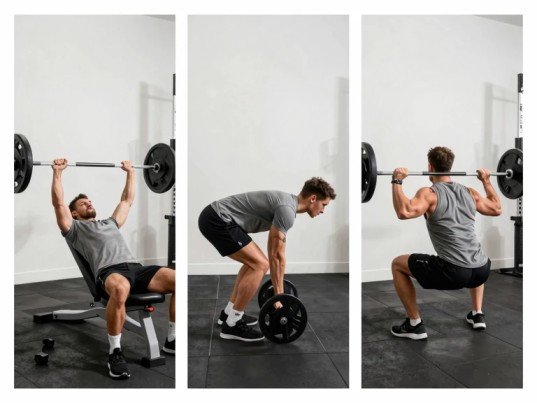
Push Day A — Chest, Shoulders, Triceps
| Exercise | Sets | Reps | Rest | Target Muscle |
|---|---|---|---|---|
| Barbell Bench Press | 4 | 6–8 | 90–120 sec | Pecs, front delts, triceps |
| Incline Dumbbell Press | 3 | 8–10 | 90 sec | Upper chest, front delts |
| Overhead Press (BB or DB) | 3 | 8–10 | 90 sec | Lateral + front delts, triceps |
| Cable Lateral Raise | 4 | 12–15 | 60 sec | Lateral deltoids |
| Tricep Rope Pushdown | 3 | 10–12 | 60 sec | Triceps lateral + long head |
| Overhead Tricep Extension | 3 | 10–12 | 60 sec | Triceps long head |
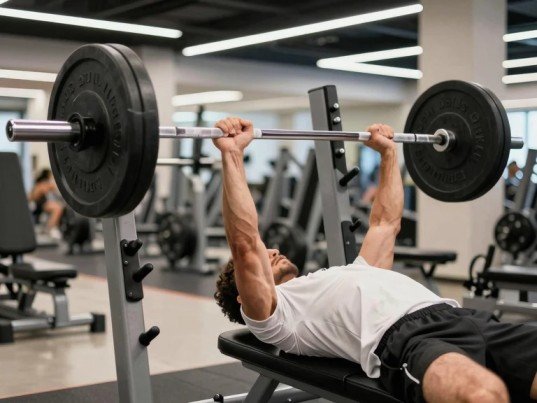
Form tip: On bench press — retract your shoulder blades before you unrack, keep feet flat, touch the bar to mid-chest. On overhead press — brace your core hard, avoid letting your lower back arch excessively.
Push Day B — Advanced 6-Day Split
| Exercise | Sets | Reps | Rest | Target Muscle |
|---|---|---|---|---|
| Incline Barbell Bench Press | 4 | 6–8 | 90–120 sec | Upper chest, front delts |
| Low-to-High Cable Fly | 3 | 12–15 | 60 sec | Sternal (lower) pecs |
| Dumbbell Shoulder Press | 3 | 8–10 | 90 sec | All three delt heads |
| Face Pull | 3 | 15–20 | 60 sec | Rear delts, external rotators |
| Close-Grip Bench Press | 3 | 8–10 | 90 sec | Triceps, inner chest |
| Leaning Lateral Raise | 3 | 12–15 | 60 sec | Lateral deltoids |
Pull Day A — Back, Biceps, Rear Delts
| Exercise | Sets | Reps | Rest | Target Muscle |
|---|---|---|---|---|
| Conventional Deadlift | 4 | 5–6 | 2–3 min | Full posterior chain |
| Barbell Bent-Over Row | 4 | 6–8 | 90 sec | Lats, rhomboids, traps |
| Pull-Up or Lat Pulldown | 3 | 8–10 | 90 sec | Lats, biceps |
| Seated Cable Row | 3 | 10–12 | 60–90 sec | Mid-back, lats |
| Barbell or Dumbbell Curl | 3 | 10–12 | 60 sec | Biceps long + short head |
| Hammer Curl | 3 | 10–12 | 60 sec | Brachialis, brachioradialis |
Form tip: On deadlifts — hinge from the hips, keep a neutral spine, push the floor away rather than thinking about pulling the bar up. On rows — lead with your elbow, squeeze your shoulder blade at the top, avoid using momentum.
Pull Day B — Advanced 6-Day Split
| Exercise | Sets | Reps | Rest | Target Muscle |
|---|---|---|---|---|
| Romanian Deadlift | 4 | 8–10 | 90 sec | Hamstrings, glutes, lower back |
| Chest-Supported DB Row | 4 | 8–10 | 90 sec | Lats, rhomboids (no spinal load) |
| Cable Pullover | 3 | 12–15 | 60 sec | Lats, serratus anterior |
| Reverse Pec Deck | 3 | 12–15 | 60 sec | Rear deltoids |
| Incline Dumbbell Curl | 3 | 10–12 | 60 sec | Biceps (stretched position) |
| Rope Hammer Curl | 3 | 10–12 | 60 sec | Brachialis |
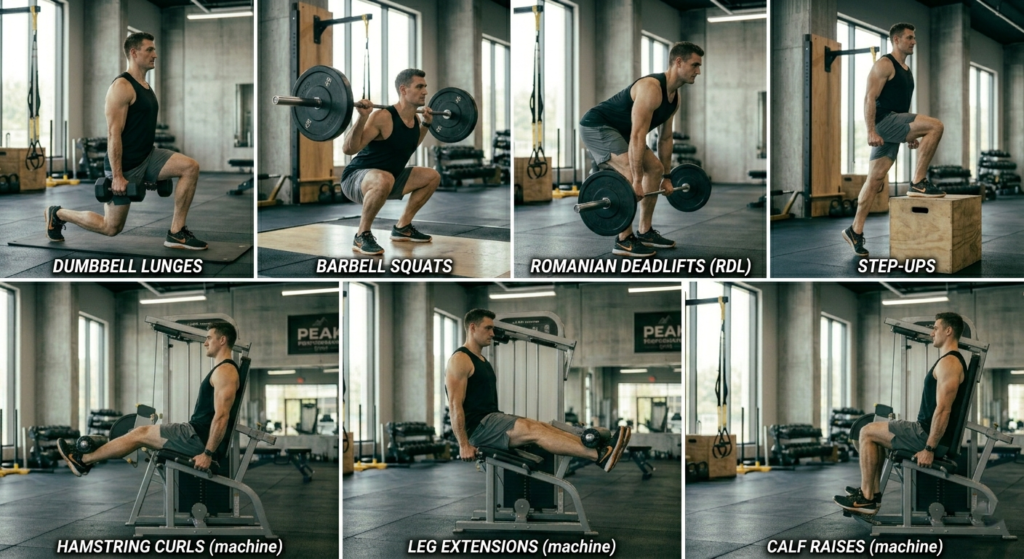
Legs Day A — Quads, Hamstrings, Glutes, Calves
| Exercise | Sets | Reps | Rest | Target Muscle |
|---|---|---|---|---|
| Barbell Back Squat | 4 | 6–8 | 2–3 min | Quads, glutes, core |
| Romanian Deadlift | 3 | 8–10 | 90 sec | Hamstrings, glutes |
| Leg Press | 3 | 10–12 | 90 sec | Quads, glutes |
| Seated Hamstring Curl | 4 | 10–15 | 60 sec | Hamstrings (isolated) |
| Walking Lunges | 3 | 10–12/leg | 60 sec | Quads, glutes, balance |
| Standing Calf Raise | 4 | 12–15 | 60 sec | Gastrocnemius |
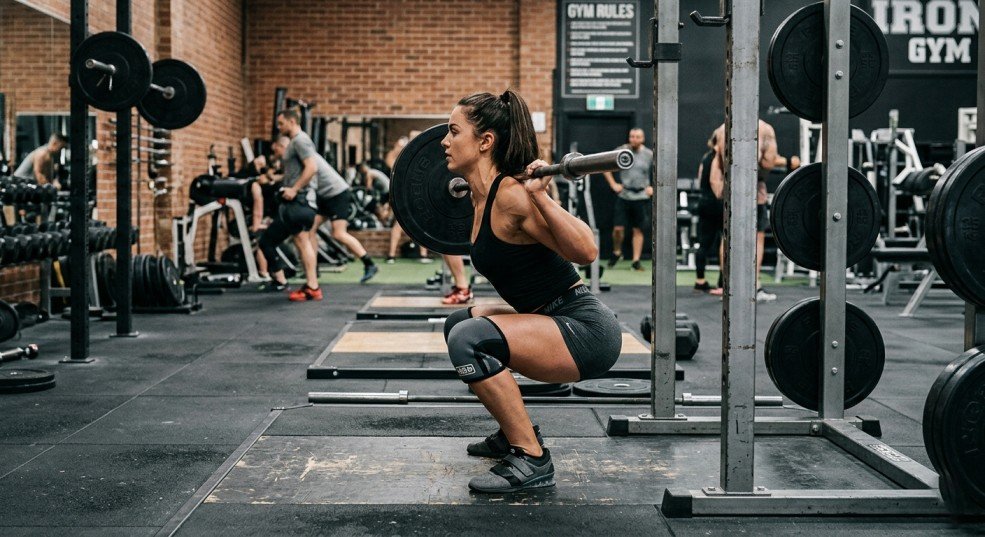
Form tip: On squats — sit into your hips, keep knees tracking over toes, maintain a neutral spine throughout. Don’t let your heels rise or your chest cave forward.
Legs Day B — Advanced 6-Day Split, Posterior Emphasis
| Exercise | Sets | Reps | Rest | Target Muscle |
|---|---|---|---|---|
| Hack Squat or Front Squat | 4 | 6–8 | 2–3 min | Quads (heavy emphasis) |
| Hip Thrust | 4 | 8–10 | 90 sec | Glutes (primary) |
| Bulgarian Split Squat | 3 | 8–10/leg | 90 sec | Quads, glutes unilaterally |
| Leg Extension | 3 | 12–15 | 60 sec | Quads (isolation) |
| Lying Hamstring Curl | 3 | 12–15 | 60 sec | Hamstrings |
| Seated Calf Raise | 4 | 15–20 | 60 sec | Soleus |
Progressive Overload: The Real Engine Behind Push Pull Legs Results
Here’s something a lot of people figure out too late: the push pull legs workout routine isn’t magic by itself.
Progressive overload is what actually builds muscle.
The split just gives you an intelligent framework to apply overload consistently. Without it, you’re doing random exercise with no direction.
Progressive overload means increasing the demand on your muscles over time. It doesn’t always mean adding weight to the bar. It can mean:
Getting one more rep than last week on the same weight. Completing the same reps with 30 seconds less rest. Increasing your range of motion on an exercise. Adding one more working set to a movement you’ve mastered.
How to track it without overcomplicating things: After every session, write down the exercise, the weight, your sets, and your reps. A notes app works fine. Apps like Strong or Setgraph make it even easier. A paper notebook works just as well — nothing crashes, nothing needs charging.
If you benched 3 sets of 8 at 80 lbs last week, aim for 3×9 this week. Once you consistently hit the top of your rep range, bump the weight up by 5 lbs.
Training volume — the actual math: Sets × Reps × Load = Total Training Volume.
Three sets of 10 at 135 lbs = 4,050 lbs of total volume. Next week, 3×10 at 140 lbs = 4,200 lbs. That’s a progression. That’s what drives growth.
People who plateau on PPL almost always stopped tracking. They’re guessing week to week, and guessing is just spinning your wheels with extra steps.
The 5 Biggest Mistakes People Make on the Push Pull Legs Workout Routine
Mistake 1: Skipping Leg Day
I skipped it for almost a year. Legs are uncomfortable. They’re exhausting. You can barely walk the next day when you do them right.
But here’s the thing most people don’t realize — squats and deadlifts trigger more testosterone and growth hormone release than any upper body movement. Skipping legs doesn’t just leave your lower body underdeveloped. It actually limits how fast your upper body grows too. Don’t skip legs. It’s not optional.
Mistake 2: Doing Too Much Accessory Work, Not Enough Compound Work
Lateral raises feel satisfying. Bicep curls feel productive. And they’re fine — as finishers.
But if you’re spending 60% of push day on isolation exercises and only 40% on your bench press and overhead press, you’ve got the priorities backwards. Compounds first, always. Accessories fill the gaps — they don’t lead the session.
Mistake 3: Jumping to a New Program After 3 Weeks
This one kills more results than anything else.
You don’t see dramatic changes by week 3, so you switch to something new. But weeks 1 through 3 on any program are mostly about your nervous system learning the movement patterns. Visible muscle changes start appearing around weeks 8 to 12. If you bail before then, you never actually gave the program a fair run.
Stick with it for 8 to 12 weeks minimum. That’s non-negotiable.
Mistake 4: Acting Like Recovery Doesn’t Matter
Muscle isn’t built during training. It’s built during the recovery that follows.
Running a 6-day push pull legs split on 5 hours of sleep with 90 grams of daily protein isn’t hardcore — it’s just ineffective. You’re creating the stimulus for growth but never giving your body what it needs to actually build. Sleep, nutrition, and rest are part of the program. Treat them that way.
Mistake 5: Doing More Sets Than Your Body Can Recover From
More isn’t always better. This one surprises people.
Someone doing 12 quality sets per muscle group per week — well-slept, well-fed, consistent — will outgrow someone grinding through 25 half-assed sets on poor recovery every time. Match your training volume to what your actual life supports. Be honest with yourself about that.
Nutrition for the Push Pull Legs Workout Routine
You don’t need a complicated meal plan to make the push pull legs workout routine work. A few basics done consistently will cover 90% of the nutrition side.
Protein: Aim for 0.7 to 1.0 grams per pound of bodyweight per day — that’s 1.6 to 2.2 grams per kilogram. For a 180-pound person, that’s 126 to 180 grams daily. Chicken, eggs, fish, Greek yogurt, cottage cheese, and whey protein all get you there without much effort.
Calories for muscle gain: A modest surplus of 200 to 300 calories above maintenance. Enough to support growth without excess fat gain.
Calories for fat loss: A 300 to 500 calorie deficit, with protein kept at the higher end of the range to protect muscle mass.
Pre-workout meal: A protein and carbohydrate combo 60 to 90 minutes before training supports performance. Oats and a protein shake. Rice with chicken. A banana and some Greek yogurt. Nothing complicated.
Post-workout: Protein within 1 to 2 hours of training supports recovery. The old “30-minute anabolic window” idea has been largely debunked — total daily protein matters far more than timing — but eating well around your sessions still makes a difference.
Water: Even 1 to 2% dehydration measurably reduces strength output. Drink water consistently throughout the day, not just during training.
Macronutrient Reference Table
| Goal | Daily Calories | Daily Protein | Carbs | Fat |
|---|---|---|---|---|
| Muscle Gain | Maintenance +200–300 | 0.8–1.0g/lb | 40–50% of cals | 25–30% of cals |
| Fat Loss | Maintenance −300–500 | 0.9–1.1g/lb | 30–40% of cals | 25–35% of cals |
| Body Recomposition | Near maintenance | 1.0–1.1g/lb | 35–45% of cals | 25–30% of cals |
Need a ready-made meal plan that lines up with these numbers? This 7 day high protein diet plan for weight loss maps out exactly what to eat each day so you can focus entirely on your training.
PPL for Fat Loss vs. Muscle Building — Does the Routine Change?
Short answer: the push pull legs workout routine stays the same. What changes is your nutrition.
For fat loss: Keep the same compound movements. Don’t dramatically cut your training volume — your body needs a clear signal to hold onto muscle tissue even in a caloric deficit. Maintain intensity on your main lifts. Add light cardio on rest days if it helps you hit your calorie target without destroying your recovery.
For muscle building: Slightly higher training volume works well when your sleep and nutrition support it. Focus progressive overload efforts on compound lifts rather than chasing pump from isolation work.
For body recomposition: The push pull legs workout routine is genuinely one of the best structures for this goal. High training frequency keeps muscle-building stimulus consistent. Built-in recovery windows between sessions targeting the same muscles prevent overtraining. The structure does the thinking for you — you just execute it.
If you are still figuring out whether to eat in a surplus or a deficit while running this program, my full breakdown on bulking vs cutting in modern bodybuilding will help you make that decision with confidence.
How Long Should You Follow the Push Pull Legs Workout Routine?
At minimum, 8 to 12 weeks before making any major changes. Here’s what you can realistically expect:
Weeks 1–3: You’re learning movement patterns and adjusting to the training volume. Strength numbers may feel inconsistent. Muscle soreness (DOMS) can be significant early on. This is normal — it means adaptation is happening.
Weeks 4–7: Movements start to feel smooth and automatic. Weights climb consistently. You stop dreading sessions and start looking forward to them. This is when the push pull legs workout routine begins clicking.
Weeks 8–12: Noticeable strength increases on major compound lifts. Visual changes in muscle size and definition become obvious — especially when nutrition has been consistent.
After 12 weeks: Reassess and evolve. Maybe add frequency (3-day to 5-day). Maybe increase volume on your weakest sessions. Maybe swap exercise variations to hit different angles. The framework stays — you just refine it.
Expect measurable strength improvements in 4 to 8 weeks. Noticeable visual changes typically appear between weeks 8 and 12, depending on starting point, nutrition, and sleep quality.
When and How to Deload on PPL
A deload is a planned, intentional week of reduced training load — usually every 4 to 8 weeks depending on how intensely you’re training.
Signs it’s time for a deload:
Weights that felt easy are suddenly a grind even when you’re fresh. Muscle soreness between sessions isn’t clearing up like it used to. Strength numbers are going backwards. You’re starting to dread going to the gym — and not in the normal “it’s hard” way, but in a deeper, flatter kind of way.
How to deload without losing momentum:
Either cut total sets by 40 to 50% while keeping the same weights. Or keep the same sets but reduce loads by 20 to 30%. Both approaches work. The point is active recovery — staying in motion, keeping movement patterns grooved, but giving your joints, nervous system, and muscles a genuine break.
One week. Then back to your normal training. You’ll almost always come back feeling stronger.
Best Workout Tracker Apps for Push Pull Legs
Tracking your sessions isn’t optional if you want the push pull legs workout routine to produce consistent results. Without data, you’re guessing.
Strong (iOS/Android): Most popular for a reason. Clean, fast, easy to log sets and see progress graphs. The free version handles everything most lifters need.
Setgraph: Lightweight and no-nonsense. Good if you want pure tracking without extra features in the way.
JEFIT: Better analytics. Useful for people who want to see volume by muscle group, weekly load charts, and detailed performance breakdowns.
Paper training log: Genuinely underrated. Nothing crashes. Nothing dies on you mid-session. Writing your lifts down by hand also improves how well you remember and process them.
Whichever you pick — use it every session, without exception.
Push Pull Legs vs. Other Training Splits
How does the push pull legs workout routine stack up against other popular splits? Here’s an honest comparison.
| Split | Days/Week | Times Each Muscle Trains | Best For | Biggest Weakness |
|---|---|---|---|---|
| PPL — 3 Day | 3 | 1x/week | Beginners, busy people | Lower frequency limits advanced growth |
| PPL — 6 Day | 6 | 2x/week | Intermediate to advanced | Demands excellent recovery |
| Upper/Lower | 4 | 2x/week | Intermediate lifters | Less per-session volume |
| Bro Split | 5 | 1x/week | Isolation focus, variety | Very low weekly muscle frequency |
| Full Body | 3 | 3x/week | Beginners, athletes | Hard to scale volume as you advance |
| Arnold Split | 6 | 2x/week | Advanced bodybuilding | Complex to program and adjust |
The biggest advantage of PPL is how it scales. You can run it at 3 days per week as a beginner and the exact same logical structure scales all the way to 6 days for advanced training. Most other splits are more rigid — you’d need to completely rethink the program as you progress.
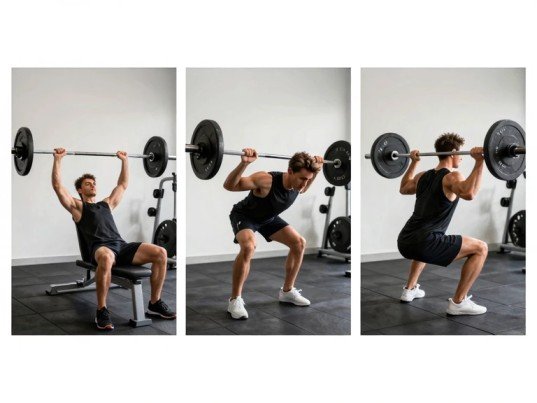
Final Thoughts: Stop Overthinking and Start Training
If you’ve been bouncing between programs looking for the perfect split, the push pull legs workout routine is about as close to a proven, no-fuss answer as this sport has to offer.
It doesn’t require 10 machines. It doesn’t need a 90-minute session to work properly. And it scales — from 3 days per week when life is busy to 6 days when you’re locked in and your recovery can handle it.
What it does need is consistency. Honest effort on the compound lifts. And enough patience to run it for 10 to 12 weeks before deciding whether it’s “working.”
The first time I ran PPL properly — real tracking, real sleep, real nutrition — my bench went from 135 lbs to 165 lbs in 10 weeks. My deadlift moved from 185 to 255. Nothing dramatic in the grand scheme of lifting. But for someone who’d been spinning their wheels for six months, it felt like something finally switching on.
Start simple. Track every session. Eat your protein. Sleep 7 to 9 hours.
Repeat for 12 weeks.
That really is all there is to it.
About the Author
I’m Saad — and I started out exactly like most people reading this. No real plan, inconsistent training, and way too much time wasted following random advice online.
It took me longer than I’d like to admit to figure out that simple, structured training beats everything else. Once I stopped chasing the next shiny program and actually committed to understanding how training works — things started clicking.
I write to share what I’ve learned the hard way — no fake science, no fluff, just honest guidance that actually works in the real world.
Got a question? Drop a comment below — I read every single one
This article is for general informational and educational purposes only. It reflects evidence-based fitness principles and personal training experience. It does not constitute medical advice. Always consult a qualified healthcare provider or certified personal trainer before starting a new exercise program, especially if you have existing health conditions or injuries.
Frequently Asked Questions About the Push Pull Legs Workout Routine
Is the push pull legs workout routine good for beginners?
Yes — particularly the 3-day version. The push pull legs workout routine teaches the foundational movement patterns every serious lifter needs: horizontal push, vertical push, horizontal pull, vertical pull, hip hinge, and squat. If you’ve never safely used a barbell, spend 4 to 6 weeks learning basic form first, then transition to PPL.
How many days a week should I train on PPL?
Start with 3 days (Monday/Wednesday/Friday) if you’re newer to training or returning after time off. Move to 5 days once your recovery is consistently solid. Only attempt the 6-day version if sleep, nutrition, and stress are genuinely well-managed — not just “pretty good.”
What muscles does push day target?
Push day works the pectoralis major and minor (chest), anterior and lateral deltoids (front and side shoulders), and all three heads of the triceps. Supporting muscles include the serratus anterior and core stabilizers engaged during pressing movements.
What muscles does pull day target?
Pull day works the latissimus dorsi, rhomboids, mid and lower trapezius, teres major, rear deltoids, biceps brachii, brachialis, and brachioradialis. The erector spinae is also significantly recruited on deadlift variations.
Can I add cardio to the push pull legs workout routine?
Yes. The push pull legs workout routine pairs well with cardio — you just need to be strategic about placement. Keep intense cardio sessions away from heavy leg days. Low-impact steady-state work like walking or light cycling on rest days supports recovery actively without cutting into your muscle-building capacity.
How much weight should I use?
Pick a weight that brings you to roughly 1 to 3 reps shy of complete failure by the end of each set — this is called “reps in reserve” (RIR). If you can cruise through every rep without real effort, it’s too light. If you’re failing before hitting the minimum rep target, it’s too heavy.
Is PPL effective for women?
Completely. The push pull legs workout routine is built around movement patterns, not gender. Women may want to add extra glute and hamstring emphasis to leg sessions — hip thrusts, cable kickbacks, sumo deadlifts — but the core structure works identically. Progressive overload builds muscle regardless of gender.
Why does PPL make me so sore when I start?
Delayed onset muscle soreness (DOMS) is normal in the first 2 to 3 weeks of any new training program. It reflects adaptation, not damage or overtraining. It fades as your body adjusts. Keep training consistently — adjust the intensity down if soreness is severe enough to affect your movement quality, but don’t stop.
What’s the difference between Push A and Push B in the 6-day split?
Having two distinct push sessions creates variety in exercise selection and prevents repetitive stress injuries from doing the exact same movements six times per week. Push A might prioritize flat bench press as the primary compound. Push B prioritizes incline pressing or shoulder pressing. Different angles, different stimulus, better overall development.
Can I run the push pull legs workout routine at home without equipment?
Yes, with adjustments. For push: push-up progressions (standard, decline, archer), pike push-ups, chair dips. For pull: inverted rows under a table, resistance band rows, pull-ups on a doorframe bar. For legs: goblet squats with a heavy object, walking lunges, single-leg deadlifts, hip thrusts with a loaded backpack. Progress is slower without a barbell, but the structure of the push pull legs workout routine stays completely valid.