7-Day Diet Plan for Hashimoto’s Disease: What Actually Helped Me Stop Fighting My Own Body
Medical Disclaimer: This article is written for informational and educational purposes only. It is not a substitute for professional medical advice, diagnosis, or treatment. Always consult your doctor, endocrinologist, or registered dietitian before changing your diet — especially if you have Hashimoto’s thyroiditis or take thyroid medication such as levothyroxine.
Table of Contents
-
-
-
-
- Key Nutrients Your Thyroid Needs Most
- Best Foods to Eat on a Hashimoto’s Diet
- Foods to Limit or Avoid (With Real Nuance)
- 7-Day Diet Plan for Hashimoto’s Disease — Full Meal Plan
- The Gut-Thyroid Axis: Why Gut Health Runs the Show
- Exercise With Hashimoto’s: What I Got Completely Wrong
- Common Mistakes That Kept Me Sick Longer
- Hashimoto’s Diet Foods Quick-Reference Table
- Where I Am Now
- Frequently Asked Questions
-
Key Nutrients Your Thyroid Needs Most
I was tired. Not “I need another coffee” tired. I mean the kind of tired where you sleep nine hours, wake up, and feel like you never went to bed. Like someone drained your battery overnight and forgot to tell you.
My hair was coming out in clumps in the shower. I gained almost fifteen pounds in four months without changing how I ate. My hands were always cold. I’d forget words mid-sentence — not little words, but words I’d known my whole life. I once stood in my own kitchen for a full minute trying to remember what I had walked in to get.
My doctor told me I was probably just stressed. Another suggested depression. I tried antidepressants for six weeks. They didn’t help — the problem wasn’t in my head. It was in my thyroid.
It took a full thyroid panel — specifically one that included TPO antibodies — to finally get an answer: Hashimoto’s thyroiditis. My immune system had been quietly attacking my own thyroid gland, and nobody had thought to check.
If you’re reading this, you probably know exactly what I’m describing. You’ve probably already spent hours searching for a proper 7-day diet plan for Hashimoto’s disease — only to find completely contradictory advice. Go gluten-free. Don’t bother with gluten-free. Avoid cruciferous vegetables. Eat more cruciferous vegetables. It is exhausting on top of already being exhausted.
So here’s what I’m going to share: what I actually did, what made a real difference, what was a complete waste of time, and the Hashimoto’s disease diet plan I now use as a template — not a rigid script — to feel like a functional human being again.

What Is Hashimoto’s Disease and Why Does Food Matter?
Hashimoto’s thyroiditis is an autoimmune condition where your immune system mistakenly identifies your own thyroid tissue as a threat and attacks it over time. This chronic inflammation gradually damages the thyroid gland’s ability to produce hormones, eventually causing hypothyroidism — where your thyroid can’t make enough hormone to regulate your metabolism, mood, energy, and body temperature.
Here is what most basic explanations miss: Hashimoto’s is not just a thyroid problem. It is an immune system problem. That changes everything about what you eat on a Hashimoto’s disease diet plan.
Research has identified what scientists call the gut-thyroid axis — a two-way communication pathway between your digestive system and thyroid gland. People with Hashimoto’s frequently show disruptions in their gut microbiome, including intestinal permeability (“leaky gut”), where a compromised gut lining allows particles into the bloodstream that trigger immune reactions — worsening thyroid antibody levels and fueling the inflammation attacking your thyroid.
This means following a Hashimoto’s thyroiditis meal plan isn’t just about getting enough selenium or cutting out bread. It’s about:
-
-
- Reducing systemic inflammation
- Repairing the gut lining
- Stabilizing immune response
- Delivering the micronutrients needed to convert and use thyroid hormones properly
-
I didn’t understand any of this when I was first diagnosed. I stopped eating gluten for two weeks, felt about the same, decided it didn’t work, and went back to eating pasta. It took working with a functional medicine dietitian — and a lot of personal trial and error — before I understood what my body actually needed.
The Blood Sugar–Cortisol–Thyroid Connection Nobody Talks About
Here is the piece almost no anti-inflammatory diet for Hashimoto’s article covers — and it made the biggest difference for me personally.
Your cortisol levels directly affect your thyroid function. Your blood sugar directly affects your cortisol levels.
When blood sugar drops — from skipping meals, eating mostly refined carbohydrates, or going too long without food — your body releases cortisol as a stress response. Chronically elevated cortisol suppresses thyroid hormone production and worsens the immune dysregulation driving Hashimoto’s. It also increases intestinal permeability, circling right back to that gut-thyroid connection.
For about six months after my diagnosis, I was avoiding processed food, eating vegetables, doing everything I thought was right. But I was also skipping breakfast, surviving on black coffee until noon, then crashing and eating whatever was fastest. My blood sugar was a rollercoaster all day. My cortisol was through the roof. And I kept wondering why I still felt terrible.
The moment I started eating a proper breakfast — protein, fat, and complex carbohydrates — within an hour of waking, and eating every three to four hours throughout the day, my afternoon energy crashes began easing within two weeks. Not a dramatic cure. But the first time I felt the diet was actually doing something.
This is exactly why the 7-day diet plan for Hashimoto’s disease below is built the way it is. Every single meal includes protein, fat, and slow-burning carbohydrates. Blood sugar stability isn’t an afterthought here — it’s the entire foundation.
Levothyroxine and Food: What You Must Know First
If you take levothyroxine — the most common thyroid hormone replacement — the timing of when you eat relative to your medication matters more than most people realize.
I learned this the hard way. I was taking my medication, then immediately making a smoothie with almond milk (which often contains added calcium) and eating Greek yogurt alongside it. Calcium interferes significantly with levothyroxine absorption. I was neutralizing part of my medication dose every single morning without knowing it.
Standard guidance: take levothyroxine on an empty stomach first thing in the morning, then wait at least 30 minutes before eating — ideally 60 minutes. Coffee, calcium-rich foods, high-fiber foods, iron supplements, and soy can all reduce absorption if consumed too close to your dose.
When my dietitian caught this mistake, I adjusted the timing — and my TSH levels improved meaningfully at my very next blood draw. The medication has to be absorbed to actually work. Talk to your prescribing doctor about this specifically. Many general practitioners don’t mention it unless you ask.
Key Nutrients Your Thyroid Needs Most
Before we get into the full foods for Hashimoto’s disease meal plan, here’s what your thyroid specifically needs — because loading up on these nutrients is just as important as removing trigger foods.
Selenium
The most critical mineral for thyroid health that most people haven’t thought enough about. Your thyroid contains the highest concentration of selenium of any organ in your body. Selenium protects the thyroid from oxidative damage and is essential for converting inactive T4 into active T3 — the form your cells actually use. Research published in the Journal of Clinical Endocrinology & Metabolism has shown selenium supplementation can meaningfully reduce TPO antibody levels. (Source: JCEM Selenium Study)
Just 1–2 Brazil nuts per day can meet your daily selenium requirement. Do not eat handfuls. Selenium toxicity is real — it causes hair loss, brittle nails, and nerve damage. One or two nuts. That’s it.
Zinc
Works alongside selenium in thyroid hormone conversion and regulates immune function. Low zinc is common in hypothyroidism. Food sources: pumpkin seeds, oysters, grass-fed beef, chickpeas.
Vitamin D
Deficiency has a strong documented association with autoimmune thyroid disease. (Source: Frontiers in Endocrinology) If you’re mostly indoors or live in a northern climate, your levels are likely low. Ask your doctor for a 25-OH vitamin D test — it’s simple and often missed in routine thyroid panels.
Magnesium
Supports thyroid hormone production and helps with Hashimoto’s secondary symptoms — poor sleep, anxiety, muscle cramps, and constipation. I started magnesium glycinate at night and noticed improved sleep quality within a week. Food sources: dark leafy greens, pumpkin seeds, avocado, dark chocolate (70%+ cacao).
Omega-3 Fatty Acids
Reduce systemic inflammation and specifically lower C-reactive protein — an inflammatory marker frequently elevated in Hashimoto’s. Best dietary sources: wild-caught salmon, sardines, walnuts, flaxseeds, chia seeds.
Iron
Essential for thyroid peroxidase (TPO) activity — literally the enzyme Hashimoto’s antibodies attack. Iron deficiency makes thyroid hormone production even harder. Women with Hashimoto’s are especially at risk. If you’re experiencing significant hair loss and fatigue despite “normal” thyroid numbers, ask for a full iron panel including ferritin.
Best Foods to Eat on a Hashimoto’s Diet
Think of every meal as doing three things simultaneously: calming immune activity, feeding beneficial gut bacteria, and delivering the micronutrients your thyroid needs to function.
Prioritize these foods on your Hashimoto’s thyroiditis meal plan:
-
-
- Wild-caught fatty fish (salmon, sardines, mackerel, trout) — omega-3s, selenium, and vitamin D in one go. Aim for at least 3 servings per week.
- Colorful vegetables in wide variety — feed gut bacteria that regulate immune function
- Cooked cruciferous vegetables (broccoli, cauliflower, kale) — powerful antioxidants with reduced goitrogenic load versus raw
- Sweet potatoes, beets, quinoa, basmati rice — slow-burning complex carbohydrates for blood sugar stability
- Fermented foods (kimchi, sauerkraut, coconut yogurt, kefir) — introduce beneficial bacteria supporting gut lining integrity
- Extra virgin olive oil — anti-inflammatory polyphenols; use as your primary cooking fat
- Bone broth — provides glycine, proline, and collagen that directly support gut lining repair. One of the most underused tools in any Hashimoto’s diet.
- Brazil nuts (1–2 daily) — most reliable food source of selenium
-
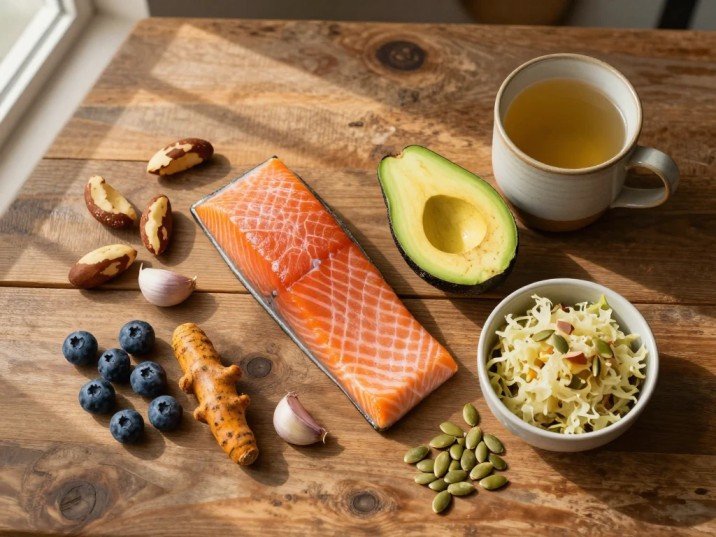
Best Foods For Hashimoto’s Disease, 7-Day Diet Plan for Hashimoto’s Disease Foods to Limit or Avoid (With Real Nuance)
Gluten
The most debated topic in Hashimoto’s nutrition — and the honest answer is nuanced. Gluten shares molecular similarities with thyroid tissue. In people with co-existing celiac disease or non-celiac gluten sensitivity, eating it can trigger immune reactions that worsen thyroid antibodies. A 2019 pilot study found a gluten-free diet reduced TPO antibodies in drug-naive women with Hashimoto’s. (Source: PubMed)
But going gluten-free is not universally required. The responsible approach: a deliberate 6–8 week elimination, careful symptom tracking, then reintroduction. I did this twice. The first time I eliminated too many things at once and couldn’t tell what was helping. The second time I removed only gluten for eight weeks — my bloating reduced noticeably. That was enough information for me to stay mostly gluten-free long-term.
Soy
Contains isoflavones that may interfere with thyroid peroxidase activity, particularly with iodine deficiency. Occasional small amounts are likely fine. Daily large servings of soy milk, tofu, or edamame are worth reducing if you’re not improving.
Dairy
Lactose intolerance is more common in people with Hashimoto’s than in the general population. A 2013 study found lactose elimination improved TSH levels in Hashimoto’s patients who were lactose intolerant. (Source: Springer) Try removing dairy for 4–6 weeks and track digestion, skin, and energy.
Raw Cruciferous Vegetables in Large Amounts
Broccoli, kale, cauliflower, and Brussels sprouts contain goitrogens that can interfere with iodine uptake in very high amounts. The critical nuance: cooking deactivates most goitrogenic compounds significantly. Cooked cruciferous vegetables are not only safe — they’re highly beneficial for Hashimoto’s patients.
Where people go wrong is the daily massive raw kale smoothie habit. I did this for three months thinking I was being healthy. My dietitian pointed it out. I switched to sautéed greens and my digestion improved within two weeks.
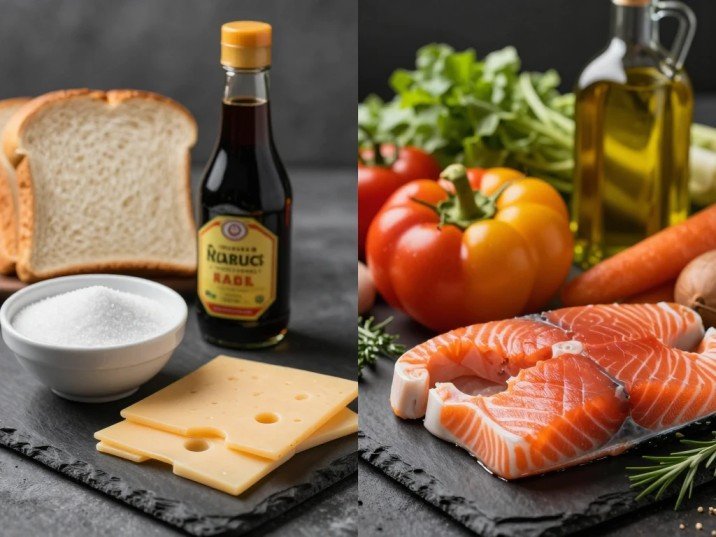
Foods to avoid in Hashimoto’s Disease, 7-Day Diet Plan for Hashimoto’s Disease (Full Proven Guide) -
Processed Foods, Added Sugars, and Refined Carbohydrates
The most universally harmful category for any Hashimoto’s diet. They promote inflammation, destabilize blood sugar, disrupt the gut microbiome, and feed chronic immune dysregulation. Non-negotiable to eliminate.
Excessive Iodine Supplementation
Iodine is essential for thyroid hormone production — but supplementing through kelp capsules or high-dose supplements can actually worsen Hashimoto’s thyroiditis. Do not self-supplement without confirmed deficiency through proper testing.
7-Day Diet Plan for Hashimoto’s Disease — Full Meal Plan
This 7-day diet plan for Hashimoto’s disease is a framework, not a prescription. Track your meals and symptoms as you go — the Notes app on your phone works fine. Apps like Cara Care or MySymptoms are more systematic if you want patterns. I used MySymptoms for four months and identified a mild egg sensitivity I’d never consciously noticed because it showed up across dozens of meals rather than any single dramatic reaction.
Every day below includes protein, fat, and complex carbohydrates at each meal for blood sugar stability. Fermented foods appear daily. Selenium-rich foods appear multiple times throughout the week — intentionally, because your thyroid needs consistent supply.
Day 1 — Monday: Start Gentle, Start Strong
Starting Day 1 of your Hashimoto’s disease diet plan, resist the urge to go extreme. Most people cut everything at once and feel deprived by Tuesday. Day 1 is about showing your body you’re on its side — not punishing it.
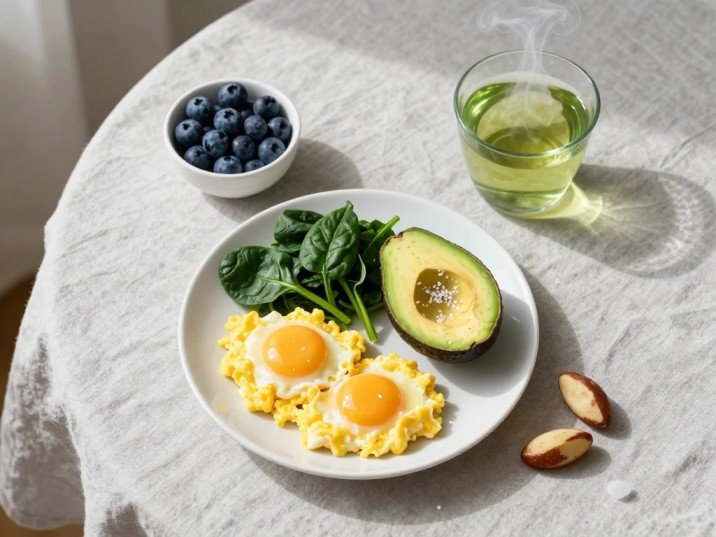
Breakfast (~380 calories) Two eggs scrambled slowly in olive oil with a generous handful of baby spinach folded in at the end. A quarter avocado on the side. A cup of fresh blueberries. Green tea or dandelion root coffee if you’re within your medication window. Dandelion root coffee has similar warmth to coffee without the cortisol spike — and I genuinely enjoy it now.
Mid-Morning Snack Two Brazil nuts and a small handful of pumpkin seeds. This combination hits selenium and zinc in one go. Set a phone reminder if you tend to forget snacks — blood sugar stability only works if you actually eat consistently.
Lunch (~460 calories) A large bowl of arugula topped with drained wild-caught canned salmon, sliced cucumber, cherry tomatoes, Kalamata olives, and a dressing of extra virgin olive oil, fresh lemon juice, and sea salt. Scatter pumpkin seeds on top for texture and additional zinc.
Afternoon Snack Half an avocado with sea salt and a few plain rice crackers. Simple, satisfying, prevents the 3pm processed-food reach.
Dinner (~520 calories) Baked wild salmon fillet with roasted sweet potato wedges and steamed broccoli — cooked, not raw — drizzled with olive oil and minced garlic. Season everything with turmeric and black pepper. Black pepper increases curcumin bioavailability from turmeric significantly — a small step with real anti-inflammatory impact.
Add two tablespoons of sauerkraut alongside dinner. If you’ve never eaten sauerkraut before, start small — your gut bacteria need time to adjust, and going too aggressive with fermented foods initially causes bloating.
Day 2 — Tuesday: Protein-Forward, Blood Sugar Steady
This is the day I learned to stop being afraid of eating enough. Under-eating with Hashimoto’s is a real problem — your body is already metabolically sluggish, and under-fueling sends stress signals that raise cortisol further and worsen everything.
Breakfast (~400 calories) A smoothie: one cup unsweetened coconut milk, one frozen banana, one tablespoon ground flaxseed, one scoop unflavored collagen peptides or pea protein, a small handful of spinach (you won’t taste it, I promise), and half a cup of frozen wild blueberries. Five minutes to make. Keeps you full until lunch without the mid-morning crash I used to hit like clockwork.
Snack One small apple with a tablespoon of natural almond butter. Fiber and fat together slow sugar absorption from the fruit — exactly the kind of blood sugar management a Hashimoto’s thyroid diet plan needs built in.
Lunch (~440 calories) Leftover salmon from Monday — prepping even one dinner saves you significantly on weeknights. Flake it over romaine lettuce with roasted beets, toasted walnuts, and a simple balsamic-olive oil dressing.
Snack A small bowl of coconut yogurt with a drizzle of raw honey and a sprinkle of cinnamon. Coconut yogurt with live active cultures delivers probiotics without dairy.
Dinner (~530 calories) Slow-cooked chicken thighs in bone broth with onion, garlic, turmeric, fresh ginger, and sea salt. Serve over cooked quinoa with roasted zucchini on the side. The broth base is doing double duty — anti-inflammatory and gut-supportive. This was one of the first meals where I genuinely felt nourished rather than just full. There is a difference, and you notice it when you haven’t felt it in a long while.
Day 3 — Wednesday: Anti-Inflammatory Focus
By Wednesday of my first real attempt at this Hashimoto’s disease diet plan, I was waiting for the dramatic transformation that health articles promise. It had not arrived. My energy was maybe marginally better. I was not magically healed.
That is normal — and I want to say it clearly, because I almost quit at this point. Dietary changes shift thyroid antibody levels over months, not days. Early wins are subtle: digestion improving slightly, the 3pm crash being less severe, sleeping a little more solidly. Those small signals are real data. Don’t dismiss them while waiting for something dramatic.
Breakfast (~360 calories) A Mediterranean-style omelet: two eggs, diced red onion, zucchini, fresh parsley, and a small crumble of feta cheese if you tolerate dairy. Cooked in olive oil. Side of orange slices — vitamin C enhances iron absorption, which matters especially if your iron tends to run low.
Snack Sliced cucumber with hummus. Choose a brand without unnecessary additives, or make your own with canned chickpeas, tahini, lemon, garlic, and olive oil.
Lunch (~450 calories) Turkey lettuce wraps using large romaine or butter lettuce leaves filled with ground turkey cooked with garlic, cumin, and paprika. Top with diced tomato, avocado slices, and fresh cilantro.
Snack A small handful of walnuts and a few dark chocolate chips — 70% cacao or higher. Walnuts are one of the best plant-based omega-3 sources. Dark chocolate above 70% provides meaningful magnesium without the sugar load of milk chocolate.
Dinner (~500 calories) Baked cod with roasted asparagus and white basmati rice. White basmati is gentler on the gut than high-fiber whole grains during an autoimmune flare — easier to digest without triggering gut inflammation. It is not the enemy. Dress everything with fresh lemon and dill.
Day 4 — Thursday: Gut Healing Day
We’re at the midpoint of your 7-day Hashimoto’s diet plan — and Thursday is specifically built around the gut-thyroid axis. Every food here is chosen as much for what it does to your gut microbiome as for its direct thyroid benefits.
Breakfast (~370 calories) Overnight oats made the night before: certified gluten-free rolled oats, unsweetened almond milk, chia seeds, and a tablespoon of ground flaxseed. Top with sliced kiwi in the morning. Kiwi is rich in vitamin C and has prebiotic properties that feed beneficial gut bacteria. If oats don’t agree with you — some Hashimoto’s patients react to the avenin protein in oats even in gluten-free versions — substitute chia seed pudding made the same way.
Snack A small bowl of mixed berries — blueberries, raspberries, strawberries. Their polyphenols specifically feed and support the gut microbiome.
Lunch (~480 calories) Lentil and vegetable soup: red lentils, diced carrot, celery, onion, garlic, fresh spinach, and bone broth as the base. Season with cumin, coriander, and turmeric. Lentils provide zinc, iron, and fiber — three things Hashimoto’s patients commonly need more of — while the bone broth base simultaneously supports gut lining repair.
Snack Two Brazil nuts with a cup of chamomile tea. Chamomile has mild anti-inflammatory properties and genuinely helps with the low-level anxiety that many people with Hashimoto’s experience as a symptom. I drink it most evenings now.
Dinner (~510 calories) Grass-fed ground beef or turkey stir-fried with bok choy, bell peppers, snap peas, fresh ginger, garlic, and coconut aminos — a soy-free alternative to soy sauce that tastes remarkably similar. Serve over cauliflower rice or regular rice. The ginger here is pulling real anti-inflammatory weight, not just flavoring things.
Day 5 — Friday: Mediterranean Inspiration
The Mediterranean diet is one of the most studied patterns for autoimmune and inflammatory conditions, aligning almost perfectly with what a good foods for Hashimoto’s disease plan requires: abundant olive oil, fatty fish, vegetables, legumes, and whole fruits. (Source: Advances in Nutrition)
Breakfast (~390 calories) A Greek-style yogurt bowl with coconut yogurt or goat’s milk yogurt, a drizzle of raw honey, a tablespoon of hemp seeds, sliced banana, and cinnamon. Hemp seeds are quietly one of the best Hashimoto’s foods: they contain magnesium, zinc, omega-3s, and all essential amino acids in a single tablespoon. I add them to almost everything now.
Snack A small portion of olives and sliced bell pepper. Olives are concentrated in anti-inflammatory polyphenols. Bell peppers are packed with vitamin C.
Lunch (~460 calories) Grilled chicken breast over a large Greek salad: romaine, cucumber, tomatoes, Kalamata olives, red onion, and extra virgin olive oil. A side of tzatziki made with coconut or goat yogurt, grated cucumber, garlic, and fresh dill.
Snack Trail mix: pumpkin seeds, sunflower seeds, a few almonds, and a small handful of unsweetened dried cranberries. Make a jar of this on Sunday and use it all week — it’s one of the easiest ways to keep snacking clean.
Dinner (~520 calories) Pan-seared wild-caught trout or sardines — sardines are one of the most underrated foods on any Hashimoto’s disease diet plan, rich in selenium, omega-3s, vitamin D, and calcium in one affordable package — with roasted root vegetables (parsnips, beets, and carrots in olive oil and rosemary) and steamed spinach wilted with garlic.
Day 6 — Saturday: Slower Morning, Deeper Nourishment
Saturdays in my house have become what I call healing Saturdays. Slower mornings. No rushing through breakfast. Time to actually taste what I’m eating and notice how it makes me feel. That mindfulness around food — small as it sounds — changed my relationship with eating in a way I didn’t expect.
Breakfast (~410 calories) Smoked wild-caught salmon on gluten-free toast or cucumber rounds — I use cucumber when feeling particularly grain-sensitive — spread with mashed avocado, topped with capers and a squeeze of lemon. Eggs on the side if you’re hungry. This breakfast feels genuinely indulgent and takes about eight minutes.
Mid-Morning A small cup of bone broth with sea salt and a pinch of turmeric. Drinking bone broth between meals — not just in soups — is one of the most underused strategies in a Hashimoto’s thyroid diet plan. It delivers glycine, proline, and collagen directly to your gut lining. I heat a mug and drink it like tea. It took a week to warm up to the idea. Now it’s a daily habit.
Lunch (~470 calories) A grain bowl: cooked quinoa, roasted sweet potato cubes, shredded kale massaged with olive oil and sea salt for two to three minutes — massaging breaks down cell walls, reduces goitrogenic compounds, and makes it significantly easier to digest — chickpeas, and a tahini-lemon dressing.
Snack A pear or apple with a tablespoon of almond butter.
Dinner (~540 calories) Slow-roasted chicken thighs with garlic, lemon, rosemary, and olive oil alongside a tray of mixed roasted vegetables. Keep it as simple as the week has been long. Save the bones in a zip-lock in the freezer — when you have enough, make bone broth. Four hours on the stovetop, almost no active effort, and you have one of the most gut-healing foods available for essentially zero cost.
Day 7 — Sunday: Reset, Reflect, and Prep for the Week
Completing your first 7-day diet plan for Hashimoto’s disease is itself an achievement worth acknowledging. Sunday is two things in this plan: the best meal of the week and the day you set yourself up for Monday through Friday all over again.
Breakfast (~420 calories) A big vegetable frittata: four eggs, whatever vegetables are left from the week — zucchini, bell pepper, spinach, mushrooms — and a handful of fresh herbs. Cooked in a cast-iron skillet in olive oil, finished under the broiler. This is the meal I make when the fridge is scattered and it always comes out better than expected.
Snack A cup of warm golden milk: unsweetened almond milk, one teaspoon turmeric, half a teaspoon ginger, a quarter teaspoon cinnamon, a pinch of black pepper, and a small drizzle of raw honey. Anti-inflammatory, calming, genuinely comforting. My sleep on evenings I drink this is measurably better.
Lunch (~450 calories) A Niçoise-inspired salad: hard-boiled eggs, tuna packed in olive oil, blanched green beans, Kalamata olives, cherry tomatoes, and small steamed potatoes. Simple, filling, fifteen minutes if you boil eggs and potatoes in advance.
Snack Sliced mango with a squeeze of lime juice and a pinch of chili powder. Mango provides vitamin C and natural digestive enzymes. Capsaicin in chili has documented anti-inflammatory properties. This combination sounds strange until you try it — then you make it every week.
Dinner (~510 calories) Wild-caught shrimp sautéed in garlic, lemon, and olive oil over white basmati rice with roasted asparagus. Shrimp is an overlooked thyroid food — containing selenium, zinc, and modest iodine in amounts that support thyroid function without the excess that can worsen Hashimoto’s.
Sunday Meal Prep (40 minutes, minimal active time): Hard-boil six eggs. Cook a cup of quinoa. Roast a tray of sweet potatoes and mixed vegetables. Make a jar of trail mix. These four tasks are the difference between eating well Monday through Friday and reaching for whatever is fastest at 7pm on a Tuesday night.
The Gut-Thyroid Axis: Why Gut Health Runs the Show
I want to come back to this because it is the piece most Hashimoto’s diet articles skim past — and it is genuinely the most important long-term lever you have.
If your gut lining is compromised, even the best-designed 7-day Hashimoto’s disease diet plan underdelivers — because nutrients need to be absorbed, not just consumed. A leaky gut allows food particles and bacterial fragments into your bloodstream, triggering immune reactions that directly worsen the autoimmune process destroying your thyroid tissue.
Supporting gut health alongside your Hashimoto’s diet means:
-
-
- Managing stress consistently — not occasionally doing yoga, but building genuine daily cortisol reduction into your routine. Cortisol directly increases intestinal permeability.
- Getting 7–9 hours of quality sleep — sleep deprivation alone raises inflammatory markers measurably
- Avoiding unnecessary antibiotics — they wipe out gut bacteria indiscriminately
- Considering a high-quality probiotic under professional guidance
- Potentially running a 6–8 week elimination protocol — removing gluten, dairy, soy, and eggs simultaneously, then reintroducing one category every two weeks to identify your personal triggers
-
Do not run that elimination casually. Do it with a dietitian who understands autoimmune conditions. Going overly restrictive without guidance is how people end up undernourished and still symptomatic.
For tracking, Cara Care and MySymptoms are both solid apps. I used MySymptoms for four months and identified a mild egg sensitivity I’d never consciously noticed, because it appeared in patterns across dozens of meals rather than any single dramatic reaction.
Exercise With Hashimoto’s: What I Got Completely Wrong
Before my diagnosis, I exercised intensely five or six days a week. After diagnosis, I assumed more exercise would help — better metabolism, better mood, more energy.
I was wrong — at least for a while.
Intense, prolonged exercise is a cortisol trigger. For Hashimoto’s patients, high cortisol from overexercising can worsen immune dysregulation and trigger autoimmune flares. I pushed through three months of hard workouts while wondering why I felt progressively worse. My functional medicine practitioner finally told me to stop and rest. It took two weeks of genuine rest before I noticed a meaningful difference.
The sweet spot for most Hashimoto’s patients: gentle to moderate movement. Walking, swimming, yoga, Pilates, light cycling, and moderate strength training. Not HIIT five days a week. Not long-distance running during a flare. Movement that leaves you feeling better when you finish — not depleted.
Before exercise: eat a light snack with protein and complex carbohydrates — a banana with almond butter, or a small bowl of rice with chicken. This prevents blood sugar crashes mid-workout.
After exercise: prioritize protein and anti-inflammatory carbohydrates within 30–60 minutes. A smoothie with protein powder, frozen berries, and coconut milk is my go-to post-workout. Coconut water handles electrolyte replenishment naturally without the sugar load of commercial sports drinks.
During a flare: give yourself permission to rest. Gentle walking counts. That is not failure. That is appropriate self-management of a real medical condition.
Common Mistakes That Kept Me Sick Longer
Understanding these mistakes is the most common reason people give up on a Hashimoto’s disease diet plan before it has a real chance to work.
Going too restrictive too fast. My biggest mistake. I cut gluten, dairy, soy, eggs, and nightshades all in the same week. I had no energy, lost weight I couldn’t afford to lose, and had no idea what was helping because I’d changed everything simultaneously. Remove one category at a time. Observe. Then adjust based on actual data.
Ignoring blood sugar. I skipped breakfast for years because “I’m not hungry in the morning.” Morning coffee on an empty stomach was driving cortisol spikes by 10am that were quietly undermining everything else I was doing. Eat within an hour of waking. Include protein and fat. Do not skip this — it is not optional on a Hashimoto’s diet plan.
Taking thyroid medication incorrectly. I took levothyroxine alongside calcium-containing foods for almost a year after diagnosis. Adjusting timing improved my TSH meaningfully at my very next blood draw. The medication has to be absorbed to work.
Daily massive raw kale smoothies. Three months of this. The goitrogenic load from large amounts of raw cruciferous vegetables daily added up. Switch to cooked greens. The anti-inflammatory benefits stay. Most goitrogenic compounds go.
Expecting results in one week. This one almost broke me. Real dietary impact on thyroid antibodies takes three to six months at minimum. Early wins are subtle. Don’t dismiss them while waiting for a dramatic turnaround.
Stopping supplements without guidance. I stopped magnesium glycinate for a month thinking I was doing well enough without it. Within two weeks my sleep quality dropped and muscle cramping returned. Some supplements require consistent daily use, not just during bad periods.
Hashimoto’s Diet Foods Quick-Reference Table
Category Eat Freely Eat in Moderation Limit or Avoid Proteins Wild salmon, sardines, chicken, turkey, eggs Grass-fed beef, lamb, lentils, chickpeas Processed meats, large soy amounts Carbohydrates Sweet potato, beets, quinoa, basmati rice GF oats, buckwheat, whole grains (if tolerated) Gluten grains, white sugar, refined flour Fats Extra virgin olive oil, avocado, fatty fish Coconut oil, ghee, nuts and seeds Vegetable oils, canola oil, trans fats Vegetables Leafy greens, zucchini, asparagus, carrots Cooked broccoli, cauliflower, massaged kale Large amounts of raw cruciferous daily Fermented Foods Sauerkraut, kimchi, coconut yogurt, kefir Small amounts of aged cheese Conventional dairy (if lactose-sensitive) Beverages Water, herbal tea, bone broth, green tea Dandelion coffee, diluted juice, coconut water Alcohol, sugary drinks, excess caffeine Snacks 1–2 Brazil nuts, pumpkin seeds, walnuts, berries Dark chocolate 70%+, rice crackers, hummus Packaged snacks, candy, chips, processed bars See our complete Calorie Deficit Guide for Thyroid Health 2026
Where I Am Now
Three years after my diagnosis, my TPO antibody levels have come down significantly from their peak. My hair stopped falling out at around the six-month mark of consistent dietary changes. My brain fog — which used to be so thick I’d reread the same paragraph four times and still not retain it — is maybe twenty percent of what it was.
My energy is not perfect. I still have bad days. I still have weeks where fatigue hits hard and I don’t entirely understand why.
But I have genuinely good weeks now. Weeks where I feel strong, clear-headed, and like my body is working with me rather than against me. I didn’t have those before.
Diet didn’t fix everything. My medication matters. Sleep matters enormously. Stress management matters. I started tracking my HRV with a Garmin watch and noticed my heart rate variability — a proxy for recovery and stress — is measurably higher on days I eat closer to this plan versus days when I slip back into old habits. That personal data, even imperfect, keeps me motivated in a way that abstract advice never quite did.
The 7-day diet plan for Hashimoto’s disease in this article is where I would tell a friend to start. Not the most aggressive version. Not the full Autoimmune Protocol with its exhaustive elimination list. Just this — real food, blood sugar stability, fermented foods, the right nutrients, and the patience to let it work over time.
You deserve to feel better. And the dietary part of that path is less complicated than the internet makes it look.
External Sources Referenced:
-
-
- Selenium and the Thyroid — JCEM: https://academic.oup.com/jcem/article-abstract/95/12/5180/2835162
- Gluten-Free Diet and Hashimoto’s — PubMed: https://pubmed.ncbi.nlm.nih.gov/30060266/
- Lactose and TSH in Hashimoto’s — Springer: https://link.springer.com/article/10.1007/s12020-013-0065-1
- Vitamin D and Autoimmune Thyroid Disease — Frontiers: https://www.frontiersin.org/articles/10.3389/fendo.2017.00055/full
- Mediterranean Diet and Inflammation — Advances in Nutrition: https://www.sciencedirect.com/science/article/pii/S2161831322007262
- Hashimoto’s Thyroiditis Overview — NCBI StatPearls: https://www.ncbi.nlm.nih.gov/books/NBK459262/
-
This article reflects personal experience and general research-based information. It is not medical advice. Please work with a licensed healthcare provider and a registered dietitian before making significant dietary changes, especially if you have a diagnosed thyroid condition or are currently taking prescription medication.
Frequently Asked Questions
Can a 7-day diet plan for Hashimoto’s disease reverse the condition?
No diet plan reverses Hashimoto’s disease on its own — and anyone claiming otherwise is not being honest with you. Hashimoto’s is a chronic autoimmune condition requiring appropriate medical management. What a well-designed anti-inflammatory Hashimoto’s diet can do is meaningfully reduce symptoms, support thyroid function, lower TPO antibody levels over time, and significantly improve daily quality of life when combined with proper medical treatment and consistent lifestyle habits.
Should everyone with Hashimoto’s go completely gluten-free?
Not universally. A gluten-free diet is essential for anyone with co-existing celiac disease. For Hashimoto’s patients without celiac disease, the evidence is mixed but leans toward benefit for many people — particularly those with elevated antibodies. The most responsible approach is a carefully tracked 6–8 week elimination followed by one-at-a-time reintroduction, ideally guided by a registered dietitian specializing in autoimmune conditions.
Can I drink coffee if I have Hashimoto’s disease?
Yes, with important caveats. Coffee interferes with levothyroxine absorption — wait at least 60 minutes after your morning medication before having coffee. Excessive caffeine can also spike cortisol and worsen blood sugar instability. One to two cups per day is likely fine for most Hashimoto’s patients, but if you notice increased anxiety, heart palpitations, or disrupted sleep, reducing caffeine is worth trying first.
What is the best diet for Hashimoto’s thyroiditis?
There is no single universally best diet. The Mediterranean diet and the Autoimmune Protocol (AIP) diet are the two most researched dietary approaches for Hashimoto’s disease. Both emphasize anti-inflammatory whole foods and eliminate processed foods. The Mediterranean diet tends to be more sustainable long-term. The AIP is more aggressive in eliminating potential triggers and works well as a short-term diagnostic elimination tool.
Are Brazil nuts safe to eat every single day with Hashimoto’s?
Yes — one to two Brazil nuts daily is a safe and effective way to meet selenium needs. Do not eat large handfuls. Selenium toxicity from overdoing Brazil nuts causes hair loss, brittle nails, and nerve damage — the exact symptoms you’re trying to prevent. One or two nuts. That is the sweet spot.
How long before dietary changes affect TPO antibody levels in Hashimoto’s?
Most clinical research measuring dietary intervention impact on thyroid antibodies uses timeframes of three to twelve months. You may notice symptom improvements — better energy, reduced bloating, clearer thinking — within four to six weeks of consistent changes, but meaningful antibody shifts take considerably longer. Patience is not optional with this condition.
Can I follow this Hashimoto’s diet plan while taking levothyroxine?
Absolutely — and you should. Diet supports but cannot replace thyroid hormone replacement medication when medically necessary. The critical point is timing: take levothyroxine on an empty stomach, wait 30–60 minutes before eating, and space calcium, iron, and high-fiber foods away from your morning dose. Discuss timing specifically with your prescribing doctor.
What foods help reduce TPO antibodies naturally with Hashimoto’s?
Foods rich in selenium (Brazil nuts, sardines, tuna), vitamin D (salmon, egg yolks), zinc (pumpkin seeds, oysters), and omega-3 fatty acids (salmon, walnuts, flaxseeds) have the strongest research support for thyroid antibody regulation. These are not cures — they are consistent, evidence-supported nutritional strategies that help regulate immune activity over time when paired with appropriate medical care.
-
-