High Protein Low Calorie Recipes: Delicious Meals That Fuel Your Goals
If you have been searching for high protein low calorie recipes that actually work in real life — not just on paper — you are in the right place. This guide covers everything from the science behind why this approach works, to practical meal prep strategies, portable lunch ideas, vegetarian options, and full recipes you can start using this week.
Whether your goal is fat loss, muscle building, or simply eating smarter on a busy schedule, building your meals around lean protein and whole foods is one of the most evidence-aligned, sustainable dietary strategies available today.
Why High Protein Low Calorie Recipes Work Better Than Generic Diets
Most low calorie diets fail for one simple reason: they make you hungry. When you slash calories without replacing them with satiating nutrients, your body responds with increased hunger hormones, reduced energy, and relentless cravings. High protein low calorie recipes solve this problem at the source.
Protein is significantly more satiating than carbohydrates or fat, calorie for calorie. When meals are built around lean protein sources, ghrelin — the primary hunger hormone — is suppressed more effectively, meaning you naturally eat less throughout the day without willpower battles. This is the fundamental reason high protein approaches consistently outperform generic low calorie diets in long-term studies.
Beyond satiety, protein has the highest thermic effect of food of any macronutrient. Roughly 20 to 30 percent of the calories in protein are burned during digestion itself. For someone eating 150 grams of protein per day, this represents a meaningful metabolic advantage that stacks up quietly in the background every single day.
Protein is also the structural material your body uses to repair muscle fibres after exercise and build new tissue. Unlike carbohydrates and fats, which primarily serve as energy sources, dietary protein provides the essential amino acids that muscle synthesis demands. High protein low calorie recipes ensure you hit those amino acid targets without a caloric surplus you do not need.
The practical result of combining all three mechanisms — satiety, metabolic advantage, and muscle support — is a dietary approach that feels sustainable because it addresses hunger directly rather than asking you to ignore it.
The core benefits of building your meals around this approach include:
- Simultaneous support for fat loss and lean muscle maintenance
- Sustained energy throughout the day without the mid-afternoon crash
- Reduced cravings and stronger meal-to-meal satisfaction
- Better long-term adherence because you never feel deprived
- Stable blood sugar that keeps mental focus sharp

Essential Ingredients for High Protein Low Calorie Recipes
The best high protein low calorie recipes are not built on expensive specialty products or ingredients that require a trip to three different shops. They are built on a reliable core of whole-food staples that are affordable, globally available, and endlessly versatile. When these are stocked consistently, you are always twenty minutes away from a high-quality meal.
Animal-Based Lean Proteins
Chicken breast is the single most efficient lean protein for most people. It delivers approximately 31 grams of protein per 100 grams at roughly 165 calories, making it ideal for building meals around a caloric deficit. It absorbs marinades well, batch-cooks easily, and works across salads, bowls, wraps, and soups.
Turkey mince comes close behind at approximately 29 grams of protein per 100 grams. It is particularly useful for egg muffins, stuffed vegetables, and high-protein sauce bases where chicken breast would be too firm in texture.
Eggs and egg whites are among the most affordable and versatile protein sources available anywhere in the world. Two large eggs provide approximately 13 grams of protein. Using a combination of whole eggs and egg whites — as in the egg muffin recipe below — maximises protein while keeping saturated fat and calories in check.
Zero percent fat Greek yogurt delivers around 10 grams of protein per 100 grams alongside probiotic benefits that support gut health. It works as a meal component, a snack base, a smoothie ingredient, and a lower-calorie substitute for cream or sour cream in cooked dishes.
Plant-Based Proteins
Lentils provide approximately 9 grams of protein per 100 grams cooked and are exceptionally high in fibre, which compounds their satiety effect beyond protein alone. They are inexpensive, widely available, and one of the fastest-cooking legumes — red lentils dissolve into soups and curries in under 25 minutes with no pre-soaking required.
Quinoa stands out among plant foods for having a complete amino acid profile, meaning it provides all nine essential amino acids the human body cannot synthesise on its own. At approximately 4 grams of protein per 100 grams cooked, it is not the highest-protein grain, but the quality of that protein makes it worth the inclusion in plant-based high protein low calorie meal prep and try 7-Day Protein Diet Plan for Weight Loss.
Chickpeas offer approximately 9 grams of protein per 100 grams cooked alongside meaningful iron content. They hold their texture in curries, roast well for salad toppings, and blend smoothly into hummus — one of the most calorie-efficient flavour bases available for wraps and bowls.
Firm tofu delivers around 8 grams of protein per 100 grams and is versatile enough to absorb virtually any flavour profile. Pressed, marinated, and cooked over high heat, it crisps in a way that makes it genuinely satisfying rather than texturally disappointing. It is a cornerstone of any vegetarian high protein low calorie approach.

F
Flavour Boosters That Add Zero Meaningful Calories
Heavy sauces and bottled dressings are where calories accumulate invisibly. A single tablespoon of many commercial dressings can contain 100 calories — almost entirely from oil and sugar. Build your flavour arsenal from these instead:
Fresh herbs — basil, cilantro, mint, and flat-leaf parsley — add brightness and complexity that no sauce can replicate. They are virtually calorie-free and make the difference between a meal that feels like diet food and one that feels genuinely satisfying.
Anti-inflammatory spices including turmeric, cumin, ginger, smoked paprika, and coriander create real depth without adding a single meaningful calorie. Turmeric and ginger also carry well-documented anti-inflammatory properties, adding a functional benefit beyond flavour alone.
Acid accents — fresh lemon juice, lime juice, and apple cider vinegar — brighten every dish they touch and cost essentially zero calories. A squeeze of fresh lemon over a chicken and quinoa bowl transforms it from bland to complete. This single habit, consistently applied, is worth more to your meals than any expensive sauce.
Aromatics including garlic, shallots, and fresh ginger root provide the flavour foundation for virtually every cuisine on earth and are available cheaply in every market globally.
Saad’s Pantry Rule
“If your fridge has chicken breast, eggs, Greek yogurt, and lentils — and your spice rack has cumin, turmeric, and garlic — you can make a high-quality high protein low calorie meal in under 20 minutes, every single time. Simplicity is the secret to consistency.”
How to Do High Protein Low Calorie Meal Prep That Actually Sticks
The most common reason people abandon high protein low calorie eating is not lack of motivation — it is lack of preparation. When healthy food is not ready to grab, willpower erodes fast. The solution is not discipline. It is structure.
High protein low calorie meal prep removes the daily decision entirely. You make the right choice once during your prep session, and every meal for the rest of the week becomes automatic. This is the structural difference between people who sustain this approach long-term and people who abandon it by Wednesday.
Step 1: Plan Around Overlapping Ingredients
Before you cook anything, choose three or four recipes for the week that share core ingredients. Chicken breast, for example, can appear in a quinoa bowl on Monday, a lettuce wrap on Wednesday, and a soup on Friday — cooked once in a single batch, used three different ways. This reduces prep time, reduces waste, and reduces the mental load of eating well on busy days.
Step 2: Batch-Cook Your Proteins First
Proteins take the longest to cook and matter the most nutritionally. On your prep day — most commonly Sunday — bake or grill your chicken, cook a large pot of lentils, and press, marinate, and pan-fry your tofu. Everything else in the week builds around the protein you have already prepared.
Step 3: Pre-Chop Vegetables and Pre-Cook Grains
Quinoa, brown rice, and roasted vegetables can all be stored safely in the refrigerator for four to five days. Having them ready dramatically reduces the friction of assembling a meal mid-week when time is short. The ten minutes it takes to roast a tray of bell peppers and courgette on Sunday saves you from skipping dinner on Thursday.
Step 4: Use Quality, Portion-Appropriate Containers
Glass containers with locking lids keep food fresher longer than plastic alternatives and make portioning straightforward. If tracking your intake helps you stay consistent, label each container with the protein content when you pack it. Removing that calculation from the middle of a busy day keeps your system frictionless.
Step 5: Use the Freezer as a Buffer
Egg muffins, lentil soups, and chicken patties all freeze well. Make double batches of anything freezable and build a two-week cushion in your freezer. This cushion protects you on the days when Sunday prep does not happen — and those days will come. Having a high-protein meal available straight from the freezer is what separates consistent performers from occasional ones.
The target is one 90-minute prep session per week. Not daily cooking. Not elaborate multi-hour sessions. Ninety focused minutes on one day, and the rest of the week takes care of itself.
Easy High Protein Lunch Ideas for Real Life
Lunch is where most nutrition plans collapse. Time pressure, limited kitchen access, and the proximity of convenient but poor options combine to make midday the hardest meal to get right. These easy high protein lunch ideas are designed specifically for real-world constraints — fast to assemble, satisfying enough to carry you through the afternoon without an energy crash, and genuinely good to eat.

Grilled Chicken and Chickpea Power Salad
Start with a generous base of mixed greens or baby spinach. Add sliced grilled chicken breast, a large handful of chickpeas, half a sliced cucumber, a handful of cherry tomatoes, and a sprinkle of pumpkin seeds for healthy fat and crunch. Dress with the juice of half a lemon, one teaspoon of olive oil, and cracked black pepper.
This delivers approximately 35 grams of protein at under 380 calories, assembles in under five minutes from prepped components, and is satisfying enough to replace a significantly larger meal. It is also one of the easiest lunches to scale — double the batch on Sunday and you have two days covered without any additional effort.
Hummus, Turkey and Veggie Whole Grain Wrap
Spread two tablespoons of hummus across a whole-grain wrap. Layer sliced lean turkey breast, a handful of baby spinach, shredded carrot, and thinly sliced bell pepper. Roll tightly, slice in half, and wrap in foil for transport.
The hummus provides plant-based protein alongside healthy fat from the tahini, while keeping the calorie count significantly lower than cream cheese or mayonnaise-based alternatives. The whole grain wrap adds fibre that slows digestion and extends satiety beyond what a white flour wrap can offer. Total protein is approximately 28 grams at around 340 calories.
Greek Yogurt Protein Smoothie
Blend 180 grams of zero percent fat Greek yogurt with one cup of fresh spinach, 80 grams of mixed frozen berries, half a banana, and one scoop of unflavoured or vanilla protein powder. Blend until smooth.
This delivers 30 to 35 grams of protein in under five minutes with no cooking and minimal cleanup. The spinach adds micronutrients without affecting the flavour noticeably. The frozen berries provide natural sweetness that eliminates any need for added sugar. This option is particularly valuable as a post-workout lunch when solid food feels like too much but a protein hit is essential.
Egg Muffin Lunchbox
Three batch-baked egg muffins (recipe below) paired with sliced cucumber, a handful of cherry tomatoes, and a small 150-gram pot of cottage cheese make a complete portable lunch that requires zero assembly on the day itself. Everything is grabbed from the refrigerator and placed directly into a container.
This is the five-minute rule in practice: if it takes more than five minutes to pull together at lunchtime, it will not happen consistently under pressure. Build lunch around prepped components, not recipes cooked fresh each day, and consistency becomes the default rather than the exception.

Expert Tip
“The key to making high protein lunches work in real life is the five-minute rule: if it takes more than five minutes to assemble at lunchtime, it won’t happen consistently. That’s why I always build lunch around prepped components, not full recipes cooked fresh every day.”
High Protein Lunch On the Go
High protein eating does not need a desk, a microwave, or even a proper lunchbreak. These portable combinations are designed for commuters, travellers, people between meetings, and anyone who needs high-quality nutrition outside of a conventional meal setting.
Lean turkey sandwich on whole grain bread provides approximately 28 grams of protein, travels comfortably without refrigeration for several hours, and is customisable with whatever vegetables you have available. Add mustard rather than mayonnaise to keep the calorie count low without sacrificing flavour.
Hummus and veggie wrap delivers approximately 20 grams of protein and works well as a plant-based option that requires no meat. Pairing it with a small pot of Greek yogurt on the side pushes total protein to around 30 grams — a complete, portable, plant-based lunch.
Boiled egg, almonds, and Greek yogurt snack pack assembles in under two minutes with zero cooking on the day itself. One large boiled egg, a 20-gram portion of almonds, and a 150-gram pot of zero percent fat Greek yogurt together deliver approximately 26 grams of protein. This is the most travel-friendly option in the list — no utensils required, and every component is shelf-stable or refrigerator-stable for several days.
Cottage cheese and mixed seeds pot offers a high protein-to-calorie ratio with satiating healthy fats from the seeds. 200 grams of low-fat cottage cheese with a tablespoon of mixed seeds provides approximately 22 grams of protein at under 220 calories. Keep it refrigerated until needed and eat it directly from the container.
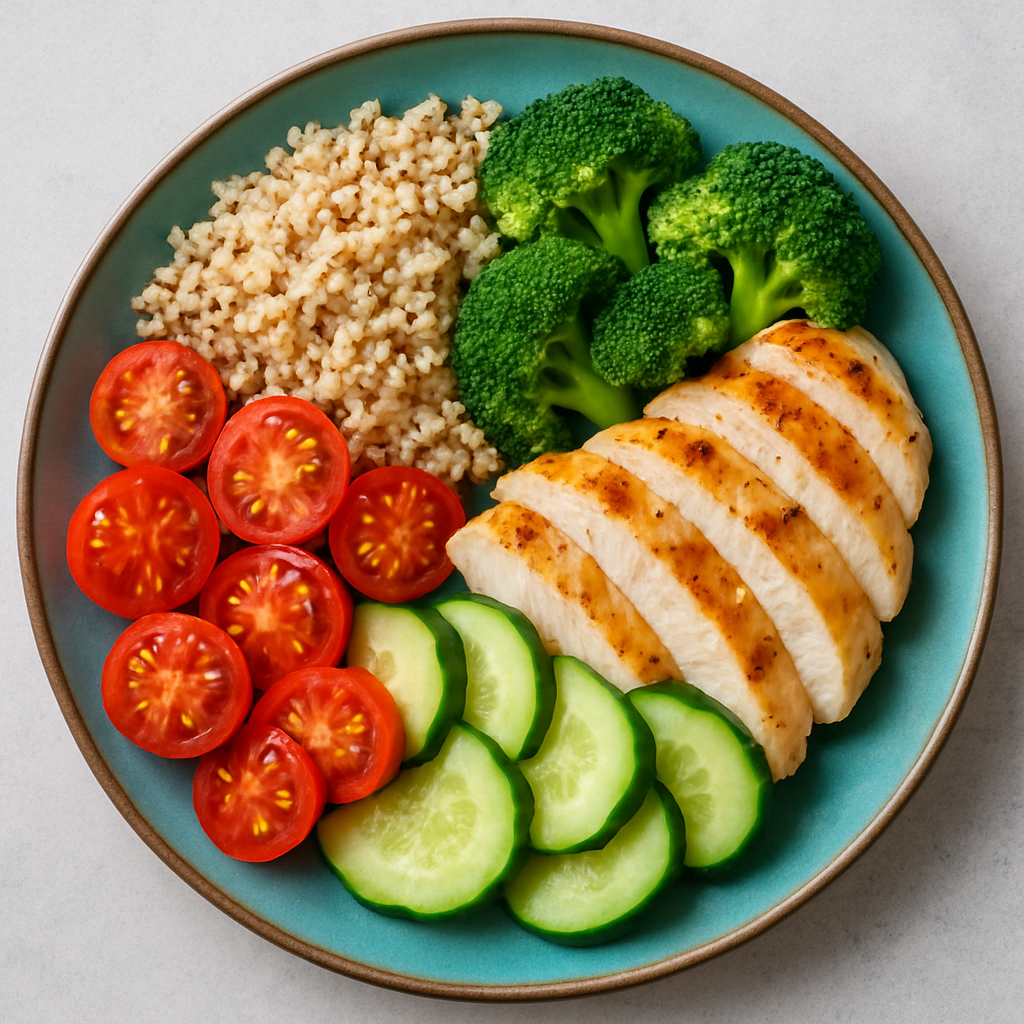
Cold chicken and quinoa bowl prepped the night before and grabbed from the refrigerator in the morning is the most protein-dense portable option of all, delivering approximately 38 grams of protein per serving. The combination of complete protein from the chicken and complete amino acids from the quinoa makes this nutritionally the strongest option on the list. It keeps well for up to five hours at room temperature in a sealed container, making it suitable for most commutes and workdays.

High Protein Low Calorie Meal Prep Recipes
These are the four cornerstone recipes that belong in every serious meal-prepper’s rotation. Each one is designed to batch-cook efficiently, store safely for four to five days in the refrigerator, and deliver a strong protein-to-calorie ratio without sacrificing the flavour that makes a dietary approach actually sustainable.Recipe 1: Chicken and Quinoa Roasted Veggie Bowl
Protein: approximately 38 grams | Calories: approximately 390 | Servings: 4
This is the most versatile meal prep recipe in this guide. It works as lunch or dinner, keeps well for five days, and can be varied simply by changing the herbs and spices each week to prevent flavour fatigue.
Ingredients:
- 600 grams chicken breast
- 200 grams uncooked quinoa
- 2 red bell peppers, cubed
- 2 medium courgettes, cubed
- 1 large red onion, cut into wedges
- 2 tablespoons olive oil
- Juice of 1 lemon
- 1 teaspoon cumin
- 1 teaspoon smoked paprika
- Salt, pepper, and fresh parsley to finish

Method:
Preheat your oven to 200°C. Toss the cubed bell peppers, courgette, and red onion wedges in one tablespoon of olive oil, cumin, smoked paprika, salt, and pepper. Spread across a large baking tray in a single layer.
Season the chicken breasts with the remaining olive oil, salt, pepper, and a pinch of paprika. Place on a separate baking tray or on top of the vegetables if space allows.
Roast everything together for 25 to 30 minutes until the chicken is cooked through and the vegetables have caramelised at the edges. While they roast, cook the quinoa according to packet instructions — typically 15 minutes in lightly salted water at a two-to-one water-to-quinoa ratio.
Slice the chicken and divide everything into four meal prep containers. Squeeze fresh lemon juice over each portion and finish with chopped fresh parsley. Seal and refrigerate. These keep well for up to five days and taste excellent cold, which makes them genuinely useful on days when reheating is not possible.
Recipe 2: Spinach, Feta and Turkey Egg Muffins
Protein: approximately 22 grams per 3 muffins | Calories: approximately 180 | Makes: 12 muffins
Egg muffins are the single most efficient meal prep item in this guide. They take 30 minutes to make, last five days in the refrigerator or three months in the freezer, and deliver a concentrated protein hit with zero preparation on the day itself.
Ingredients:
- 6 large whole eggs
- 4 large egg whites
- 150 grams lean turkey mince, cooked and drained
- 80 grams fresh spinach, wilted and excess moisture squeezed out
- 50 grams reduced-fat feta cheese, crumbled
- 1 teaspoon smoked paprika
- Salt and black pepper to taste
- Cooking spray or a small amount of olive oil for the tin
Method:
Preheat your oven to 180°C. Spray a 12-hole muffin tin thoroughly with cooking spray or lightly brush each hole with olive oil — this is the step most people skip and then regret.
In a large bowl, whisk the whole eggs and egg whites together until fully combined. Season with smoked paprika, salt, and black pepper. Add the cooked turkey, wilted and squeezed spinach, and crumbled feta. Stir everything together until evenly distributed.
Pour the mixture into the prepared muffin tin, filling each hole to approximately three-quarters full — they will rise slightly during baking.
Bake at 180°C for 18 to 22 minutes until the tops are set and just beginning to turn golden at the edges. Allow to cool in the tin for five minutes before removing.
Store in an airtight container in the refrigerator for up to five days. To freeze, allow to cool completely, wrap individually in foil, and store in a sealed freezer bag for up to three months. Reheat from frozen in a microwave for 60 to 90 seconds.
Recipe 3: Red Lentil, Carrot and Celery Soup
Protein: approximately 18 grams | Calories: approximately 280 | Servings: 6
This soup is the highest-yield recipe in this guide — six generous portions from one 40-minute cooking session, all of which freeze perfectly. It is plant-based, high in fibre, anti-inflammatory from the spice blend, and deeply satisfying in a way that most soups are not.
Ingredients:
- 300 grams dried red lentils, rinsed
- 3 medium carrots, diced
- 4 stalks of celery, diced
- 1 large onion, diced
- 4 cloves of garlic, minced
- 1.5 litres low-sodium vegetable stock
- 1 teaspoon ground cumin
- 1 teaspoon ground turmeric
- Half a teaspoon of smoked paprika
- Juice of 1 large lemon
- 1 tablespoon olive oil
- Salt and black pepper to taste
Method:
Heat the olive oil in a large pot over medium heat. Add the diced onion, carrot, and celery and cook for seven to eight minutes, stirring occasionally, until softened and the onion is translucent. Add the minced garlic, cumin, turmeric, and smoked paprika and cook for a further two minutes until the spices are fragrant.
Add the rinsed red lentils and pour in the vegetable stock. Stir well to combine. Bring to a boil, then reduce the heat to a gentle simmer. Cook uncovered for 25 minutes, stirring occasionally, until the lentils have broken down and the soup has thickened considerably.
Use a hand blender to blend approximately half the soup directly in the pot — this creates a thick, creamy texture while retaining enough whole lentil texture to make it substantial. Alternatively, transfer half to a blender, process until smooth, and return to the pot.
Stir in the lemon juice and season with salt and black pepper. Divide into six containers. This soup refrigerates well for five days and freezes for up to three months. It reheats perfectly from frozen — add a small splash of water if it has thickened on standing.
Recipe 4: Ginger-Garlic Tofu and Broccoli Stir-Fry
Protein: approximately 24 grams | Calories: approximately 310 | Servings: 2
This is the recipe that converts people who think they do not like tofu. The pressing and marinating steps are not optional — they are what make the difference between rubbery, flavourless tofu and crisp, deeply flavoured tofu that is genuinely satisfying.
Ingredients:
- 400 grams firm tofu
- 300 grams broccoli florets
- 150 grams snap peas
- 100 grams shiitake mushrooms, sliced
- 3 tablespoons low-sodium soy sauce
- 1 tablespoon freshly grated ginger
- 3 cloves of garlic, minced
- Half a teaspoon of sesame oil
- 1 teaspoon cornstarch
- 1 teaspoon olive oil for cooking
- Cauliflower rice to serve
- Sesame seeds and sliced spring onion to finish
Method:
Press the tofu first. Wrap the block in a clean kitchen towel, place a heavy object on top — a cast iron pan works perfectly — and leave for at least 20 minutes. The more moisture you remove, the better the tofu will crisp.
Cut the pressed tofu into 2-centimetre cubes. In a bowl, combine the soy sauce, grated ginger, minced garlic, sesame oil, and cornstarch. Add the tofu cubes, toss to coat, and marinate for a minimum of 20 minutes — longer if time allows.
Heat olive oil in a large pan or wok over high heat until shimmering. Add the marinated tofu in a single layer, without stirring, for three minutes until the underside is golden and crisp. Turn each piece and cook for a further two minutes. Remove from the pan and set aside.
Add the broccoli and snap peas to the same pan with a splash of water. Stir-fry over high heat for three minutes. Add the shiitake mushrooms and cook for a further two minutes. Return the tofu to the pan, pour over any remaining marinade, and toss everything together over high heat for one final minute.
Serve over cauliflower rice and finish with sesame seeds and sliced spring onion. This recipe doubles well for meal prep — store the stir-fry separately from the cauliflower rice to prevent sogginess.
Vegetarian and Vegan High Protein Low Calorie Options
A persistent misconception about high protein eating is that it requires animal products. In reality, some of the most protein-dense easy high protein low calorie recipes are entirely plant-based — and they are also among the highest-fibre, most micronutrient-rich options in this entire guide.
The key principle for plant-based high protein low calorie meal prep is amino acid complementarity. Most plant proteins are incomplete — they provide some but not all of the nine essential amino acids. By combining a legume with a grain in the same meal or across the same day, you reliably achieve a complete amino acid profile. Lentils with quinoa, black beans with brown rice, chickpeas with whole grain flatbread — these pairings are the nutritional foundation of effective plant-based high protein eating.

Quinoa and Black Bean Salad
Cook one cup of quinoa according to packet instructions and allow it to cool completely. Combine with one 400-gram tin of rinsed black beans, one diced red bell pepper, one diced yellow bell pepper, 100 grams of sweetcorn, half a finely diced red onion, and a generous handful of fresh cilantro.
Dress with the juice of two limes, one teaspoon of ground cumin, half a teaspoon of smoked paprika, and cracked black pepper. Toss well and refrigerate for at least 30 minutes before serving to allow the flavours to develop.
This delivers approximately 18 grams of protein per serving with a complete amino acid profile from the quinoa, substantial fibre from both the beans and the grain, and a flavour profile that improves over two to three days in the refrigerator — making it one of the best meal prep options in this guide.
Chickpea and Spinach Curry
Heat one tablespoon of olive oil in a large pan. Add one diced onion and cook over medium heat for five minutes. Add three minced garlic cloves, one tablespoon of freshly grated ginger, and cook for a further two minutes. Add one teaspoon each of cumin, ground coriander, and garam masala, plus half a teaspoon of turmeric. Stir to combine and cook for one minute until the spices are fragrant.
Pour in one 400-gram tin of chopped tomatoes and one 400-gram tin of drained chickpeas. Stir well, bring to a gentle simmer, and cook uncovered for 15 minutes. Add two large handfuls of fresh spinach, stir through until wilted, and season with salt and the juice of half a lemon.
Serve with cauliflower rice for an ultra-low-calorie base or a small portion of brown rice for a higher-carbohydrate version. This delivers approximately 16 grams of protein per serving and is particularly high in iron from the chickpeas and spinach — a combination that is nutritionally significant for anyone following a plant-based diet.
This curry refrigerates well for five days and freezes for up to three months. The flavour deepens significantly overnight, making it one of the recipes that actually tastes better on day two or three than it does fresh.
Final Thoughts: How to Start This Week
Incorporating high protein low calorie recipes into your regular routine is one of the highest-leverage dietary decisions you can make for fat loss, muscle maintenance, energy stability, and long-term sustainability. The approach works because it addresses the root cause of why most diets fail — hunger — rather than simply restricting food and hoping willpower holds.
The four recipes in this guide — chicken and quinoa roasted veggie bowls, spinach and turkey egg muffins, red lentil soup, and ginger-garlic tofu stir-fry — are enough to cover the majority of your weekly meals from a single prep session. Add the portable lunch options for your working days and the vegetarian recipes for variety, and you have a complete, practical system that requires one dedicated 90-minute session per week to maintain.
To start this week:
Pick two recipes from this guide today. Write a shopping list built around the core ingredients in Section 2. Schedule a 90-minute prep session for this weekend. On that day, batch-cook your proteins first, then your grains, then your vegetables. Portion everything into containers and label them. That is the entire system.
The meals are here. The strategy is clear. The ingredient list is simple. Everything you need to make this work in real life is in this guide — the only step that remains is the first one.
Frequently Asked Questions About High Protein Low Calorie Recipes
What ingredients should I keep stocked for quick high protein low calorie meals?
Keep lean animal proteins — chicken breast, turkey mince, eggs, and zero percent fat Greek yogurt — alongside plant-based options including lentils, quinoa, chickpeas, and firm tofu. Maintain a vegetable supply of leafy greens, bell peppers, broccoli, cucumber, and tomatoes. Stock your spice rack with cumin, turmeric, smoked paprika, and ginger. With these foundations in place, you can assemble a salad, bowl, wrap, soup, or stir-fry that delivers 25 to 38 grams of protein in under twenty minutes on any day of the week.
How can I add strong flavour without adding significant calories?
Replace heavy sauces and bottled dressings with fresh herbs, anti-inflammatory spices, and acid accents. Fresh cilantro, basil, and flat-leaf parsley add genuine flavour complexity at effectively zero calories. Cumin, turmeric, ginger, and smoked paprika create depth that rivals any commercial sauce without the hidden sugar and oil. A squeeze of fresh lemon or lime over a finished dish costs zero calories and delivers the brightness that separates a satisfying meal from a bland one.
What are the most efficient high protein meal prep strategies?
Plan the week around overlapping ingredients so that each protein source is cooked once and used multiple ways. Batch-cook proteins — chicken, tofu, lentils — on a single prep day. Pre-cook grains and pre-chop vegetables. Use quality containers that seal well and keep food fresh for five days. Aim for one 90-minute prep session per week rather than daily cooking. This single structural change is the most reliable predictor of whether someone maintains a high protein low calorie approach beyond the first two weeks.
What are the best portable high protein lunches for busy days?
Cold chicken and quinoa bowls prepped the night before are the most protein-dense portable option at approximately 38 grams per serving. A lean turkey sandwich on whole grain bread with mustard and vegetables delivers approximately 28 grams without refrigeration. A boiled egg, almonds, and Greek yogurt snack pack requires no preparation on the day and provides approximately 26 grams. All three travel well, keep you satisfied, and support steady energy without an afternoon energy crash.
What vegetarian and vegan options provide enough protein?
Quinoa and black bean salad, chickpea and spinach curry, and ginger-garlic tofu stir-fry all deliver 16 to 25 grams of protein per serving from entirely plant-based ingredients. The key is combining legumes with grains to achieve a complete amino acid profile. Lentil-based soups and curries paired with quinoa or whole grain bread, chickpea bowls over brown rice, and marinated tofu stir-fries over cauliflower rice are the most reliable plant-based high protein low calorie combinations for regular meal prep.
How do I increase protein intake without significantly increasing calories?
Build every meal around a lean protein centrepiece — chicken breast, turkey, tofu, lentils, or Greek yogurt — and use vegetables to fill volume and complex carbohydrates for sustained energy rather than calorie-dense fats and refined carbs. Replace calorie-heavy sauces with herb and spice-based flavouring. Use egg whites alongside whole eggs to boost protein in egg-based dishes without adding saturated fat. The principle is that protein does the nutritional work of keeping you full and supporting muscle; everything else on the plate should be earning its place nutritionally, not just adding calories.
Are high protein low calorie diets sustainable over the long term?
Yes — they are among the most sustainable dietary approaches available when implemented correctly. The factors that determine long-term sustainability are variety to prevent flavour fatigue, balance of protein alongside adequate vegetables and healthy fats, and flexibility in approach so that imperfect days do not derail the overall pattern. Relying heavily on protein supplements rather than whole food sources is a common mistake that reduces both satiety and micronutrient intake over time. Whole food protein sources — chicken, legumes, eggs, Greek yogurt — consistently outperform supplements for adherence, satiety, and long-term results.