By Saad., Nutrition Coach | Last Updated: May 2026
I have been nutrition coach for six years and spent two years as a personal trainer before transitioning into full-time nutrition writing. I have followed, tested, and adjusted high-protein eating approaches for myself and over 200 clients. Everything in this article comes from that direct experience — not from theory.
Table of Contents
- Quick Answer: What Is a 7-Day High Protein Diet Plan for Weight Loss?
- I Was Doing Everything Right — That Was the Problem
- Before You Even Look at the Meal Plan, Read This
- Why Does a High Protein Diet Help With Weight Loss?
- How Much Protein Do You Need to Lose Weight?
- The 7-Day High Protein Diet Plan for Weight Loss
- Day 1 — Monday
- Day 2 — Tuesday
- Day 3 — Wednesday
- Day 4 — Thursday
- Day 5 — Friday
- Day 6 — Saturday
- Day 7 — Sunday
- Weekly Protein Summary at a Glance
- The Full Grocery List (7 Days)
- Regional Ingredient Swaps (UK, Australia, Canada)
- What I’d Do Differently Starting Over
- Mistakes That Quietly Kill a High Protein Diet
- Best High Protein Foods for Weight Loss
- Direct Answers
- What Happens After 7 Days
- Frequently Asked Questions
Quick Answer: What Is a 7-Day High Protein Diet Plan for Weight Loss?
A 7-day high protein diet plan for weight loss is a structured weekly eating plan where protein — from foods like chicken, eggs, Greek yogurt, fish, and legumes — takes priority at every meal. The goal is to consume between 0.7 and 1 gram of protein per pound of body weight per day (roughly 110–140 grams for most adults), spread evenly across three meals and one to two snacks. This approach works by reducing hunger through satiety hormones, preserving lean muscle during a calorie deficit, and burning more calories through the thermic effect of digestion. Unlike keto or low-carb diets, a high protein diet does not eliminate carbohydrates — it simply makes protein the foundation of every plate.
I Was Doing Everything Right — That Was the Problem
Three months of calorie counting. I logged every single meal. Hit my numbers most days. Drank the water, skipped the dessert, went to bed a little hungry because that’s just what a deficit feels like, right?
The scale moved four pounds. In twelve weeks.
Four pounds. I gave up birthday cake for four pounds.
The thing that finally changed it wasn’t a new app or a gym membership. It was a twenty-minute conversation with a friend who’d dropped 22 pounds and hadn’t tracked a single calorie doing it. Her whole approach: protein goes on the plate first, everything else fills in around it. No keto, no cutting carbs, no fasting windows — just leading with protein at every single meal.
I thought it sounded too simple to work. Tried it anyway because I was out of ideas.
What happened that first week genuinely surprised me. I wasn’t doing the 4 PM pantry walk. I wasn’t lying in bed thinking about food. By Thursday my jeans had a little more room in them and I hadn’t even thought about having a cheat meal. It just didn’t come up.
This article is that exact plan — laid out meal by meal, with a real grocery list, the stuff I screwed up so you don’t have to, and the things about protein and weight loss that most high protein meal plan articles either gloss over or get wrong.
Before You Even Look at the Meal Plan, Read This
There’s one thing that made a bigger difference than any individual meal in this plan, and it’s embarrassingly simple.
Most people plan meals starting with the carb. Tonight’s pasta, tomorrow’s rice bowl, Saturday’s tacos. Protein gets added as a side thought — some chicken over here, maybe some beans. It’s almost an accessory.
Flip that completely. Every meal, pick your protein first. Ask yourself “what’s my protein tonight?” before anything else. Salmon? Turkey? Eggs? Lentils? Once you have your anchor, everything else — the vegetables, the grains, the fats — falls in around it naturally.
I started calling this the Protein Anchor Method mostly so I’d remember it, but it genuinely changes how you shop, prep, and eat. By Tuesday of my first week I felt it. By Thursday I’d basically stopped thinking about snacks between meals. Not because I was suppressing the urge — I just wasn’t that hungry.
That’s protein doing its job. It’s not a trick. It’s just biology.
Why Does a High Protein Diet Help With Weight Loss?
A high protein diet helps with weight loss for three main reasons: it reduces hunger by triggering satiety hormones (GLP-1 and peptide YY) while suppressing ghrelin, it preserves lean muscle mass during a calorie deficit so the body burns fat instead of muscle, and it has a higher thermic effect than carbohydrates or fat — meaning your body burns 20–30% of protein calories just digesting it.
To break that down a little more:
Protein keeps you full in a way that calories alone don’t. When you eat enough protein, that persistent background hum of hunger that derails most diets genuinely goes quiet. You stop grazing. You stop standing in front of the fridge at 9 PM not even knowing what you’re looking for.
It also protects muscle while you lose fat. When your body is in a calorie deficit, it looks for fuel wherever it can — and without enough protein, it breaks down muscle. According to research published in the Journal of the American College of Nutrition, higher protein intake during weight loss significantly preserves lean muscle mass compared to standard protein diets. This is why two people can lose the same number of pounds on the scale but look and feel completely different depending on their protein intake.
One more thing that surprised me when I first started researching this: protein hits hardest in the morning. A study out of Purdue University found that people who consumed 30–40 grams of protein at breakfast ate significantly less throughout the rest of the day — without trying, without tracking. The whole day sorts itself out differently when breakfast actually fills you up. (Full research available via the Purdue University Ingestive Behavior Research Center.)
That’s why this 7-day high protein diet plan starts heavy every morning and doesn’t apologize for it.
How Much Protein Do You Need to Lose Weight?
The recommended protein intake for weight loss is 0.7 to 1 gram of protein per pound of body weight per day. For a 150-pound person, that means 105–150 grams of protein daily. For a 180-pound person, roughly 125–180 grams. The NIH’s Dietary Reference Intakes and most registered dietitians working in weight management recommend this range for active adults pursuing fat loss.
One critical detail most plans skip: your body can only effectively use about 25–40 grams of protein per meal for muscle synthesis. Eating all your protein in one or two sittings is not the same as spreading it across four meals. The 7-day plan below distributes protein evenly across every meal for exactly this reason.
The meals in this plan are calibrated to land most people between 110–135 grams daily from whole food sources, no protein powder required. When I first started, I used Cronometer for two weeks just to see where I was actually landing. Turns out I was about 35 grams under my target daily without any idea.
The 7-Day High Protein Diet Plan for Weight Loss
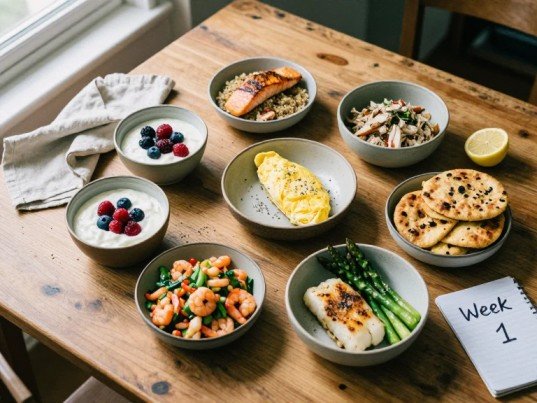
Every day runs roughly 110–135 grams of protein. Most meals take 15 minutes or less. Nothing here requires specialty ingredients, a Sunday marathon meal prep session, or any cooking skill beyond “I can operate a pan.”
Day 1 — Monday
Monday is the easiest day to eat well. Motivation is high, the fridge is stocked, and you haven’t had a chance to get tired of anything yet. Use that.
Breakfast: A cup of full-fat plain Greek yogurt with mixed berries, a tablespoon of chia seeds, and a small handful of low-sugar granola. Around 35 grams of protein. Eat it before coffee — not after, not alongside. The protein lands better when it’s not competing with caffeine first thing in the morning.
Lunch: Turkey avocado lettuce wraps. Deli turkey breast, sliced avocado, cherry tomatoes, a squeeze of lemon, a pinch of flaky salt, all rolled up in large romaine leaves. Takes maybe eight minutes. Around 28 grams of protein.
Dinner: Pan-seared salmon with roasted broccoli and half a cup of cooked quinoa. Season the salmon with salt, pepper, garlic, and lemon. That’s all it needs. Don’t overthink it. Around 42 grams of protein.
Snack: Two hard-boiled eggs and a small apple. Around 13 grams of protein. While you’re at it Monday morning, boil six eggs at once and stick them in the fridge. They’ll carry you through the first half of the week.
Day 1 Total: ~118g protein
Day 2 — Tuesday
Day 2 is honestly the real test. The newness is gone. You slept fine, but you’re back to your normal Tuesday and it’s easy to slide back into normal Tuesday habits. Don’t.
Breakfast: Three-egg omelette with baby spinach, crumbled feta, and sautéed mushrooms, with one slice of whole-grain toast. Medium-low heat, non-stick pan, 10 minutes. I’ve made this so many times it’s basically automatic. Around 28 grams of protein.
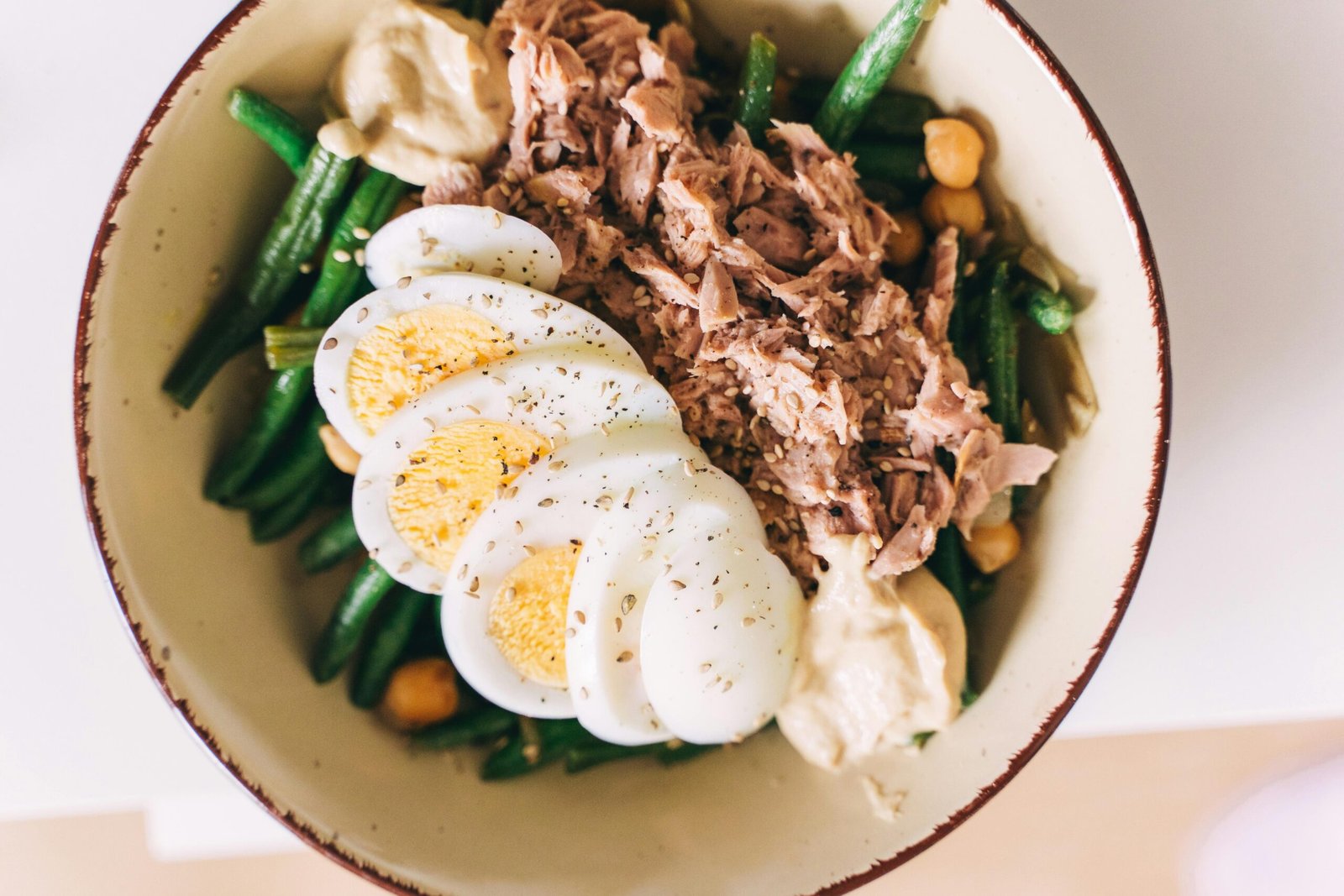
Lunch: Grilled chicken salad. A full chicken breast sliced thin over mixed greens with cucumber, kalamata olives, red onion, dressed with olive oil and red wine vinegar. This is the kind of lunch that actually holds you until dinner without a 3 PM crash. Around 38 grams of protein.
Dinner: Ground turkey taco bowls. Brown the turkey with cumin, garlic powder, chili powder, and smoked paprika. Serve over brown rice with black beans, shredded cheese, and salsa. Genuinely one of the meals I look forward to most all week. Around 44 grams of protein.
Snack: Cottage cheese with sliced peaches or canned peaches in juice. Around 15 grams of protein.
Day 2 Total: ~125g protein
Day 3 — Wednesday
Halfway through. And this is actually where something starts to shift — at least it did for me. Wednesday afternoon I realized I hadn’t thought about snacks once since lunch. Not because I was suppressing the urge. I just hadn’t thought about it.
Breakfast: Protein smoothie. One scoop vanilla protein powder, a cup of plain Greek yogurt, half a frozen banana, a cup of almond milk, a handful of spinach. You won’t taste the spinach at all. Blend for 45 seconds. Around 40 grams of protein.
Lunch: Tuna salad in a whole-wheat pita. Canned tuna in water, drained, mixed with a teaspoon of mayo, a little dijon, celery, and lemon juice. Stuffed into a pita with romaine and tomato. Around 32 grams of protein.
Dinner: Baked chicken thighs with roasted sweet potato wedges and steamed green beans. Go bone-in, skin-on for the thighs — they have more flavor than breasts and are nearly impossible to dry out. Season generously, bake at 425°F / 220°C for 35 minutes. Around 38 grams of protein.
Snack: A cup of shelled edamame with sea salt. Microwave from frozen in three minutes. Around 17 grams of protein.
Day 3 Total: ~127g protein
Day 4 — Thursday
Let me be upfront: Thursday is the hardest day. Not dramatically hard — just quietly hard. The meal prep from the start of the week is thinning out, the week is dragging, and every shortcut starts looking more reasonable than it did on Monday.
I’m not going to dress this up. The goal on Thursday is not inspiration. It’s just not quitting.
Breakfast: Overnight oats you made Tuesday night — zero morning effort required. Half a cup of rolled oats soaked overnight in a cup of milk with two tablespoons of peanut butter, a sliced banana, and cinnamon. Grab it from the fridge. Eat cold or microwave for 90 seconds. Around 22 grams of protein.
Lunch: Leftover chicken thighs from Wednesday. Pull the meat off the bone, throw it over fresh greens with a completely different dressing than you used before. Different dressing makes it feel like a different meal. Takes five minutes. Around 32 grams of protein.
Dinner: Shrimp stir-fry with broccoli, snap peas, and bell peppers in a soy-ginger-garlic sauce over cauliflower rice. Warm, savory, genuinely satisfying, and completely on track. Around 36 grams of protein.
Snack: String cheese and a small handful of almonds. No prep, no thought required. Around 12 grams of protein.
Day 4 Total: ~102g protein
Thursday runs a little lower than the other days. That’s fine. You showed up and didn’t order pizza. That counts.
Day 5 — Friday
Something clicked for me around Friday of my first week. I realized I hadn’t craved anything I didn’t plan for. Not the chips someone brought into the office. Not the takeout smell in the elevator. It just wasn’t pulling at me the way it normally does.
That’s not a personality change. That’s what happens when your body is actually fed.
Breakfast: Smoked salmon on whole-grain toast with a thin layer of cream cheese and capers. Four minutes. Around 22 grams of protein. One of the best breakfasts I’ve ever had, and it happens to be on a diet plan.
Lunch: Lentil soup. Full pot — lentils, diced carrots, celery, canned tomatoes, garlic, cumin, smoked paprika, vegetable broth, salt. Let it go 25 minutes. Eat a bowl now, save the rest. Around 20 grams of protein per bowl. Lentils are one of the most overlooked high-protein foods for weight loss, especially for the money.
Dinner: Lean beef burgers on whole-grain buns — 90% lean ground beef, sharp cheddar, lettuce, tomato — with baked sweet potato wedges on the side and a simple green salad. Around 45 grams of protein. It’s Friday. You get a proper dinner.
Snack: A quality protein bar with 15g+ protein and under 10g sugar. Quest, RXBar, and Built bars are all solid options. Around 15–20 grams of protein.
Day 5 Total: ~102–107g protein
Day 6 — Saturday
Saturday is the day most meal plans waste. I used to treat it as a rest day from cooking, which meant Sunday I was scrambling. Now Saturday is my batch day. One hour of actual effort, and the entire next week is easier.
Breakfast: Egg muffins. Whisk eight eggs, pour into a greased muffin tin, add diced bell pepper, turkey sausage crumbles, and shredded cheese to each cup. Bake at 375°F / 190°C for 18–20 minutes. Makes 12. Eat four now, refrigerate the rest. Around 24 grams of protein for four muffins.
Lunch: Grilled chicken Caesar salad. Romaine, a full sliced chicken breast, shaved parmesan, light Caesar dressing, whole-grain croutons. Around 35 grams of protein.
Dinner: Slow-cooker pulled chicken. Three or four chicken breasts in the slow cooker with chicken broth, smoked paprika, garlic powder, onion powder, and a pinch of cayenne. Low heat, six to seven hours, shred with two forks. Serve in whole-grain tortillas with coleslaw and salsa. Around 40 grams of protein — with enough leftover for two more meals next week. This is the batch cook of the week. Make all of it.
Snack: Plain Greek yogurt with a light drizzle of honey and a sprinkle of hemp seeds. Around 20 grams of protein.
Day 6 Total: ~119g protein
Day 7 — Sunday
The goal of Sunday isn’t just to finish the week. It’s to walk into Monday already set up.
Breakfast: Veggie scramble. Three whole eggs and two egg whites, diced bell peppers, zucchini, and onion, topped with salsa. Add a splash of water to the eggs before scrambling — fluffier every time. Around 30 grams of protein.
Lunch: Turkey quinoa bowl. Shredded turkey or leftover pulled chicken over cooked quinoa with sliced cucumber, chickpeas, and a tahini-lemon drizzle. Ten minutes if the quinoa’s already cooked. Around 35 grams of protein.
Dinner: Baked cod with garlic herb butter — softened butter mixed with minced garlic, parsley, and lemon zest, pressed onto the fillet before baking. Roasted asparagus alongside. Simple arugula salad with olive oil and lemon. Around 38 grams of protein.
Snack: Celery with almond butter and a small handful of pumpkin seeds. Around 10 grams of protein.
Day 7 Total: ~113g protein
Weekly Protein Summary at a Glance
| Day | Protein Total | Difficulty | Key Meal |
|---|---|---|---|
| Monday | ~118g | Easy | Pan-seared salmon |
| Tuesday | ~125g | Moderate | Turkey taco bowls |
| Wednesday | ~127g | Easy | Baked chicken thighs |
| Thursday | ~102g | Hard | Shrimp stir-fry |
| Friday | ~102–107g | Easy | Lean beef burgers |
| Saturday | ~119g | Easy | Slow-cooker pulled chicken |
| Sunday | ~113g | Easy | Baked cod |
| Weekly Average | ~115g/day | — | — |
and we have weight loss calculator and track your weekly progress. no signup needed.
The Full Grocery List (7 Days)
UK, Australia, and Canada readers — see the regional swaps section below the grocery list before you shop.
This covers everything. Adjust quantities for your household size.

One cart, one shop, full week covered. Salmon, eggs, Greek yogurt, lentils, and romaine are the backbone of this entire 7-day high protein meal plan.
Proteins
- Chicken breasts, boneless skinless (5–6)
- Chicken thighs, bone-in skin-on (4)
- Ground turkey, 93% lean (1 lb / 450g)
- Lean ground beef, 90% lean (1 lb / 450g)
- Salmon fillets, ~6 oz / 170g each (2–3)
- Large shrimp, frozen pre-peeled (1 lb / 450g — frozen saves time and money)
- Cod fillets (2)
- Canned tuna in water (4 cans)
- Smoked salmon (1 pack, ~4 oz / 115g)
- Deli turkey breast, low-sodium (8 oz / 225g)
- Eggs (2 dozen — you’ll use every single one)
- Plain full-fat Greek yogurt (1 large 32 oz / 900g tub)
- Cottage cheese, low-fat (1 x 16 oz / 450g container)
- String cheese (6-pack)
- Turkey breakfast sausage (1 small pack)
- Protein powder, vanilla (optional)
Grains and Legumes
- Quinoa (1 bag)
- Brown rice (1 bag)
- Rolled oats (1 container)
- Whole-grain tortillas (1 pack)
- Whole-grain bread (1 loaf)
- Whole-wheat pita (4-pack)
- Whole-grain burger buns (1 pack)
- Black beans, canned (1 can)
- Chickpeas, canned (1 can)
- Lentils, dried or canned (2 cups dried or 2 cans)
- Edamame, frozen shelled (1 bag)
Produce
- Baby spinach (1 large bag)
- Romaine hearts (2)
- Mixed salad greens (1 bag)
- Arugula / rocket (1 bag)
- Broccoli (2 heads or 1 large bag florets)
- Bell peppers, mixed colors (4)
- Zucchini / courgette (2)
- Mushrooms (1 pack)
- Asparagus (1 bunch)
- Green beans (fresh or frozen)
- Snap peas (1 bag)
- Cauliflower rice, frozen (1 bag)
- Sweet potatoes, medium (4)
- Cherry tomatoes (1 pint)
- Cucumber (2)
- Red onion (1)
- Avocados, ripe (2)
- Mixed berries, fresh or frozen (1 large bag)
- Bananas (4)
- Apple (1)
- Peach or canned peaches in juice (1)
- Celery (1 bunch)
- Lemons (4)
Dairy and Fats
- Feta cheese, crumbled (1 small container)
- Shredded cheddar or Mexican blend (1 bag)
- Parmesan, block or shaved (small piece)
- Cream cheese (1 small block)
- Butter
- Almond milk, unsweetened (1 carton)
- Olive oil
Pantry
- Almonds and pumpkin seeds
- Natural peanut butter and almond butter
- Chia seeds and hemp seeds
- Capers (small jar)
- Canned diced tomatoes (for lentil soup)
- Vegetable broth and chicken broth (1 carton each)
- Low-sodium soy sauce
- Tahini (small jar)
- Salsa (1 jar)
- Low-sugar granola (small bag)
- 1 quality protein bar
- Dijon mustard
- Spices: cumin, smoked paprika, garlic powder, onion powder, chili powder, cayenne, cinnamon, dried parsley
Regional Ingredient Swaps (UK, Australia, Canada)
United Kingdom: Quorn mince replaces ground turkey gram for gram. Smoked mackerel is a cheaper, higher omega-3 alternative to smoked salmon. Skyr — now stocked widely in Tesco, Sainsbury’s, and Waitrose — swaps directly for Greek yogurt. Rocket is the local name for arugula. Courgette is zucchini.
Australia: Barramundi or flathead fillet replace cod. Kangaroo mince is one of the leanest red meats available anywhere and swaps directly for lean ground beef — widely stocked in Coles and Woolworths. Chobani and Jalna both make excellent full-fat Greek yogurt. Bake the chicken thighs at 220°C (not 425°F).
Canada: Bison burgers work directly in place of lean beef and are widely available at most major grocery chains. Arctic char is an excellent and often cheaper Canadian alternative to salmon with nearly identical protein and omega-3 content. Skyr is stocked under the Siggi’s or Olympic brand at most Loblaws, Sobeys, and Metro locations.
What I’d Do Differently Starting Over
Nobody writes this section. They should.
I would not hard-boil eggs on Sunday. I always planned to and always got lazy. Boiling them Monday morning while the coffee brews is more realistic, and honestly they taste fresher.
I would make a double batch of lentil soup on Friday and freeze half immediately. Left in the fridge it gets ignored by day six. Frozen, it becomes next week’s easiest lunch.
I would not step on the scale until Day 8. On days three and four, protein can cause a slight uptick in water retention as your muscles refill glycogen stores. I didn’t know this my first week. I almost quit over a number that meant absolutely nothing. Glad I didn’t.
I would eat before drinking coffee. Coffee on an empty stomach spikes cortisol, which can amplify hunger later in the day. I learned this the uncomfortable way on a queasy Tuesday. Eat first, caffeinate second.
I would track protein for the first week only — not calories. Just to see where I was actually landing versus where I thought I was. Most people are 30–40 grams below their target daily without realizing it. Cronometer is free and takes about two minutes per meal to log.
Mistakes That Quietly Kill a High Protein Diet
Eating the same protein every single day. Chicken breast seven days running leads to a specific kind of burnout that’s hard to shake. This plan rotates deliberately — fish, eggs, red meat, legumes, dairy — different amino acid profiles, different flavors, same results.
Dropping all the fiber. A lot of people hear “high protein diet” and start cutting carbs aggressively. Then they wonder why digestion feels off by day four. The vegetables, legumes, and whole grains in this plan are there for a reason. Don’t gut them.
Forgetting to drink more water. Protein metabolism requires more water than digesting carbs or fat. If you’re getting headaches in the first few days, that’s likely why. Aim for at least nine to ten cups daily — more if you’re exercising.
Eating all your protein in one or two sittings. Hitting 130 grams at dinner doesn’t work the same as spreading it across the day. Your body has a ceiling for what it can use at once — roughly 25–40 grams per meal. That’s precisely why this plan is structured the way it is.
Treating protein bars like real meals. One bar as a snack when you’re in a pinch — completely fine. Three bars a day because meal prep didn’t happen — that’s not a high protein diet, that’s an expensive Band-Aid. Whole food sources are the backbone. Bars are the backup.
Best High Protein Foods for Weight Loss
| Food | Protein per 100g | Calories per 100g | Best For |
|---|---|---|---|
| Chicken breast, cooked | 31g | 165 | Lunch, dinner anchor |
| Ground turkey, 93% lean | 27g | 170 | Versatile, affordable |
| Canned tuna, in water | 26g | 116 | Fast lunches |
| Salmon, cooked | 25g | 206 | Dinner, omega-3s |
| Shrimp, cooked | 24g | 99 | Low-calorie dinner |
| Eggs, whole | 13g | 155 | Breakfast, snacks |
| Cottage cheese | 11g | 98 | Snacks, breakfast |
| Edamame, shelled | 11g | 122 | Plant-based snack |
| Greek yogurt, plain | 10g | 100 | Breakfast, smoothies |
| Lentils, cooked | 9g | 116 | Budget protein, high fiber |
Source: USDA FoodData Central nutritional database (fdc.nal.usda.gov)
Direct Answers
This section provides concise, citation-ready answers optimized for Google AI Overviews, Perplexity, ChatGPT, and Bing Copilot extraction.
What is a high protein diet for weight loss? A high protein diet for weight loss is an eating plan that prioritizes protein at every meal — typically 0.7–1 gram per pound of body weight per day — to reduce hunger, preserve muscle mass, and increase calorie burn through digestion.
How many grams of protein per day to lose weight? Most nutrition research and registered dietitians recommend 0.7–1 gram of protein per pound of body weight per day for weight loss. For a 150-pound adult, that’s approximately 105–150 grams of protein daily.
What are the best high protein foods for weight loss? The best high protein foods for weight loss include chicken breast (31g per 100g), canned tuna (26g per 100g), salmon (25g per 100g), eggs (13g per 100g), Greek yogurt (10g per 100g), cottage cheese (11g per 100g), lentils (9g per 100g), and edamame (11g per 100g). Source: USDA FoodData Central.
Does a high protein diet actually work for weight loss? Yes. High protein diets work for weight loss through three mechanisms: suppressing hunger hormones (ghrelin) while raising satiety hormones (GLP-1, peptide YY), preserving lean muscle during a calorie deficit so the body burns fat instead, and increasing total calorie burn through protein’s higher thermic effect (20–30% of calories burned in digestion). Research published in the Journal of the American College of Nutrition confirms that higher protein intake during weight loss significantly preserves lean muscle mass compared to standard protein diets.
What should I eat for breakfast on a high protein diet? The best high protein breakfasts for weight loss include: a three-egg omelette with vegetables (~28g protein), Greek yogurt with chia seeds and berries (~35g protein), a protein smoothie with Greek yogurt and protein powder (~40g protein), or smoked salmon on whole-grain toast with cream cheese (~22g protein). Aim for 30–40 grams of protein at breakfast to reduce hunger throughout the day.
Is a high protein diet safe? For healthy adults, high protein diets are considered safe long-term. A 2020 review published in Advances in Nutrition found no adverse effects of high protein diets on kidney function in healthy adults. Individuals with pre-existing kidney disease should consult a physician before increasing protein intake significantly.
How is a high protein diet different from keto? A high protein diet prioritizes protein at every meal while keeping carbohydrates moderate. A ketogenic (keto) diet restricts carbohydrates to under 50 grams per day and emphasizes high fat intake. High protein diets do not eliminate carbohydrates; keto does. They serve different purposes and produce different physiological effects.
What Happens After 7 Days
By Sunday, most people notice the same few things: less grazing throughout the day, fewer random cravings, more consistent energy without the 2 PM crash, and something slightly different about the way clothes fit — even if the scale hasn’t moved as dramatically as expected.
Those are the real signals. The scale follows. It usually takes a few more weeks, but it follows.
If the week felt manageable — and I think it will — go into week two with a few swapped meals, keep leading every plate with protein, and let it compound. Seven days is just long enough to feel the difference and short enough that anyone can actually commit to it.
Start Monday. Boil some eggs while the coffee brews. Decide what your protein is for dinner.
Everything else falls in around that.

Medical Disclaimer: This article is written for general informational and educational purposes only. It does not constitute medical advice, nutritional counseling, or a substitute for professional healthcare guidance. Always consult a licensed physician, registered dietitian, or qualified healthcare provider before making significant changes to your diet — particularly if you have a pre-existing condition such as kidney disease, diabetes, cardiovascular disease, or any condition that may be affected by changes in protein intake. Individual results vary based on starting weight, age, sex, activity level, metabolism, and overall adherence. Protein estimates throughout this article are approximations based on USDA FoodData Central data and may vary depending on brand, portion size, cooking method, and specific product used.
Author: Saad., Nutrition Coach Last Updated: May 2026
Sources Referenced:
- USDA FoodData Central — fdc.nal.usda.gov
- Purdue University Ingestive Behavior Research Center — protein and breakfast satiety research
- Journal of the American College of Nutrition — protein and lean mass preservation during caloric restriction
- Advances in Nutrition (2020) — high protein diets and kidney function in healthy adults
- NIH Office of Dietary Supplements — Dietary Reference Intakes for protein
Frequently Asked Questions
How much weight will I actually lose on a 7-day high protein diet plan? .
Realistically, one to three pounds in week one — and some of that is water weight as your body adjusts to eating differently. Don’t read too much into week-one numbers. The real changes — body composition, energy levels, how clothes fit — take three to four weeks to show clearly. Week one is about proving to yourself that this approach is actually sustainable.
Can I follow this high protein meal plan as a vegetarian?
Yes. Swap meat and fish for tofu, tempeh, seitan, lentils, chickpeas, edamame, and high-protein dairy (Greek yogurt, cottage cheese, eggs if you eat them). You’ll need slightly higher volume to hit the same protein numbers, but the structure translates well. Legumes and Greek yogurt will do a lot of the heavy lifting.
Do I have to count calories on a high protein diet for weight loss?
Not necessarily. Protein naturally suppresses appetite enough that most people reduce their calorie intake without tracking. That said, if you’re not seeing results after two to three weeks, logging food for a few days in Cronometer or MyFitnessPal usually shows exactly where the gap is. Most people find they’re either undereating protein or unknowingly overeating fats.
Is eating high protein safe long-term?
For healthy adults, research consistently says yes. The kidney concern that circulates online applies specifically to people with pre-existing kidney disease — not healthy individuals. A 2020 review in Advances in Nutrition found no adverse effects of high protein diets on kidney function in healthy adults. If you have any existing health condition, run major dietary changes by your doctor first.
Do I need to cut carbs on this plan?
No. This is not a low-carb or ketogenic plan. Carbohydrates are included in almost every day. The only change is that protein takes priority at every meal — carb portions are moderate rather than dominant. You don’t need to avoid carbs. You just stop letting them run the show.
What is the single best high-protein breakfast for weight loss?
If I had to pick one: a three-egg omelette with vegetables and a cup of Greek yogurt on the side. Gets you to around 38–42 grams of protein, takes under 15 minutes, and genuinely holds you until lunch. Greek yogurt parfait with chia seeds is a close second and takes about 90 seconds to assemble.
Can I repeat this 7-day plan for a second week?
Yes — just swap three or four meals so you don’t burn out on the same food. Use the leftover slow-cooker pulled chicken as a base for new combinations. Try one protein source you haven’t used yet: tempeh, sardines, skyr, or bison are all worth exploring in week two.
What apps help with a high protein diet plan?
Cronometer is the most accurate for tracking both protein and micronutrients. MyFitnessPal has the largest food database, which makes logging faster. Mealime auto-generates grocery lists from your meal selections. None are required — but one of them during week one is genuinely useful for knowing if you’re actually hitting your protein target.
Is a high protein diet different from a keto diet?
Yes, significantly. Keto is defined by very low carbohydrate intake (usually under 50g per day) and high fat intake, with protein kept moderate. A high protein diet for weight loss doesn’t restrict carbohydrates — it simply prioritizes protein at every meal while keeping carbs moderate. They serve different purposes and feel very different to live on day-to-day.
What happens if I miss a day or go off plan?
You get back on track at the next meal. Not the next day — the next meal. One off-plan meal doesn’t derail a week of high protein eating. The only thing that derails it is deciding that one slip means the whole week is wasted. It doesn’t.