Jump to: Why Diet Smoothies Fail | The Science | The Formula | 10 Recipes | 7-Day Plan | Key Ingredients | FAQ
Not all smoothies help you lose weight.
In fact, most “healthy” smoothie recipes are secretly packed with sugar and hidden calories.
A single store-bought mango smoothie can top 600 calories before 9 AM — with less protein than a boiled egg.
If you want to burn fat, stay full until lunch, and actually enjoy what you are drinking, you need the right balance of protein, fiber, and healthy fats.
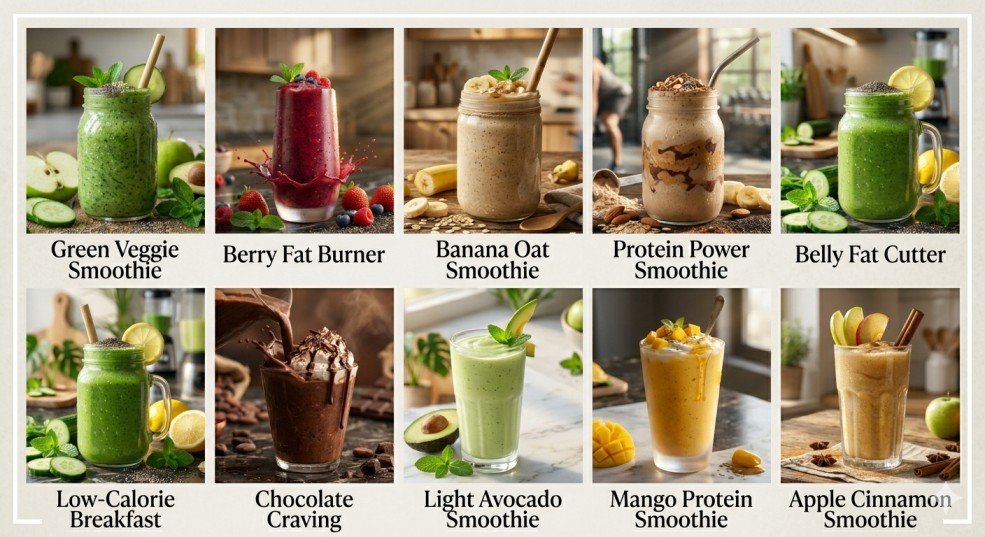
These are the 10 best smoothies for weight loss — each one built on nutrition science, under 350 calories, ready in under 5 minutes, and tested for taste.
Are Smoothies Really Good for Weight Loss?
This is the first question most people ask — and the honest answer is:
yes, but only when they are built correctly.
A poorly built smoothie — too much fruit, juice as the base, no protein — can easily hit 500 to 600 calories with minimal protein and almost no fiber.
That type of smoothie causes weight gain, not weight loss.
A correctly built smoothie — controlled fruit, a solid protein source, a fiber booster, and a low calorie liquid base — lands at 250 to 350 calories with 15 to 25 grams of protein and 5 to 10 grams of fiber.
That type of smoothie creates a sustainable calorie deficit, controls hunger for hours, and is easy to repeat every single day.
Research consistently shows that high-protein, high-fiber meal replacements reduce total daily calorie intake more effectively than traditional dieting.
The reason is simple: they remove the decision-making and the hunger that cause most diets to fail in the first place.
So smoothies are excellent for weight loss when they follow the right formula.
They are counterproductive when they do not.
The rest of this article shows you exactly how to build them correctly.
Why Most Diet Smoothies Fail
Most people trying smoothie-based weight loss hit the same wall.
They follow the recipes. They stay consistent. And the scale does not move.
Sometimes it goes the wrong direction.
The reason is almost always one of three things.
Too much fruit, not enough fiber.
A full banana, a cup of mango, and orange juice as the base can push a single smoothie past 70 grams of sugar.
Fruit is nutritious. But for weight loss, it needs to be portioned.
Half a banana is enough. A full one is closer to dessert.
Zero protein means zero satiety.
Without at least 15 grams of protein, you will be hungry again within 90 minutes.
That hunger leads to snacking. That snacking quietly erases the calorie deficit your smoothie created in the first place.
Store-bought smoothies are not diet food.
The branding says healthy. The nutrition label says otherwise.
Most bottled smoothies contain concentrated fruit juice, added syrups, and preservatives.
Some hit 400 to 600 calories per bottle with under 5 grams of protein.
The fix is simple: build your smoothie correctly. The rest of this article shows you exactly how.
How Smoothies Help You Lose Weight
When a smoothie is built with the right ingredients in the right portions, it targets the three core drivers of sustainable fat loss at the same time.
Calorie deficit. Hunger control. Consistency.
Fiber slows digestion and stabilizes blood sugar.
Ingredients like oats, chia seeds, and berries slow gastric emptying.
This keeps blood sugar stable, prevents insulin spikes, and keeps you full for three to four hours after drinking.
Protein reduces hunger hormones.
Protein lowers ghrelin, the primary hunger hormone.
It also increases peptide YY, the satiety hormone that tells your brain you are full.
On top of that, protein has the highest thermic effect of any macronutrient. Your body burns more calories just digesting it compared to carbohydrates or fat.
Controlled calories make the deficit automatic.
A correctly built weight loss smoothie lands between 250 and 350 calories.
That is a satisfying meal replacement that keeps you in a deficit without obsessive tracking.
Convenience drives consistency.
Smoothies take under 5 minutes to make. They travel easily. They taste good.
Those three factors make them far easier to sustain than complicated meal prep or restrictive eating plans.
Smoothie Macro Targets for Weight Loss
Meal Replacement Smoothie: Calories: 250 to 350 Protein: 15 to 25 grams Carbs: 25 to 40 grams Fat: 5 to 10 grams Fiber: 5 to 10 grams
Snack Smoothie: Calories: 150 to 250 Protein: 8 to 15 grams Carbs: 15 to 30 grams Fat: 3 to 8 grams Fiber: 3 to 7 grams
The single most important rule: always prioritize protein and fiber together.
That combination controls hunger more powerfully than any other nutritional pairing.
What Is the Rule of 3 for Smoothies?
Before building your first recipe, it helps to understand the foundational framework that makes every smoothie on this list work.
The rule of 3 is a simple system that helps you build a balanced, effective smoothie every time using just three core categories of ingredients.
Category 1 — A liquid base.
This is the foundation of your smoothie.
Choose water, unsweetened almond milk, low-fat milk, or brewed green tea.
Aim for 1 cup. Avoid fruit juice — it adds sugar and strips out fiber.
Category 2 — A fruit or vegetable.
This provides natural sweetness, vitamins, and fiber.
Use half to 1 cup of berries, half a banana, a green apple, or 1 cup of spinach.
Keep fruit portions controlled to manage sugar intake.
Category 3 — A protein and fat source.
This is what most people skip — and what separates a weight loss smoothie from a high-calorie juice.
Use half a cup of Greek yogurt, a scoop of protein powder, or a tablespoon of chia seeds and flaxseeds combined.
When you always include one from each category, your smoothie automatically hits the minimum threshold for protein, fiber, and calorie control needed to support fat loss.
Think of it as your non-negotiable checklist before every blend.
What Is the Best Type of Smoothie for Weight Loss?
Now that you understand the rule of 3, the answer to this question becomes straightforward.
The best type of smoothie for weight loss is a green protein smoothie.
Here is why that specific combination works better than any other type:
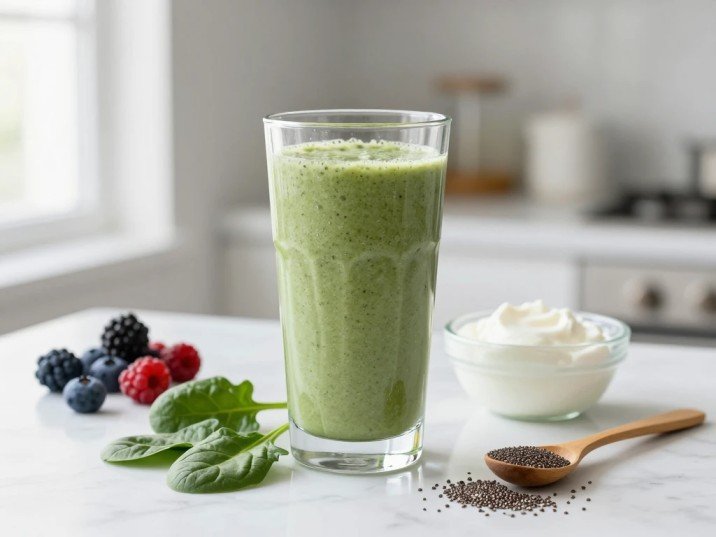
Green vegetables like spinach and kale add micronutrients and fiber at virtually zero calories.
Protein from Greek yogurt, low-fat milk, or protein powder controls hunger hormones for hours after drinking.
The low sugar content of greens means blood sugar stays stable — which prevents the energy crash and cravings that follow high-fruit smoothies.
A basic green protein smoothie template looks like this:
1 cup spinach, 1 cup unsweetened almond milk, half a cup of Greek yogurt, half a cup of berries, and 1 tablespoon chia seeds.
That combination lands at roughly 200 to 250 calories with 15 to 18 grams of protein and 7 to 9 grams of fiber.
It controls every variable that matters — calories, protein, fiber, and blood sugar — all at once.
What Is a Big 5 Smoothie?
Taking the rule of 3 one step further brings you to the Big 5 framework.
The Big 5 smoothie is built from five specific functional ingredient categories, each chosen to serve a distinct purpose in the body.
1. Leafy greens. Spinach, kale, or Swiss chard. These provide iron, magnesium, folate, and fiber at minimal calories.
2. Healthy fat. Avocado, chia seeds, flaxseeds, or a small amount of natural nut butter. Fat slows digestion, triggers satiety hormones, and supports absorption of fat-soluble vitamins from the greens.
3. Protein source. Greek yogurt, protein powder, silken tofu, or hemp seeds. Protein controls hunger hormones, supports muscle maintenance, and provides the thermic effect that increases calorie burn during digestion.
4. Fiber-rich fruit. Berries, green apple, or pear. These provide natural sweetness, antioxidants, and soluble fiber that feeds beneficial gut bacteria and stabilizes blood sugar after drinking.
5. A functional booster. This is the element that elevates the Big 5 above a standard recipe.
One targeted ingredient added for a specific health benefit.
Common examples include ginger for anti-inflammation, cinnamon for blood sugar control, turmeric with black pepper for fat oxidation, green tea as the liquid base for thermogenic effect, or raw cacao for cortisol reduction and appetite suppression.
When all five categories are present, the smoothie addresses calories, protein, fiber, healthy fat, blood sugar stability, and one targeted functional benefit — all in a single drink.
From the recipes below, the Avocado Satiety Bomb comes closest to the full Big 5 framework.
You can also build your own by picking one ingredient from each category above and blending them with 1 cup of your chosen liquid base.
The Perfect Weight Loss Smoothie Formula
Every recipe in this article follows this exact structure:
Liquid (1 cup) Water, unsweetened almond milk, or low-fat milk. Avoid fruit juice as a base. It adds sugar and strips out fiber.
Greens (1 cup) Spinach or kale. They add micronutrients and virtually zero calories. You will not taste them once everything is blended.
Fruit (half to 1 cup) Berries, apple, or half a banana maximum. Berries give the best fiber-to-sugar ratio of any fruit.
Protein (15 to 25 grams) Greek yogurt, low-fat milk, or protein powder. This is the element most home recipes skip — and the one that matters most for staying full.
Healthy Fat (1 to 2 teaspoons) Chia seeds, flaxseeds, or a small amount of nut butter. Fat slows digestion and triggers satiety hormones.
Fiber Booster (1 tablespoon) Oats, chia seeds, or flaxseeds. If your smoothie does not have at least 5 grams of fiber, you will be hungry within the hour.
The 10 Best Smoothies for Weight Loss
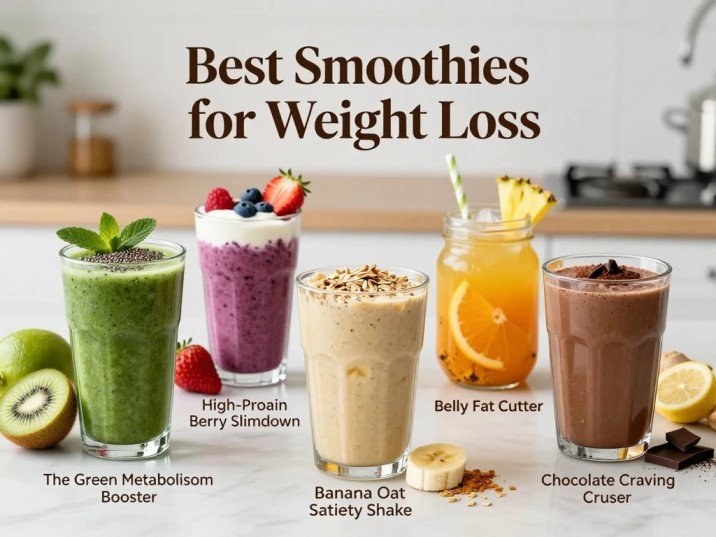
1. The Green Metabolism Booster
Best time to drink: Morning, fasted state.
Why this works:
Spinach adds virtually zero calories while delivering magnesium and iron — two minerals that support cellular energy metabolism.
The green apple provides 5 grams of natural fiber.
Lemon juice contains compounds shown in research to improve insulin sensitivity. Better insulin sensitivity means more of what you eat gets burned as fuel rather than stored as fat.
The chia seeds add a further 5 grams of fiber that expand in the stomach, physically reducing hunger for hours after drinking.
Ingredients:
1 cup fresh spinach 1 green apple, chopped Juice of half a lemon 1 teaspoon fresh ginger, grated 1 tablespoon chia seeds 1 cup cold water
Macros: Calories: 170 | Protein: 5g | Carbs: 34g | Fat: 3g | Fiber: 8g
Variation tip: Add half a teaspoon of spirulina powder for an extra 4 grams of protein.
Balance the earthy taste with an extra squeeze of lemon.
This keeps the smoothie under 200 calories while pushing total fiber past 10 grams.
2. High-Protein Berry Slimdown
Best time to drink: Breakfast or immediately after a workout.
Why this works:
Greek yogurt delivers 18 grams of slow-digesting casein protein.
Casein forms a gel in the stomach that releases amino acids gradually, keeping you full significantly longer than fast-digesting protein sources.
Mixed berries provide 7 grams of fiber and a dense load of antioxidants.
These antioxidants reduce chronic inflammation — which is directly linked to insulin resistance and fat accumulation, particularly around the abdomen.
This is one of the highest satiety-per-calorie smoothies on this entire list.
Ingredients:
1 cup mixed berries, frozen Half a cup of 0 percent fat Greek yogurt 1 cup unsweetened almond milk 1 tablespoon flaxseeds Half a teaspoon vanilla extract
Macros: Calories: 220 | Protein: 18g | Carbs: 28g | Fat: 6g | Fiber: 7g
Variation tip: Make it completely vegan by replacing Greek yogurt with half a cup of silken tofu plus 1 tablespoon of pea protein powder.
You will still reach 20 grams of protein and the texture stays creamy and thick.
3. Banana Oat Satiety Shake
Best time to drink: Breakfast or 45 minutes before training.
Why this works:
Rolled oats contain beta-glucan, a soluble fiber that is clinically proven to slow stomach emptying and reduce post-meal appetite.
Half a banana provides just enough natural sweetness and 3 grams of resistant starch.
Resistant starch feeds beneficial gut bacteria associated with leaner body composition in peer-reviewed research.
The chia seeds and cinnamon work together to further stabilize blood sugar after drinking.
This smoothie is designed to carry you from breakfast past noon without hunger.
Ingredients:
Half a frozen banana 2 tablespoons rolled oats 1 cup low-fat milk 1 tablespoon chia seeds Half a teaspoon cinnamon A pinch of sea salt
Macros: Calories: 280 | Protein: 12g | Carbs: 40g | Fat: 6g | Fiber: 5g
Variation tip: Add one scoop of vanilla whey protein to push total protein to 35 grams.
This converts the smoothie into a complete post-workout recovery meal under 400 calories — ideal for preserving muscle during a calorie deficit.
4. Belly Fat Cutter
Best time to drink: Morning, 20 minutes before eating.
Why this works:
Pineapple contains bromelain, an enzyme that reduces bloating and supports protein digestion.
Fresh ginger has been shown in multiple controlled studies to reduce waist circumference and lower fasting blood sugar — independent of calorie intake.
Turmeric contains curcumin, one of the most studied anti-inflammatory compounds in nutrition science.
Chronic inflammation directly blocks fat burning at the hormonal level by impairing leptin and insulin signaling.
This combination targets the root causes of stubborn belly fat rather than just calories alone.
Ingredients:
Three-quarter cup pineapple chunks 1 teaspoon fresh ginger, grated Juice of half a lemon Quarter teaspoon ground turmeric 1 tablespoon chia seeds 1 cup coconut water
Macros: Calories: 195 | Protein: 4g | Carbs: 38g | Fat: 1g | Fiber: 7g
Variation tip: Add a pinch of black pepper.
Research shows piperine, the active compound in black pepper, enhances curcumin absorption by up to 2000 percent.
The turmeric goes from decorative to genuinely therapeutic — without changing the flavor at all.
5. Chocolate Craving Crusher
Best time to drink: Afternoon snack or post-dinner craving.
Why this works:
Raw cacao contains theobromine, a compound that mildly suppresses appetite and raises serotonin levels.
This directly addresses the emotional side of cravings — which is responsible for breaking more diets than physical hunger alone.
The magnesium in cacao also lowers cortisol, the stress hormone most directly associated with abdominal fat storage.
At 255 calories with 16 grams of protein, this smoothie satisfies a chocolate craving completely while keeping the calorie deficit fully intact.
Ingredients:
1 tablespoon raw cacao powder Half a frozen banana 1 cup low-fat milk Half a cup of Greek yogurt 1 tablespoon chia seeds 1 teaspoon honey, optional
Macros: Calories: 255 | Protein: 16g | Carbs: 33g | Fat: 5g | Fiber: 6g
Variation tip: Replace the banana with 3 frozen strawberries to reduce carbohydrates by 10 grams.
This brings the smoothie close to keto-friendly territory at around 200 calories.
It still tastes like dessert.
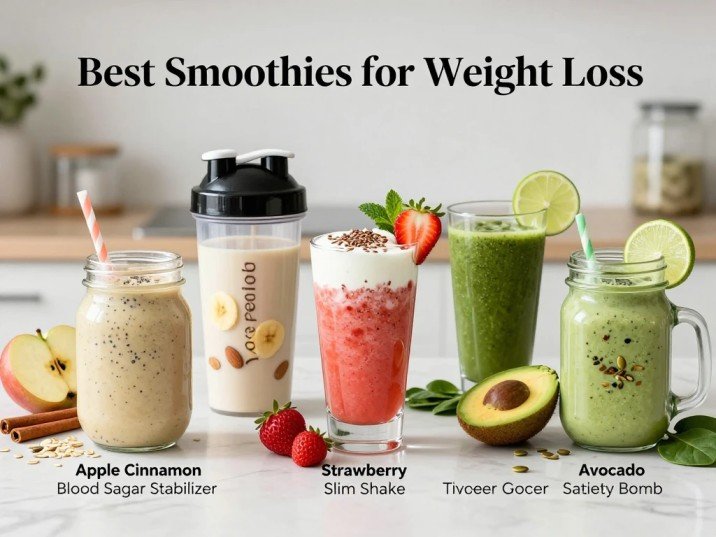
6. Apple Cinnamon Blood Sugar Stabilizer
Best time to drink: Breakfast or mid-morning snack.
Why this works:
Cinnamon is one of the most clinically validated blood sugar regulators available without a prescription.
Just half a teaspoon reduces post-meal glucose spikes by up to 29 percent, according to research in the Journal of Medicinal Food.
Lower glucose spikes mean less insulin released into the bloodstream.
Less insulin means less fat gets stored.
The apple provides pectin, a soluble fiber that forms a viscous gel in the gut and slows digestion further.
Combined with the beta-glucan from oats, this smoothie creates one of the most powerful blood sugar stabilizing effects possible from a single breakfast.
Ingredients:
1 medium apple, cored 2 tablespoons rolled oats Half a teaspoon cinnamon 1 cup low-fat milk Half a cup of Greek yogurt Ice cubes
Macros: Calories: 235 | Protein: 13g | Carbs: 36g | Fat: 4g | Fiber: 6g
Variation tip: This is the most budget-friendly recipe on the list.
Prep the dry oats and cinnamon in a small jar the night before.
Your morning smoothie will be ready in under 90 seconds. No excuses. No skipped breakfasts.
7. Post-Workout Protein Power
Best time to drink: Within 30 minutes of finishing training.
Why this works:
After training, muscle tissue is primed to absorb protein for repair and growth.
Whey protein reaches the bloodstream within 30 minutes of consumption, making it the fastest whole-food protein source available.
The banana’s fast-digesting carbohydrates simultaneously replenish muscle glycogen.
At 25 grams of protein and 330 calories, this smoothie prevents muscle breakdown during a calorie deficit.
Preserving muscle mass is what creates a leaner physique — rather than simply a lighter number on the scale.
Ingredients:
1 scoop vanilla whey protein 1 teaspoon natural peanut butter Half a frozen banana 1 cup water or low-fat milk 1 tablespoon flaxseeds A handful of ice
Macros: Calories: 330 | Protein: 25g | Carbs: 30g | Fat: 9g | Fiber: 4g
Variation tip: Make it fully plant-based by switching to pea protein isolate and oat milk.
Add 1 tablespoon of hemp seeds for a complete amino acid profile.
Pea protein carries a PDCAAS score of 0.89 — nearly equal to whey in muscle-building effectiveness.
8. Strawberry Slim Shake
Best time to drink: Breakfast or afternoon snack.
Why this works:
Strawberries carry one of the lowest sugar-to-fiber ratios of any fruit.
A full cup delivers only 7 grams of sugar alongside 3 grams of fiber and 141 percent of your daily Vitamin C.
Here is the part most people miss: Vitamin C is a required cofactor for synthesizing carnitine.
Carnitine is the molecule that physically transports fatty acids into mitochondria where they are burned as fuel.
Low Vitamin C levels directly slow fat oxidation — regardless of how clean the rest of your diet is.
Ingredients:
1 cup fresh or frozen strawberries Half a cup of 0 percent Greek yogurt 1 cup low-fat milk 1 tablespoon chia seeds Half a teaspoon vanilla extract
Macros: Calories: 200 | Protein: 14g | Carbs: 24g | Fat: 4g | Fiber: 6g
Variation tip: Always use frozen strawberries over fresh for blending.
They are cheaper, picked at peak nutritional density, and create a thicker and colder texture without needing ice.
The difference in taste and consistency is significant.
9. Green Tea Thermogenic Booster
Best time to drink: Mid-morning, replacing your second coffee.
Why this works:
Brewed green tea contains EGCG — epigallocatechin gallate — the most studied thermogenic compound in clinical nutrition.
Meta-analyses of randomized controlled trials show that EGCG increases 24-hour calorie expenditure by 3 to 4 percent.
That number compounds meaningfully over weeks and months.
More importantly, EGCG specifically targets fat oxidation — the process by which the body breaks down stored fat for energy.
This makes it uniquely suited for people experiencing a weight loss plateau.
Ingredients:
1 cup brewed green tea, cooled 1 cup fresh spinach Juice of half a lemon 1 tablespoon chia seeds Half a cup cucumber slices Fresh mint leaves
Macros: Calories: 120 | Protein: 5g | Carbs: 18g | Fat: 2g | Fiber: 7g
Variation tip: Brew a full pot of green tea, allow it to cool completely, and freeze it in an ice cube tray.
Use green tea cubes in any smoothie on this list for the thermogenic benefit — without diluting the flavor the way regular ice does.
10. Avocado Satiety Bomb
Best time to drink: Breakfast or lunch replacement.
Why this works:
Avocado’s primary fat is oleic acid — the same monounsaturated fatty acid found in olive oil.
It is extensively studied for its effect on fat-burning gene expression in liver cells.
A quarter avocado also delivers 4 grams of fiber and triggers the release of cholecystokinin.
Cholecystokinin is a satiety hormone produced in the small intestine that signals the brain to stop eating.
This is the smoothie for people who are hungry again an hour after every other breakfast they have tried.
This recipe also comes closest to the Big 5 framework mentioned earlier — combining leafy greens, healthy fat, protein, fiber-rich fruit, and cinnamon as the functional booster all in one glass.
Ingredients:
Quarter of a ripe avocado 1 cup unsweetened almond milk Half a cup of Greek yogurt Half a teaspoon cinnamon 1 tablespoon chia seeds Ice A pinch of sea salt
Macros: Calories: 290 | Protein: 11g | Carbs: 18g | Fat: 16g | Fiber: 9g
Variation tip: Add the avocado last when blending.
It prevents the blades from sticking and produces the smoothest texture in under 60 seconds.
The pinch of sea salt is not optional — it activates the natural flavor of avocado the same way it does in guacamole.
Key Ingredients for Weight Loss Smoothies
Spinach 5 calories per cup. Contains thylakoids, plant compounds shown to slow fat digestion and reduce hunger hormone activity by up to 95 percent in controlled studies.
Mixed Berries Highest antioxidant-to-sugar ratio of any fruit. Seven grams of fiber per cup. Clinically linked to improved insulin sensitivity and reduced visceral fat over time.
Chia Seeds One tablespoon delivers 5 grams of fiber and omega-3 fatty acids. They expand up to ten times their size in liquid, physically filling stomach space and slowing digestion.
Greek Yogurt 18 to 20 grams of casein protein per half cup. Keeps you full two to three times longer than fast-digesting protein sources due to its slow gel-forming digestion.
Rolled Oats Beta-glucan fiber clinically reduces post-meal blood sugar spikes and total cholesterol. Adds natural creaminess to any smoothie without significant calorie cost.
Flaxseeds Contain lignans that help regulate estrogen metabolism. Particularly important for women experiencing hormonal-pattern weight gain.
Ginger Documented thermogenic properties. Shown in peer-reviewed trials to reduce waist circumference independently of total calorie intake.
Cinnamon Reduces post-meal blood sugar spikes by up to 29 percent. One of the most underused, most affordable, and most evidence-backed fat-loss tools in any kitchen.
Avocado Oleic acid activates fat-burning gene expression in the liver. High fiber content combined with fat triggers the strongest satiety hormone response of any smoothie ingredient.
Raw Cacao Theobromine suppresses appetite and raises serotonin. Magnesium lowers cortisol. Together they target both the physical and emotional causes of overeating.
The 7-Day Weight Loss Smoothie Meal Plan
Use one smoothie as your breakfast meal replacement every morning.
Build lunch and dinner around lean protein, non-starchy vegetables, and a moderate portion of complex carbohydrates.
Maintain a daily calorie deficit of 300 to 500 calories from your total daily energy expenditure.
Monday — Green Metabolism Booster — 170 calories High fiber, low calorie start to the week.
Tuesday — High-Protein Berry Slimdown — 220 calories 18 grams protein, strong anti-inflammatory effect.
Wednesday — Banana Oat Satiety Shake — 280 calories Pre-gym fuel and sustained morning energy.
Thursday — Apple Cinnamon Blood Sugar Stabilizer — 235 calories Insulin control and steady afternoon energy.
Friday — Strawberry Slim Shake — 200 calories Vitamin C boost for fat oxidation.
Saturday — Post-Workout Protein Power — 330 calories Gym day muscle preservation and recovery.
Sunday — Chocolate Craving Crusher — 255 calories End the week with something that feels like a reward.
Expected results by week:
Week 1: Reduced bloating. Better digestion. More stable energy after meals.
Week 2: Noticeably lower hunger throughout the day. Reduced afternoon cravings.
Week 3 to 4: Visible fat loss when combined with a consistent calorie deficit and regular movement.
Repeat this cycle for a minimum of four weeks.
Real, visible fat loss requires sustained consistency more than it requires perfection.
Final Thoughts
The best smoothies for weight loss are not random combinations of healthy-sounding ingredients.
They are deliberately built systems — controlled calories, sufficient protein, high fiber, and ingredients chosen for their specific effect on hunger hormones, blood sugar, and fat metabolism.
When you combine that structure with the rule of 3, the Big 5 framework, a consistent weekly plan, correct portion sizes, and balanced meals for the rest of the day, smoothies become one of the most practical and repeatable fat-loss tools available.
Start with one recipe.
Make it five days in a row.
Build the habit before adding complexity.
Expect real results in three to four weeks — not three to four days.
When a craving threatens to break your streak, reach for the Chocolate Craving Crusher.
Because the system you enjoy is the only system you will actually sustain.

We also have weight loss workouts, Female Fitness,
Author: Saad — Fitness and Nutrition Content Writer
I am specializes in evidence-based fitness and nutrition content that translates peer-reviewed research into practical, actionable guidance for everyday people.
All recipes in this article are cross-referenced with published nutritional science and tested for real-world ease of preparation.
Frequently Asked Questions
What is the best smoothie for weight loss?
The best smoothie for weight loss is one that contains 15 to 25 grams of protein, 5 to 10 grams of fiber, and stays between 250 and 350 total calories. From this list, the High-Protein Berry Slimdown and the Apple Cinnamon Blood Sugar Stabilizer consistently deliver the best hunger control per calorie for most people.
Can smoothies help you lose belly fat specifically?
No food or drink targets belly fat in isolation. However, smoothies built with anti-inflammatory ingredients like ginger, turmeric, berries, and spinach reduce the chronic inflammation that drives visceral fat accumulation. Combined with a calorie deficit and regular exercise, they support belly fat reduction as part of total body fat loss.
Are smoothies better than solid food for weight loss?
Neither is superior. Smoothies offer speed, convenience, and precise macro control. Solid food offers more chewing-dependent satiety signals. For most people, replacing one meal per day with a well-built smoothie while eating whole food for the remaining meals is the most effective and sustainable combination.
How many smoothies should I drink per day to lose weight?
One meal-replacement smoothie per day is the optimal starting point for most people. A second smaller snack smoothie at 150 to 200 calories is acceptable. Beyond two per day, you risk replacing too many whole-food meals and losing important satiety signals that blended drinks cannot fully replicate.
Why am I drinking smoothies every day but not losing weight?
The most common causes are compensatory eating at other meals, underestimating calorie portions in the smoothie itself, or not maintaining an overall daily calorie deficit. Use a kitchen scale for the first two weeks. Weigh every ingredient. The gap between what people estimate and what they actually consume is almost always larger than expected.
What should I never put in a weight loss smoothie?
Avoid fruit juice as a liquid base, flavored yogurts with added sugar, more than one tablespoon of nut butter, full-fat coconut milk as the main liquid, and pre-sweetened protein powders with more than 5 grams of added sugar per scoop. Each of these mistakes can quietly add 100 to 200 calories to an otherwise effective recipe.
Do I need protein powder in weight loss smoothies?
No. Half a cup of Greek yogurt provides 18 grams of protein. Silken tofu provides 10 grams. Protein powder is convenient but not necessary. For budget-conscious readers, the Greek yogurt and low-fat milk combination in several recipes here delivers 15 to 20 grams of protein at significantly lower cost than most commercial protein powders.
Are smoothies good for weight loss at night?
Only if they are low in calories and sugar. The Green Tea Thermogenic Booster at 120 calories is the only recipe from this list that is appropriate as a late-night option. High-calorie or high-sugar smoothies consumed close to sleep interfere with overnight fat oxidation and can impair sleep quality.