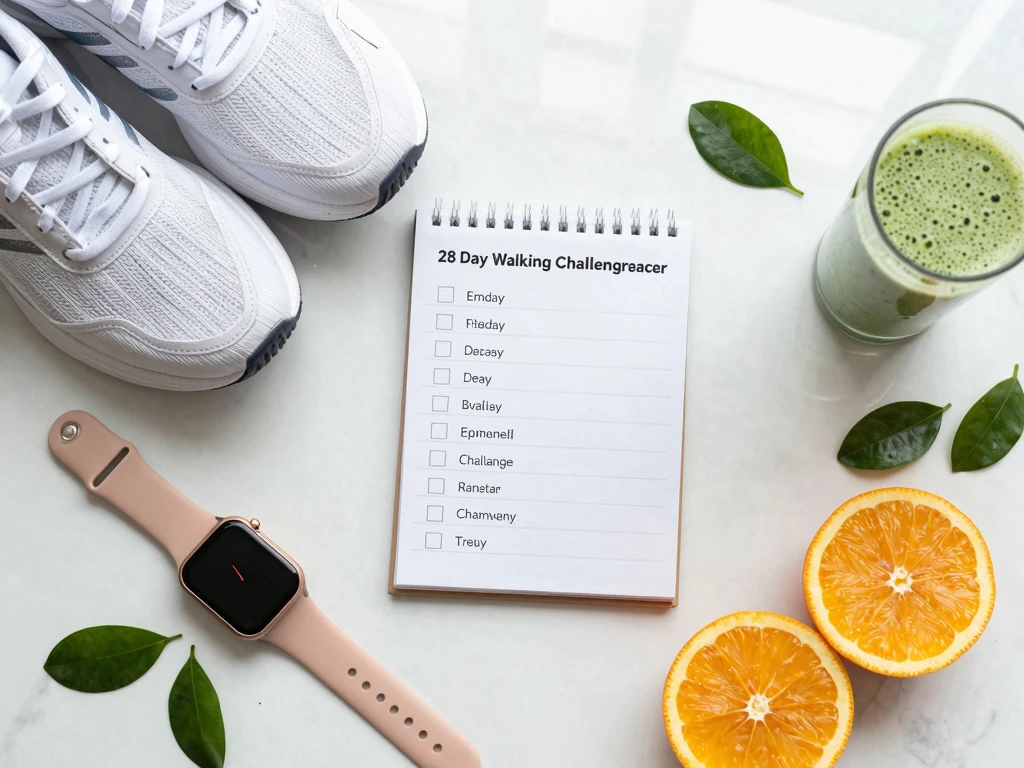
Transform Your Health with 28-Day Walking Challenge
Written by Saad | Fitness & Wellness Expert · 6 Years of Experience. | Review Cycle: Every 6 months
“Walking is one of the most underestimated tools in preventive medicine. A structured 28-day plan is exactly the kind of low-barrier, high-reward intervention I recommend to patients starting their health journey.”
If you are looking for a straightforward, highly effective way to revitalize your physical and mental well-being, you do not need an expensive gym membership or grueling, high-intensity boot camps. Sometimes, the most profound changes come from the simplest movements. Engaging in a dedicated 28 day walking plan or 28 day challenge focused entirely on walking might be the exact catalyst you need to jumpstart your health.
Embarking on a four week fitness transformation centered around walking is highly accessible, incredibly sustainable, and remarkably effective. Whether you are stepping outside to breathe in the fresh air or participating in a structured routine right in your living room, putting one foot in front of the other can change your life.

The Power of Putting One Foot in Front of the Other
Before diving into the mechanics of the plan, it is crucial to understand the incredible walking benefits that come from a consistent routine. Far too often, walking is dismissed as “too easy” to yield real results. However, fitness walking is a legitimate cardiovascular exercise that elevates your heart rate, burns calories, and strengthens your lower body.
Committing to a daily walking program stimulates blood flow, improves joint mobility, and enhances lung capacity. Furthermore, walking consistently can trigger the benefits of a metabolic reset. By staying active every day, you encourage your body to efficiently process sugars and fats, naturally regulating your blood sugar levels and increasing your baseline metabolic rate.
Defining Your 28-Day Walking Routine
The beauty of a 28-day walking challenge is its sheer flexibility. You can tailor it to your environment, fitness level, and daily schedule.
If you live in an area with unpredictable weather, or if you simply prefer the privacy of your own home, a 28 day indoor walking challenge is a fantastic alternative. These routines often involve marching in place, side steps, and gentle knee lifts to accumulate steps without needing a treadmill. In fact, many people find success by looking for a 28-day walking challenge free online to guide their daily routines.
To help you get started right away, we highly recommend securing a visual guide. Keeping a free 28 day indoor walking challenge pdf on your fridge or saved to your phone is a great way to map out your daily step goals and keep yourself accountable.

Week 1: Laying the Foundation and Habit Building
Your first week is not about breaking speed records; it is about establishing a new rhythm in your daily life. To understand how to build lasting habits, we must look at the psychology of behavioral change. Human brains thrive on dopamine—the reward chemical. When you set an easily achievable goal and meet it, your brain rewards you, making you want to repeat the behavior.
- Start with a Step Challenge: Instead of aiming for 10,000 steps immediately, set a baseline. If you currently walk 3,000 steps a day, make your week one goal 4,500 steps.
- Track Your Progress Visually: Utilizing a printable habit tracker for goals gives you a physical act of crossing off a completed day. This visual momentum is incredibly powerful.
- Focus on Posture: Keep your chest up, shoulders back, and swing your arms naturally. Proper mechanics prevent injury and increase caloric burn.
Week 2: Dialing in Nutrition for Better Energy
As you enter the second week, your body will begin demanding more quality fuel to sustain your new activity level. You cannot out-walk a poor diet. This is the perfect time to introduce a whole food nutrition plan to complement your physical efforts.

If you have never planned your meals before, consulting a meal prepping for beginners guide can save you time, money, and unnecessary stress. Meal prepping ensures that when you return from a long, brisk walk, you have a healthy option ready to go, rather than reaching for processed convenience foods.
During this week, pay close attention to your macronutrient balance for weight loss and energy sustainability:
- Complex Carbohydrates: Foods like oats, sweet potatoes, and brown rice provide slow-releasing energy for your walks.
- Lean Proteins: Chicken, tofu, fish, and legumes help repair the muscle tissue in your legs and core.
- Healthy Fats: Avocados, nuts, and olive oil keep you satiated and support joint health.
Week 3: Adding Variety and Pushing Through
Week three is notoriously the toughest phase of any new program. The initial excitement has faded, and the routine can start to feel like a chore. Overcoming the third week slump requires a mix of mental fortitude and strategic variation.
To keep things fresh, try taking a different walking route, listening to a new podcast, or inviting a friend to join you. If you have been exclusively walking outdoors, this is a great time to swap in a low impact home workout routine to give your muscles a different kind of stimulus.
- Introduce Cross-Training: You might be curious about bodyweight training vs weightlifting to supplement your walking. For this 28-day phase, simple bodyweight exercises—like squats, lunges, and calf raises—are perfect. They build strength in the specific muscles you use for walking without overtaxing your central nervous system or requiring heavy gym equipment.
- Interval Walking: Try walking at a moderate pace for three minutes, followed by a brisk, power-walk pace for one minute. Repeat this cycle for 20 minutes to spike your heart rate and break up the monotony.

Week 4: Finishing Strong and Tracking Success
You have made it to the final week. Your endurance is higher, your breathing is more controlled, and your daily walk likely feels like a non-negotiable part of your day. Now is the time to evaluate how far you have come using incremental progress tracking methods.
While stepping on the scale is one way to measure progress, it rarely tells the whole story. Instead, place your focus on measuring non-scale victories.
Consider the following non-scale victories:
- Do your clothes fit a little looser around the waist or thighs?
- Are you sleeping more deeply and waking up feeling more rested?
- Do you have more sustained energy throughout the afternoon?
- Has your resting heart rate decreased?
- Are you experiencing a more positive, stable mood throughout the day?
Recognizing these subtle yet profound shifts is what transforms a temporary challenge into a lifelong habit.
Strategies for Long-Term Consistency
Completing the 28 days is a massive accomplishment, but the ultimate goal is staying consistent with lifestyle goals well beyond the four-week mark. How do you ensure you do not revert to old, sedentary habits on day 29?
First, acknowledge the vital importance of rest and recovery. Walking is low impact, but doing it every single day for a month still puts stress on your ligaments, tendons, and muscles. Incorporate active recovery days where your walking is purely for leisure at a slow pace. Dedicate 10 to 15 minutes post-walk to stretch your calves, hamstrings, and hip flexors. Drink plenty of water to keep your joints lubricated and your muscles hydrated.

Second, continually set new, micro-goals. Once you complete this program, perhaps your next goal is to walk a 5K, or to increase your daily average step count by another 2,000 steps. Keep the dopamine loop active by continuously giving your brain a target to hit.
Final Thoughts on Your Walking Journey
The decision to start a walking challenge is a decision to invest in your long-term health, mobility, and mental clarity. By combining a dedicated daily step goal with a balanced approach to whole food nutrition, adequate hydration, and proper recovery, you are setting the stage for a profound physical transformation.
Remember, you do not need to complicate fitness to see incredible results. Whether you utilize a free downloaded tracker, march in your living room, or hit the local nature trails, the magic lies in the consistency of putting one foot in front of the other. Lace up your shoes, step out the door (or into your living room), and let the next 28 days be the start of your healthiest chapter yet.
About the Author Saad is a fitness and wellness expert with 6 years of professional experience designing and delivering evidence-based health programs. He specializes in beginner-friendly fitness planning, walking-based routines, and sustainable lifestyle transformation. Throughout his career, Saad has worked with clients across varying fitness levels, helping them achieve measurable results without the need for expensive equipment or gym memberships. His content is grounded in practical, real-world experience and a deep commitment to making health accessible to everyone.
Q&A
Question: What benefits can I realistically expect from a 28-day walking plan?
Short answer: Consistent walking is legitimate cardio that elevates your heart rate, burns calories, and strengthens your lower body. Over four weeks, you can improve blood flow, joint mobility, and lung capacity. Staying active daily can also support a “metabolic reset,” helping your body process sugars and fats more efficiently, which naturally regulates blood sugar levels and can raise your baseline metabolic rate.
Question: I’m a beginner—how should I set my step goals in Week 1?
Short answer: Establish a realistic baseline and increase it modestly. If you average 3,000 steps, aim for around 4,500 in Week 1 rather than jumping to 10,000. Use a printable habit tracker to visually mark each day and build momentum. Focus on posture—chest up, shoulders back, and a natural arm swing—to prevent injury and boost efficiency.
Question: What if I can’t walk outside or don’t have a treadmill?
Short answer: Do an indoor walking challenge. March in place, add side steps, and use gentle knee lifts to accumulate steps at home. A free 28-day indoor walking challenge PDF saved to your phone or posted on your fridge can guide daily targets and keep you accountable without needing special equipment.
Question: How should I adjust my nutrition in Week 2 to support my walks?
Short answer: You can’t out-walk a poor diet—pair your routine with whole foods and simple meal prep. Emphasize complex carbs (oats, sweet potatoes, brown rice) for steady energy, lean proteins (chicken, tofu, fish, legumes) for muscle repair, and healthy fats (avocado, nuts, olive oil) for satiety and joint support. A beginner-friendly meal-prep plan helps you refuel well after brisk walks.
Question: Motivation dips in Week 3—how do I push through and keep progressing?
Short answer: Add variety and structure. Change routes, try a new podcast, or invite a friend. Include light cross-training with bodyweight moves like squats, lunges, and calf raises to strengthen walking muscles without heavy equipment. Use interval walking—3 minutes moderate, 1 minute brisk, repeated for about 20 minutes—to raise your heart rate and break monotony. In Week 4, track non-scale victories (looser clothes, better sleep, steadier energy, lower resting heart rate, improved mood) and, after Day 28, sustain results with active recovery days, post-walk stretching (10–15 minutes), good hydration, and new micro-goals (e.g., a 5K or +2,000 daily steps).