Written by Saad | Fitness & Wellness Researcher Last Updated: May 2026
⚠️ Medical Disclaimer: This article is for general informational purposes only and is not a substitute for professional medical advice. PCOS is a medical condition — always consult your doctor or a registered dietitian before making dietary changes.
PCOS Diet Plan: Best Foods to Eat, What to Avoid & Free 7-Day Meal Plan
Table of Contents
- What Is PCOS and Why Does Diet Matter?
- How Does the PCOS Diet Work?
- The Best Diet Approaches for PCOS
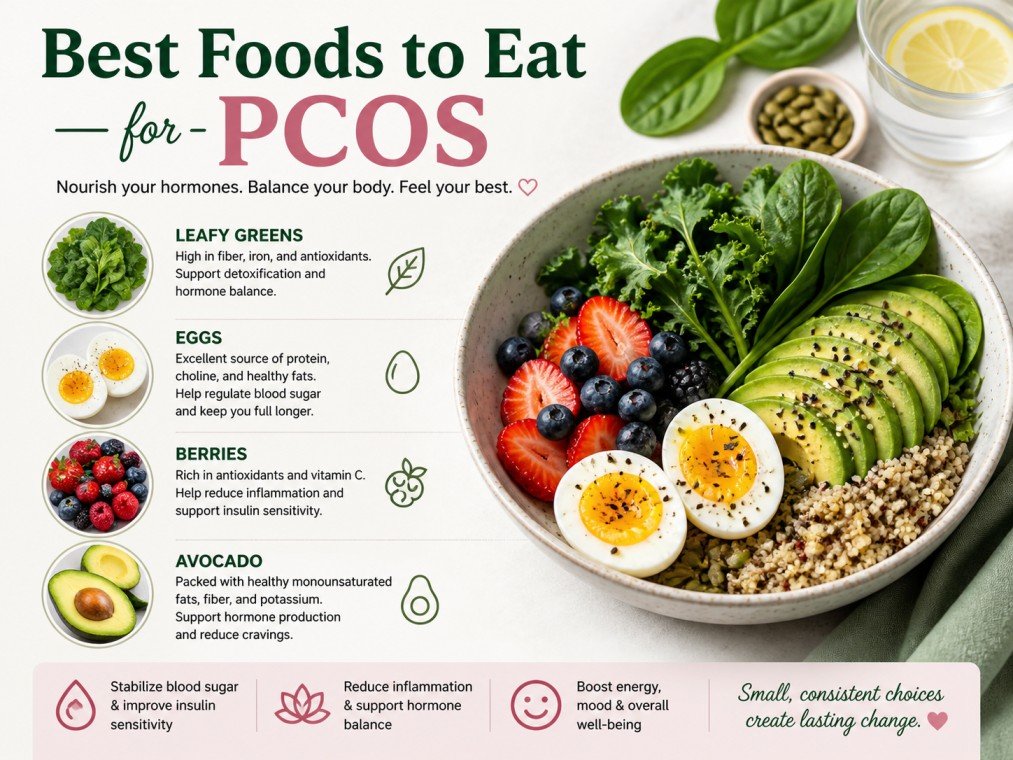
- Best Foods to Eat on a PCOS Diet
- Foods to Avoid With PCOS
- PCOS Diet Plan for Weight Loss
- Free 7-Day PCOS Meal Plan
- Meal Timing Tips for PCOS
- Best Supplements for PCOS
- Lifestyle Tips That Support Your PCOS Diet
- Final Thoughts
- PCOS Diet FAQ (People Also Ask)
What Is PCOS and Why Does Diet Matter?
If you have PCOS, your PCOS diet plan is one of the most powerful tools you have to manage your symptoms naturally. Polycystic Ovary Syndrome (PCOS) affects 1 in 10 women of reproductive age worldwide. It causes hormonal imbalances, insulin resistance, weight gain, irregular periods, acne, and fertility challenges.
The good news? Research consistently shows that the right foods can reduce PCOS symptoms significantly — without extreme dieting or cutting out entire food groups.
This guide gives you everything you need: the science behind PCOS nutrition, a complete food list, and a free 7-day PCOS meal plan to get started today. and if you want Women-specific routines are available how to tone your body for women.
💡 Quick Answer: The best PCOS diet focuses on low-glycemic foods, lean protein, healthy fats, and fiber-rich vegetables to keep blood sugar stable and reduce inflammation.
How Does the PCOS Diet Work?
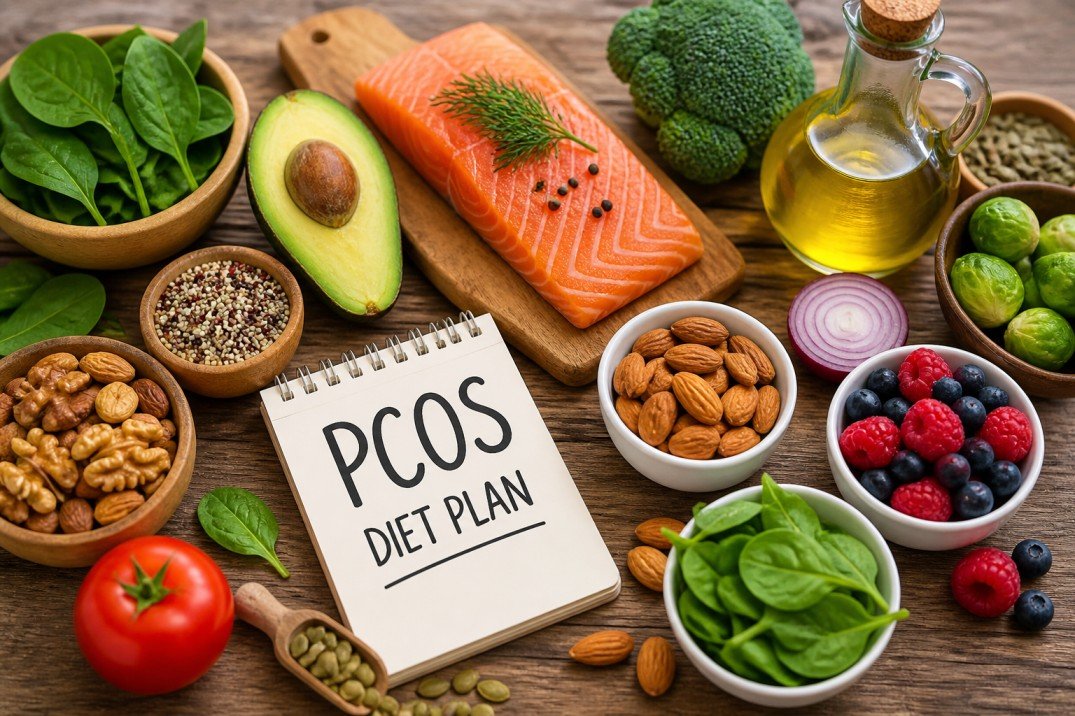
To understand why diet matters so much for PCOS, you need to understand two key problems happening in your body.
Problem 1 — Insulin Resistance
Up to 75% of women with PCOS have insulin resistance. This means your body’s cells don’t respond well to insulin — the hormone that controls blood sugar. When cells ignore insulin, your body produces even more of it. High insulin levels then signal your ovaries to produce excess androgens (male hormones like testosterone). This is what causes many of your worst PCOS symptoms: weight gain around the belly, acne, irregular periods, and unwanted hair growth.
The solution: Eat foods that keep blood sugar stable so insulin levels stay low.
Problem 2 — Chronic Inflammation
Women with PCOS carry a higher level of low-grade inflammation throughout the body. This inflammation makes every PCOS symptom worse and raises the long-term risk of type 2 diabetes, heart disease, and liver problems.
The solution: Eat anti-inflammatory whole foods and avoid processed foods that fuel the fire.
When you fix both of these problems with the right diet, your hormone levels begin to rebalance, symptoms ease, and weight becomes easier to manage.
The Best Diet Approaches for PCOS
No single “PCOS diet” exists by name, but three well-researched eating styles consistently produce the best results for women with polycystic ovary syndrome.
1. The Mediterranean Diet
Widely recommended by doctors and dietitians as the top dietary pattern for PCOS. It is rich in vegetables, legumes, whole grains, olive oil, fatty fish, and nuts — all foods that reduce inflammation and improve insulin sensitivity. Multiple studies link the Mediterranean diet to lower androgen levels, better cholesterol, and more regular periods in women with PCOS. It is also easy to follow long-term.
2. The Low Glycemic Index (Low-GI) Diet
A low-GI diet focuses on carbohydrates that digest slowly and cause a gradual rise in blood sugar — not a spike. Foods like oats, lentils, sweet potatoes, and berries have a low glycemic index. This directly targets insulin resistance, which is the root driver of most PCOS symptoms.
3. The Anti-Inflammatory Diet
Since chronic inflammation worsens PCOS at a cellular level, building every meal around anti-inflammatory foods — colorful vegetables, berries, fatty fish, turmeric, ginger, and olive oil — provides meaningful symptom relief over time. Explore beginner-friendly Home Workout routines for equipment-free training
Best approach: Combine all three. The 7-day meal plan below does exactly that.
Best Foods to Eat on a PCOS Diet
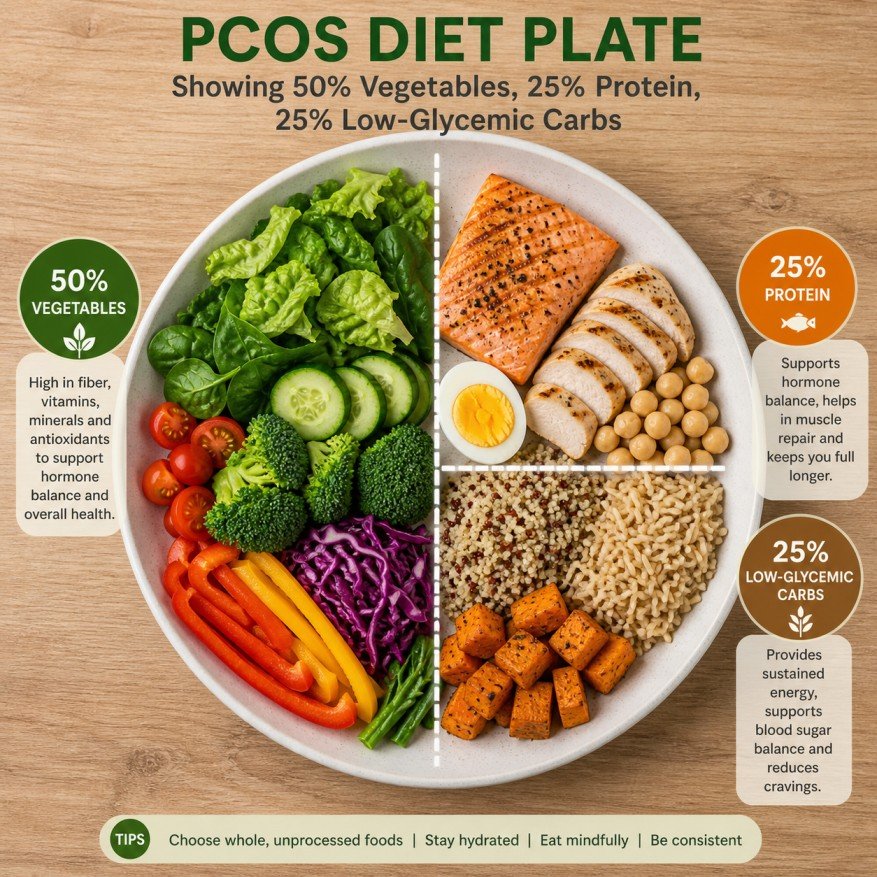
Non-Starchy Vegetables (Fill Half Your Plate)
Vegetables are the cornerstone of every PCOS-friendly meal. They are high in fiber (which slows glucose absorption and prevents insulin spikes), rich in antioxidants that fight inflammation, and low in calories.
Best choices:
- Spinach, kale, Swiss chard, and arugula
- Broccoli, cauliflower, and Brussels sprouts
- Zucchini, bell peppers, and cucumber
- Asparagus, mushrooms, and green beans
- Tomatoes, onions, and garlic
Special note on cruciferous vegetables: Broccoli, kale, and cauliflower contain natural compounds (DIM and indole-3-carbinol) that help your liver clear excess estrogen from the body — especially important for hormone balance in PCOS.
Lean Proteins (Aim for 25–30g Per Meal)
Protein slows digestion, prevents blood sugar crashes, keeps you full for longer, and supports lean muscle mass — which directly improves insulin sensitivity. Never eat a meal without a protein source.
Best choices:
- Eggs (complete protein, rich in choline and B vitamins)
- Chicken breast and turkey
- Salmon, sardines, mackerel, and trout (loaded with omega-3s)
- Lentils, chickpeas, and black beans
- Tofu and tempeh
- Plain Greek yogurt and cottage cheese
Low-Glycemic Carbohydrates (25% of Your Plate)
Carbohydrates are not the enemy in PCOS — refined carbohydrates are. Choosing low-GI, high-fiber carbs gives your body steady energy without triggering insulin spikes.
Best choices:
- Oats (steel-cut or rolled — not instant)
- Quinoa and brown rice
- Sweet potatoes and butternut squash
- Lentils and beans
- Whole grain bread and pasta (in moderate portions)
- Barley and farro
Healthy Fats (Include at Every Meal)
Healthy fats slow digestion, support hormone production, reduce inflammation, and help you absorb fat-soluble vitamins. The key is choosing anti-inflammatory unsaturated fats over pro-inflammatory saturated and trans fats.
Best choices:
- Extra virgin olive oil
- Avocado
- Walnuts, almonds, and pistachios
- Chia seeds and flaxseeds
- Fatty fish (salmon, sardines)
Omega-3 fatty acids deserve special mention: research shows higher omega-3 intake reduces androgen levels, lowers triglycerides, and improves insulin sensitivity in women with PCOS.
Low-Sugar Fruits
Fruit gets an unfair bad reputation in PCOS nutrition. Whole fruit contains fiber that slows sugar absorption, plus vitamins, minerals, and powerful antioxidants. Stick to lower-sugar options and always eat fruit as part of a balanced meal — not alone.
Best choices:
- Blueberries, raspberries, and strawberries (very low GI, very high antioxidants)
- Apples and pears (always eat the skin for fiber)
- Cherries and kiwi
- Oranges and grapefruit
- Pomegranate (research links it to lower androgen levels)
Gut-Friendly and Fermented Foods
Emerging research shows a clear connection between gut health and PCOS. Women with PCOS often have altered gut bacteria, which worsens insulin resistance and inflammation. Probiotic-rich fermented foods help restore a healthier gut environment.
Best choices:
- Plain Greek yogurt and kefir
- Sauerkraut and kimchi
- Miso and tempeh
- Prebiotic foods (garlic, onions, leeks, asparagus, oats)
PCOS Power Spices
These herbs and spices are backed by clinical research for PCOS:
- Cinnamon — Shown in multiple studies to improve insulin sensitivity and help regulate menstrual cycles. Add to oatmeal, smoothies, or yogurt daily.
- Turmeric — Its active compound curcumin is one of nature’s strongest anti-inflammatory agents. Always pair with black pepper to enhance absorption by up to 2000%.
- Ginger — Reduces inflammation and helps stabilize blood sugar.
- Spearmint — Studies show regular spearmint tea may reduce testosterone levels in women with PCOS.
Foods to Avoid With PCOS
These foods directly worsen insulin resistance, inflammation, and hormonal imbalance. You don’t need to be perfect — but minimizing these consistently makes a real difference.
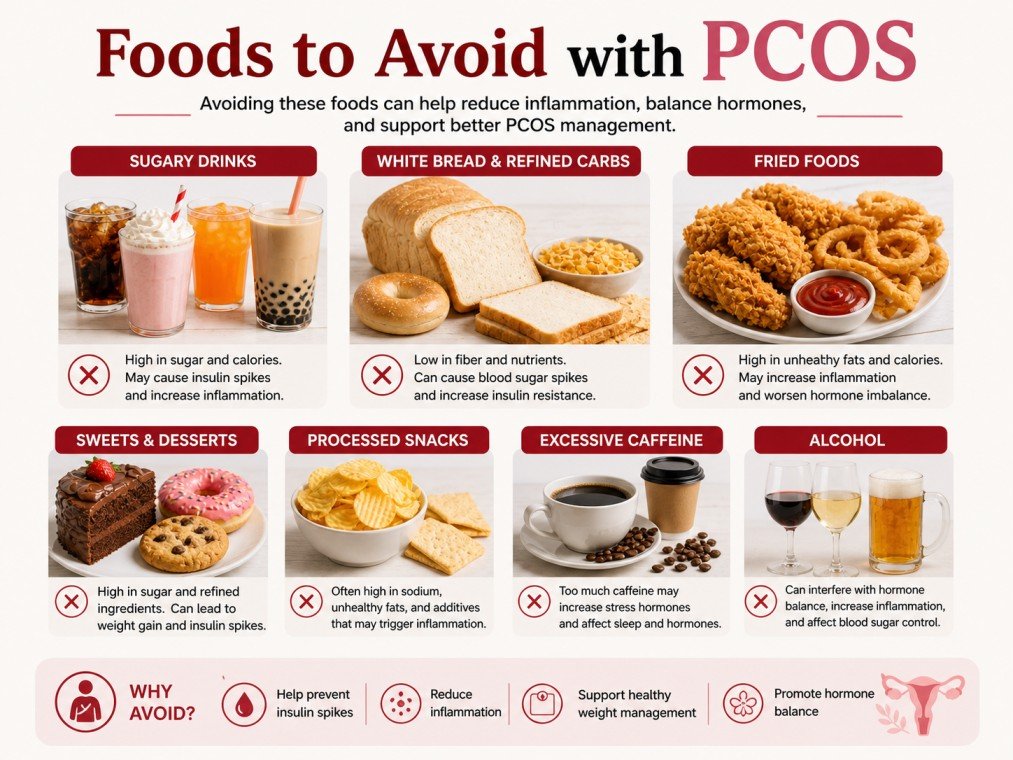
Refined Carbohydrates and Added Sugar
White bread, white rice, regular pasta, pastries, sugary cereals, candy, and most packaged snack foods are rapidly digested and cause sharp blood sugar and insulin spikes. These are the most impactful foods to cut back on.
Swap for: Whole grain alternatives, oats, quinoa, sweet potatoes, lentils.
Sugary Beverages
Sodas, fruit juices (even “natural” ones), energy drinks, sweetened coffees, and sports drinks flood your bloodstream with sugar and cause immediate insulin spikes — with zero fiber to slow absorption.
Swap for: Water, sparkling water with lemon, herbal teas, spearmint tea, or unsweetened coffee.
Fried and Ultra-Processed Foods
French fries, fried chicken, potato chips, fast food, and processed packaged foods are loaded with inflammatory omega-6 fats, refined oils, and additives that worsen systemic inflammation.
Swap for: Baked, grilled, or air-fried versions of your favorites.
Processed Meats
Sausages, bacon, hot dogs, salami, and deli meats are high in saturated fat and pro-inflammatory compounds. Enjoy lean, minimally processed meats instead.
Alcohol
Alcohol is processed as sugar in the body, raises inflammation markers, disrupts sleep, and interferes with hormone balance. Women with PCOS also have a higher risk of fatty liver disease, making this especially important to limit.
PCOS Diet Plan for Weight Loss
Even modest weight loss of just 5–10% of body weight has been shown in research to significantly improve insulin sensitivity, restore regular periods, reduce androgen levels, and improve fertility outcomes.
The key is NOT extreme calorie restriction. Severe dieting spikes cortisol (a stress hormone), slows metabolism, disrupts hormones further, and is impossible to sustain. Instead, follow these evidence-backed principles:
Eat breakfast within 60–90 minutes of waking. A protein-rich breakfast stabilizes blood sugar for the entire day and reduces afternoon cravings.
Never skip meals. Skipping meals causes blood sugar to drop, cortisol to rise, and cravings for high-sugar foods to spike.
Build every plate with the PCOS formula: 50% non-starchy vegetables + 25% lean protein + 25% low-GI carbohydrate + a small amount of healthy fat.
Always pair carbs with protein or fat. Never eat a carbohydrate source alone. Pairing slows digestion and prevents insulin spikes.
Aim for 25–30g protein per meal. This keeps you full, reduces cravings, and supports the lean muscle that improves insulin sensitivity.
Move your body every day. Even a 20-minute walk after meals significantly blunts post-meal blood sugar and insulin response.
Free 7-Day PCOS Meal Plan
This PCOS meal plan is designed to stabilize blood sugar, reduce inflammation, support hormone balance, and keep you full and energized. Adjust portions based on your individual needs and activity level.
Day 1 — Monday
Breakfast: Veggie egg muffins — 3 eggs whisked with spinach, bell pepper, and mushrooms, baked in a muffin tin. Side of fresh blueberries.
Morning Snack: Apple slices + 2 tablespoons almond butter
Lunch: Large salad with grilled chicken, chickpeas, cucumber, cherry tomatoes, avocado, and lemon-olive oil dressing
Afternoon Snack: Plain Greek yogurt with chia seeds and a sprinkle of cinnamon
Dinner: Baked salmon with roasted asparagus and quinoa drizzled with olive oil and lemon
Day 2 — Tuesday
Breakfast: Overnight oats with rolled oats, unsweetened almond milk, chia seeds, topped with blueberries and walnuts
Morning Snack: Small handful of mixed nuts (almonds, walnuts, pistachios)
Lunch: Turkey and hummus whole wheat wrap with lettuce, tomato, cucumber, and shredded carrots
Afternoon Snack: Carrot and celery sticks with guacamole
Dinner: Chicken and vegetable stir-fry (broccoli, snap peas, bell peppers) with brown rice in sesame oil
Day 3 — Wednesday
Breakfast: Green smoothie — spinach, frozen banana, frozen berries, 1 tablespoon flaxseed, 1 scoop protein powder, unsweetened almond milk
Morning Snack: Two hard-boiled eggs
Lunch: Lentil soup with whole grain bread and a simple green salad
Afternoon Snack: Plain kefir with a handful of pumpkin seeds
Dinner: Baked cod with roasted sweet potato wedges and garlic-sautéed kale in olive oil
Day 4 — Thursday
Breakfast: Scrambled eggs with avocado on whole grain sourdough toast, topped with red pepper flakes
Morning Snack: A pear and a piece of string cheese
Lunch: Buddha bowl — brown rice, roasted chickpeas, cucumber, cherry tomatoes, edamame, cabbage, tahini-lemon dressing
Afternoon Snack: Spearmint tea and a small handful of dark chocolate chips (70%+ cacao)
Dinner: Grass-fed beef vegetable kebabs over cauliflower rice with herbed yogurt dip
Day 5 — Friday
Breakfast: Greek yogurt parfait — plain full-fat Greek yogurt, fresh raspberries, hemp seeds, small drizzle of honey
Morning Snack: Sliced bell peppers with hummus
Lunch: Grilled salmon salad with mixed greens, avocado, roasted beets, walnuts, and balsamic vinaigrette
Afternoon Snack: Energy bites — oats, peanut butter, chia seeds, dark chocolate chips (no bake)
Dinner: Lemon herb baked chicken thighs with roasted Brussels sprouts and farro
Day 6 — Saturday
Breakfast: Veggie frittata — eggs, zucchini, spinach, sun-dried tomatoes, and goat cheese, baked in the oven
Morning Snack: Green smoothie (kale, cucumber, green apple, ginger, lemon, water)
Lunch: Turkey burger on a portobello mushroom cap with lettuce, tomato, onion, avocado, and cucumber salad on the side
Afternoon Snack: Rice cakes with almond butter and sliced strawberries
Dinner: One-pan baked shrimp with cherry tomatoes, olives, capers, and garlic over whole grain pasta
Day 7 — Sunday
Breakfast: Steel-cut oatmeal with sliced almonds, cinnamon, ground flaxseed, and stewed apples
Morning Snack: Cottage cheese with pineapple chunks
Lunch: Lentil and vegetable curry (lentils, coconut milk, turmeric, ginger, spinach, tomatoes) over brown rice
Afternoon Snack: Homemade trail mix — mixed nuts, pumpkin seeds, unsweetened coconut, a few dried cranberries
Dinner: Herb-roasted chicken with mashed cauliflower and roasted root vegetables (carrots, parsnips, turnips) in olive oil and rosemary
Meal Timing Tips for PCOS
What you eat matters — but when you eat matters too. These timing habits directly support blood sugar and hormone regulation:
Eat breakfast within 60–90 minutes of waking. Skipping breakfast raises cortisol and worsens insulin resistance for the rest of the day.
Space meals 3–5 hours apart. Never go more than 5–6 hours without eating during the day. Longer gaps cause blood sugar to drop sharply, which triggers cortisol and intense cravings.
Stop eating 2–3 hours before bed. Late-night eating disrupts overnight hormonal processes including growth hormone release.
Be cautious with intermittent fasting. Prolonged fasting windows of 16+ hours can disrupt menstrual cycles and worsen blood sugar control in some women with PCOS. If you try it, start with a 12-hour overnight window only, monitor your cycle closely, and consult your doctor first.
Best Supplements for PCOS
Food always comes first — but these supplements have meaningful clinical evidence behind them for PCOS:
Inositol (Myo-Inositol + D-Chiro-Inositol): The most researched PCOS supplement. Acts directly on insulin signaling pathways. Studies show it improves insulin sensitivity, reduces testosterone levels, restores ovulation, and improves egg quality.
Omega-3 Fatty Acids: If you don’t eat fatty fish regularly, a high-quality fish oil supplement helps reduce inflammation, lower triglycerides, and improve androgen levels.
Vitamin D: Deficiency is extremely common in PCOS and strongly linked to worsened insulin resistance. Get your levels tested first.
Magnesium: Many women with PCOS are deficient. Magnesium plays a direct role in insulin sensitivity and glucose metabolism. Magnesium glycinate is the most absorbable form.
N-Acetyl Cysteine (NAC): An antioxidant that has shown promise for reducing insulin resistance and inflammation markers in PCOS.
Always discuss supplements with your doctor or registered dietitian before starting. Some interact with medications.
Lifestyle Tips That Support Your PCOS Diet
Your diet works best when paired with these lifestyle habits:
Exercise regularly. Aim for 2–3 strength training sessions per week (builds insulin-sensitive muscle) plus 150 minutes per week of moderate cardio (walking, swimming, cycling). Avoid excessive high-intensity training as it can spike cortisol and worsen hormonal disruption.
Manage stress daily. Cortisol — your main stress hormone — directly raises blood sugar and disrupts reproductive hormones. Even 10 minutes of meditation or slow breathing per day makes a measurable difference.
Prioritize sleep. Poor sleep worsens insulin resistance, elevates cortisol, increases hunger hormones, and disrupts reproductive hormones. Aim for 7–9 hours per night. Women with PCOS have higher rates of insomnia and sleep apnea — both worth treating.
Drink more water. Proper hydration supports digestion, blood sugar regulation, and hormone clearance. Aim for 2–2.5 liters per day. Add lemon, cucumber, or mint for flavor without sugar.
Follow the 80/20 rule. Eat in a PCOS-supportive way 80% of the time and leave 20% room for enjoyment and real life. Rigid perfection increases stress, which directly worsens PCOS.
Final Thoughts
A PCOS diagnosis can feel overwhelming. But your diet is one area where you have real, direct control — and the science shows that control matters.
You do not need to follow a restrictive elimination diet. You do not need to cut out carbs or survive on salads. What you need is a consistent, realistic pattern of eating that keeps your blood sugar stable, reduces inflammation, and gives your body the nutrients it needs to produce hormones properly.
Start small. Pick two or three changes from this guide and build from there. Track how you feel over 4–6 weeks — your energy, your cycle, your skin, your digestion. Most women notice real improvements within the first month.
You deserve to feel well. And with the right PCOS diet plan, that is absolutely within reach.
Disclaimer: This article is for informational and educational purposes only. It is not a substitute for professional medical advice, diagnosis, or treatment. Always consult your healthcare provider, registered dietitian, or endocrinologist before making significant changes to your diet or supplement routine.
PCOS Diet FAQ (People Also Ask)
These are the most commonly searched questions about the PCOS diet — directly answering what people ask in Google search.
Q: What is the best diet for PCOS? A: The best PCOS diet is a low-glycemic, anti-inflammatory eating pattern rich in whole foods — vegetables, lean protein, healthy fats, and fiber-rich carbohydrates. The Mediterranean diet is the most well-researched and widely recommended pattern for PCOS.
Q: What foods should I avoid with PCOS? A: Avoid refined carbohydrates (white bread, white rice, pastries), sugary beverages (sodas, fruit juice, energy drinks), fried foods, ultra-processed snacks, and processed meats. These all spike insulin and worsen inflammation — the two key problems driving PCOS symptoms.
Q: Can a PCOS diet help you lose weight? A: Yes. A PCOS diet focused on blood sugar stability, adequate protein, and whole foods can support sustainable weight loss. Even 5–10% body weight reduction significantly improves insulin sensitivity, hormone balance, and menstrual regularity in women with PCOS.
Q: Should I cut carbs completely for PCOS? A: No. Eliminating all carbohydrates is not recommended for PCOS and is unnecessary. The goal is to choose low-glycemic, fiber-rich carbohydrates — like oats, quinoa, sweet potatoes, and lentils — rather than refined carbs. Completely cutting carbs can deprive your body of essential fiber and disrupt gut health.
Q: Is intermittent fasting good for PCOS? A: Results are mixed. Some women with PCOS benefit from a 12-hour overnight fast. However, extended fasting windows (16+ hours) can raise cortisol, disrupt menstrual cycles, and worsen blood sugar control in others. Always consult your doctor before starting.
Q: Can PCOS be managed by diet alone? A: Diet is one of the most powerful tools for managing PCOS symptoms, but it works best as part of a complete approach that includes regular exercise, stress management, quality sleep, and medical care when needed. Some women also benefit from medication alongside dietary changes.
Q: Is dairy bad for PCOS? A: It depends. Some women with PCOS find dairy worsens acne and bloating. Others tolerate fermented dairy like Greek yogurt and kefir very well — these options also provide beneficial probiotics. If you suspect dairy worsens your symptoms, try eliminating it for 4–6 weeks and observe what happens.
Q: What is the best breakfast for PCOS? A: The best PCOS breakfast is high in protein and fiber, and low in refined carbohydrates. Great options include eggs with vegetables, overnight oats with nuts and berries, or a protein smoothie with spinach and flaxseed. Always eat breakfast within 60–90 minutes of waking to stabilize blood sugar for the day.