7 Wholesome High Fiber Meals to Energize Your Day
By Saad · Certified Nutrition & Fat Loss Coach · FitnessFlora.com
What are the best high-fiber meals?
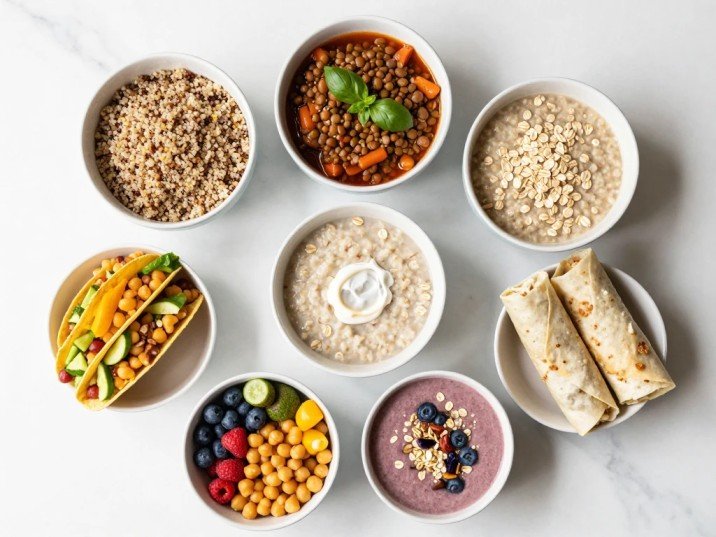
The seven best high fiber meals are: Quinoa & Black Bean Salad (14 g fiber), Lentil & Spinach Stew (16 g), Chickpea & Sweet Potato Bowl (13 g), Oatmeal with Berries & Nuts (9 g), High-Protein Fiber Wraps (12 g), Grilled Vegetable & Bean Tacos (11 g), and a High Fiber Smoothie Bowl (10 g). Each meal combines legumes, whole grains, or seeds with real vegetables to hit a meaningful chunk of your daily 25–38 g fiber target — and every one is straightforward to prep.
Here’s something I tell every new coaching client on day one: if you’re eating three meals a day and still hungry by mid-afternoon, fiber is almost always the missing piece. Not calories. Not willpower. Fiber.
Most people in the US are getting around 15 grams of fiber a day. The recommended target is 25–38 grams. That gap is costing you satiety, steady energy, gut health, and — if fat loss is the goal — real progress on the scale.
The seven meals below are the ones I’ve used most consistently with my own clients and in my own diet. Each one is built around foods that actually deliver on fiber, not just foods that sound healthy. I’ve included exact ingredients, step-by-step prep, and the numbers you need to make them work for your goals.
Why High Fiber Meals Make Such a Difference
Fiber isn’t exciting to talk about. But the outcomes it drives are. Here’s what the research — and six years of coaching — actually shows:
- Satiety that lasts: soluble fiber slows gastric emptying, meaning you stay full for 3–5 hours instead of 1–2
- Blood sugar control: fiber blunts glucose spikes after meals, keeping energy stable and cravings quiet
- Gut health: prebiotic fibers feed beneficial bacteria, reducing bloating and inflammation over time
- Fat loss support: higher fiber intake is consistently associated with lower body weight in large observational studies
- Heart health: beta-glucan from oats and soluble fiber from legumes are clinically proven to lower LDL cholesterol
- Reduced diabetes risk: fiber improves insulin sensitivity — critical for anyone managing blood sugar or body composition
From my own experience: when I rebuilt my diet around high fiber and protein meals, my hunger between sessions dropped within 10 days. I lost 4 lbs of fat in a month without touching my calorie target. Fiber did the heavy lifting on the hunger side — that gave me the consistency to do the rest.
One more thing worth saying: if you currently eat very little fiber and add a lot all at once, you will bloat. That’s normal. Increase gradually over three to four weeks, drink more water, and your gut adjusts.
1. Quinoa and Black Bean Salad
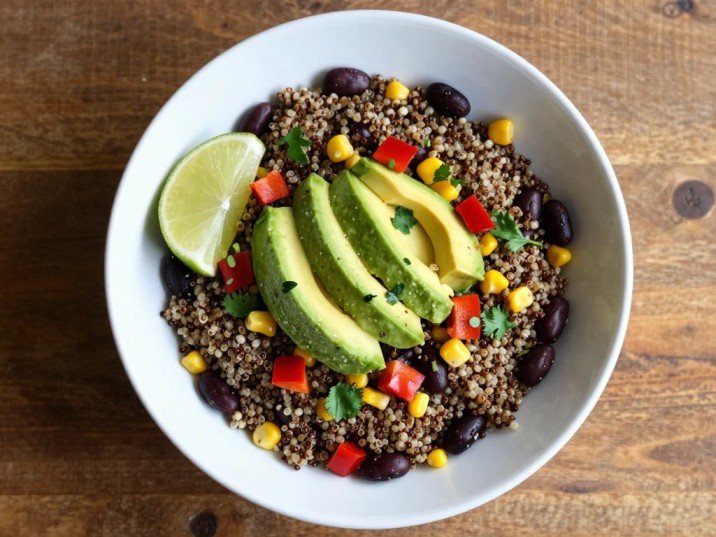
Fiber: 14 g · Protein: 18 g · Prep: 15 min · Cook: 20 min
This is my most-used meal prep recipe. Make a big batch on Sunday and you have four days of lunches sorted. It gets better overnight as the lime dressing soaks into the quinoa — so don’t skip the resting time.
What makes it worth your time nutritionally: quinoa is a complete protein with 5 g of fiber per cup. Black beans add another 7–8 g. The avocado brings heart-healthy fat and extra soluble fiber. Together you’re looking at 14 g of fiber and 18 g of protein in one bowl.
Ingredients
- 1 cup dry quinoa, rinsed
- 1 can (15 oz) black beans, drained and rinsed
- 1 red bell pepper, diced
- 1 cup corn — fresh, frozen, or canned
- ½ red onion, finely diced
- 1 ripe avocado, cubed
- Juice of 2 limes
- 2 tbsp extra-virgin olive oil
- 1 tsp cumin · ½ tsp smoked paprika · salt to taste
- Fresh cilantro to serve
How to Make It
- Cook quinoa in 2 cups of water or low-sodium broth. Bring to a boil, cover, reduce to a simmer for 15 minutes, then fluff with a fork and leave to cool slightly.
- While quinoa cooks, dice the pepper, onion, and avocado. Drain the beans.
- Whisk lime juice, olive oil, cumin, and paprika into a dressing.
- Combine quinoa, beans, pepper, corn, and red onion in a large bowl. Pour dressing over and toss well.
- Fold in avocado last — it bruises easily. Taste and adjust seasoning.
- Serve warm or refrigerate. It genuinely improves after a few hours in the fridge.
Coach’s note: Swap black beans for chickpeas for a different flavor with the same fiber count. For high protein high fiber meal prep, this is the recipe I recommend starting with.
2. Lentil and Spinach Stew
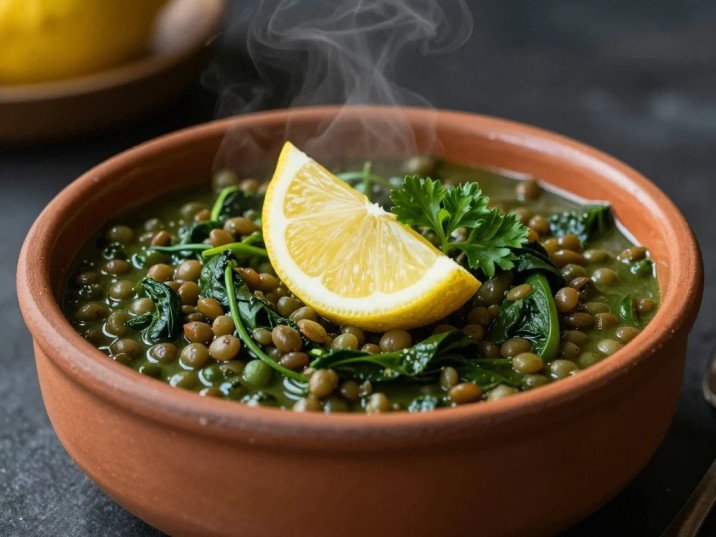
Fiber: 16 g · Protein: 20 g · Prep: 10 min · Cook: 35 min
If I could only recommend one high fiber dinner recipe, it would be this one. Lentils are nutritionally remarkable — one cup cooked delivers 15.6 g of fiber and 18 g of protein, and they cost almost nothing. This stew is warm, deeply spiced, and freezes perfectly.
I’ve prescribed this meal to dozens of clients who struggle with hunger at night. Without exception, the ones who eat this for dinner report feeling full until the next morning. Once you feel it, you’ll cook this on rotation.
Ingredients
- 1½ cups green or red lentils, rinsed
- 3 cups baby spinach
- 1 large brown onion, diced
- 3 garlic cloves, minced
- 1 can (14 oz) crushed tomatoes
- 4 cups low-sodium vegetable broth
- 1 tsp each: cumin, turmeric, coriander
- 1 tbsp olive oil
- Salt, black pepper, chili flakes to taste
- Fresh lemon juice to finish
How to Make It
- Heat olive oil in a large pot on medium. Add onion and cook 5 minutes until soft and golden.
- Add garlic and all spices. Stir constantly for 60 seconds — this step builds the flavor base, don’t rush it.
- Add lentils, crushed tomatoes, and broth. Stir and bring to a boil.
- Reduce heat and simmer uncovered for 25 minutes until lentils are tender and the stew has thickened.
- Stir in spinach, cook 2 more minutes until wilted.
- Squeeze lemon over the top before serving. Adjust seasoning.
Fiber breakdown per bowl: Lentils ~15.6 g · Spinach ~0.7 g · Tomatoes ~0.5 g = 16 g total. One of the most fiber-dense dinners you can make in under 40 minutes.
3. Chickpea and Sweet Potato Bowl
Fiber: 13 g · Protein: 15 g · Prep: 10 min · Cook: 30 min
Sweet potato is underrated in high fiber dinner recipes. It’s loaded with resistant starch — a type of fiber that acts as a prebiotic, directly feeding beneficial gut bacteria. Roasted at high heat it caramelises and becomes genuinely addictive. Paired with crispy chickpeas and a tahini dressing, this bowl doesn’t taste like diet food.
Ingredients
- 2 medium sweet potatoes, cubed into ¾-inch pieces
- 1 can (15 oz) chickpeas, drained and thoroughly dried
- 2 cups kale, stems removed, or arugula
- ½ cup cooked brown rice, farro, or freekeh
- 2 tbsp tahini · 1 tbsp lemon juice · 1 small garlic clove, grated
- 1 tbsp olive oil
- 1 tsp smoked paprika · ½ tsp garlic powder · ½ tsp cumin
- Salt, pepper, chili flakes
How to Make It
- Preheat oven to 425°F. Dry the chickpeas completely with a paper towel — moisture is the enemy of crispiness.
- Toss sweet potato and chickpeas separately with olive oil and spices. Spread on a large lined baking tray in a single layer.
- Roast 25–30 minutes, flipping halfway. Chickpeas should be golden and crisp; sweet potato soft with caramelised edges.
- Mix tahini, lemon juice, garlic, and 2–3 tbsp water until you have a pourable dressing.
- Build bowls: grains first, then kale, then roasted sweet potato and chickpeas.
- Drizzle tahini dressing generously. Eat immediately.
Coach’s note: The drying step for chickpeas matters. Wet chickpeas steam in the oven instead of roasting — you lose the crunch that makes this bowl satisfying.
4. Oatmeal with Berries and Nuts
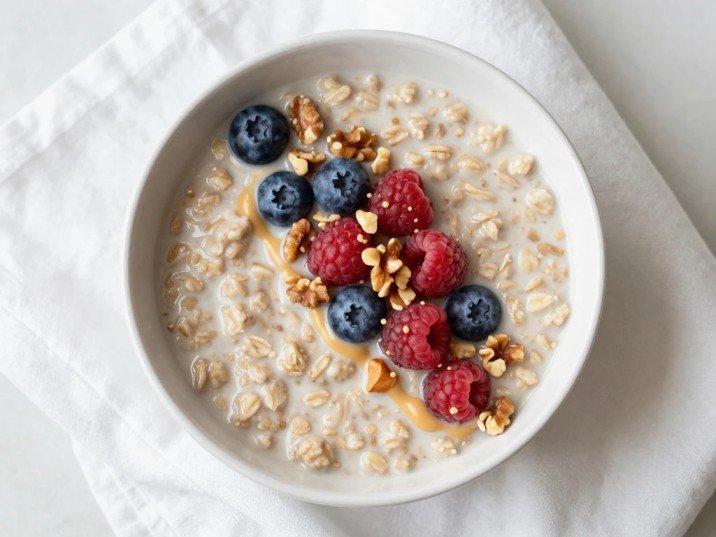
Fiber: 9 g · Protein: 12 g · Prep: 5 min · Cook: 5 min
Most people think fiber is a dinner problem. It’s not — it starts at breakfast. A low-fiber breakfast almost always leads to a high-calorie lunch because you’re playing catch-up on hunger you never should have built in the first place.
Oats contain beta-glucan, a soluble fiber with strong clinical backing for reducing LDL cholesterol and improving insulin sensitivity. Add chia and flax seeds and this bowl hits 9 g fiber before you’ve left the house. Add a scoop of protein powder and you’re at 30+ g protein — one of the most complete high protein and fiber meals you can eat.
Ingredients
- 1 cup rolled oats — not instant, they behave differently
- 1½ cups unsweetened oat or almond milk
- ½ cup mixed berries — blueberries, raspberries, strawberries
- 2 tbsp chia seeds
- 1 tbsp ground flaxseed
- ¼ cup walnuts or almonds, roughly chopped
- 1 tbsp natural almond butter
- ½ tsp cinnamon · pinch of salt
- Optional: 1 scoop unflavored or vanilla whey protein
- Optional: drizzle of raw honey
How to Make It
- Bring milk to a gentle simmer in a small saucepan. Add oats and salt.
- Cook on medium-low for 4–5 minutes, stirring often, until thick and creamy.
- Remove from heat. Stir in chia seeds, flaxseed, and cinnamon. If adding protein powder, stir it in now with a splash of extra milk.
- Transfer to a bowl. Top with berries, nuts, and a drizzle of almond butter.
- Finish with honey if you want sweetness. Eat immediately.
The protein upgrade: stir in 1 scoop of whey or plant protein before serving. You’ll hit 30+ g protein alongside 9 g fiber — one of the cleanest high protein and fiber meals you can build without any real cooking complexity.
5. High Protein and Fiber Wraps
Fiber: 12 g · Protein: 32 g · Prep: 10 min · Cook: 10 min
For body recomposition — building muscle while cutting fat — this wrap is my go-to lunch recommendation. 32 grams of protein and 12 grams of fiber in 20 minutes total. It travels well, stores well, and the macros are hard to beat.
The key detail most people miss: the tortilla. A standard white flour tortilla gives you 1–2 g fiber at most. Switch to a high-fiber whole wheat tortilla — many brands now offer 10+ g fiber per tortilla — and the whole meal transforms.
Ingredients
- 2 large high-fiber whole wheat tortillas
- 150 g grilled chicken breast, sliced — or canned tuna for faster meal prep
- ½ cup black beans, drained
- ¼ ripe avocado, mashed
- ½ cup shredded romaine lettuce
- ¼ cup diced tomato
- 2 tbsp Greek yogurt — replaces sour cream, higher protein
- Squeeze of lime · hot sauce · salt
How to Make It
- Season chicken with salt, pepper, and a pinch of cumin. Grill or pan-sear until cooked through — internal temp 165°F. Rest 3 minutes before slicing.
- Warm tortillas in a dry pan or microwave for 15–20 seconds to make them pliable.
- Spread mashed avocado across the centre first — it acts as a moisture barrier and stops the wrap getting soggy.
- Layer on beans, chicken, lettuce, and tomato.
- Add Greek yogurt and a dash of hot sauce. Squeeze lime over the top.
- Roll tightly, tucking the sides in. Slice diagonally. Serve or wrap in foil for later.
Meal prep tip: prep chicken and beans in bulk on Sunday. Store separately from the fresh veg. Each wrap assembles in under 2 minutes. This is the highest-impact high protein high fiber meal prep option in this entire guide — the one most of my male clients with fat loss goals use 3–4 times a week.
6. Grilled Vegetable and Bean Tacos
Fiber: 11 g · Protein: 16 g · Prep: 15 min · Cook: 15 min
Tacos are one of those meals people assume are off the table when eating clean. They’re not — if you build them right. The grill char on the vegetables does something no pan can replicate, and the combination of pinto beans, corn tortillas, and fresh toppings lands at 11 g of fiber per serving without tasting like it was engineered in a lab.
Use corn tortillas here, not flour. They’re naturally higher in fiber, carry a better texture for grilled vegetable fillings, and hold up without going soggy.
Ingredients
- 8 corn tortillas
- 1 can (15 oz) pinto or kidney beans, drained
- 1 zucchini, sliced lengthwise
- 1 red onion, cut into wedges
- 1 red and 1 yellow bell pepper, halved and deseeded
- 1 cup corn — fresh or frozen
- 1 tsp chili powder · ½ tsp cumin · ½ tsp smoked paprika
- 2 tbsp olive oil · salt and pepper
- Toppings: shredded red cabbage, fresh salsa, jalapeños, cilantro, lime wedges
How to Make It
- Heat a grill or grill pan to medium-high. Toss vegetables in olive oil and spices until evenly coated.
- Grill zucchini, peppers, and onion for 4–5 minutes per side until you have clear char marks and the vegetables are tender.
- Warm beans in a small pan with a splash of water, a pinch of cumin, and salt. Mash lightly if you prefer a thicker base.
- Grill corn directly for 2–3 minutes, turning, for a roasted flavour.
- Warm tortillas on the grill for 30 seconds per side.
- Slice grilled vegetables into strips. Build: beans base, then veg, cabbage, salsa, cilantro. Finish with lime.
Coach’s note: this is the recipe I recommend for families. It’s plant-based, naturally high in fiber, and because the grill does most of the flavor work, nobody feels like they’re eating health food. Add grilled chicken or shrimp alongside for anyone who wants extra protein.
7. High Fiber Smoothie Bowl
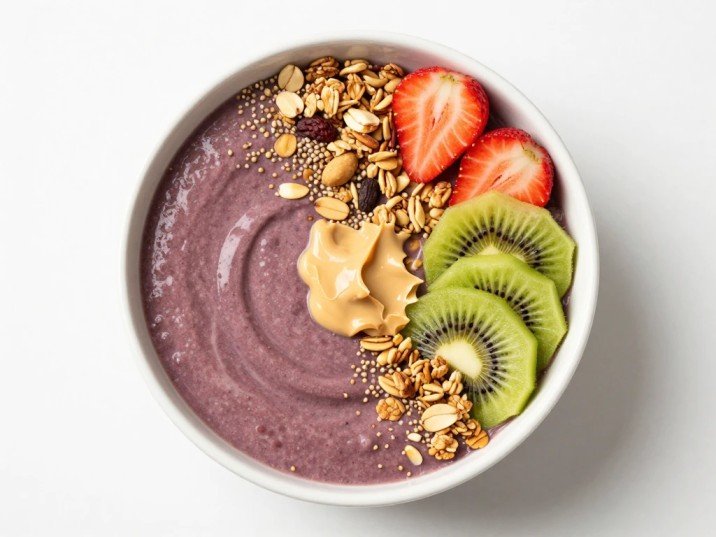
Fiber: 10 g · Protein: 14 g · Prep: 5 min · Blend: 3 min
A smoothie bowl is not just a smoothie you eat with a spoon. The thicker consistency changes how your body processes it — you slow down, you chew, and satiety signals have time to register. Sipping 600 calories through a straw bypasses that entire process.
The fiber here comes mostly from chia seeds (5 g per tbsp), ground flaxseed, and the granola topping. Choose granola carefully — most commercial varieties are oats and sugar in disguise. Look for one with 4+ g fiber per serving.
Base Ingredients
- 1 frozen banana
- ½ cup frozen mango
- ½ cup frozen raspberries
- ¼ cup Greek yogurt
- 3 tbsp chia seeds
- ¼ cup unsweetened almond milk — add conservatively, keep it thick
Toppings
- 2 tbsp hemp seeds
- 1 tbsp ground flaxseed
- ¼ cup high-fiber granola
- ¼ cup fresh strawberry or kiwi, sliced
- 1 tbsp almond butter
- Optional: drizzle of raw honey
How to Make It
- Add frozen fruit, yogurt, chia seeds, and a small splash of milk to a high-speed blender.
- Blend until smooth, scraping down the sides as needed. It should be thick like soft-serve ice cream — add milk one tablespoon at a time only if necessary.
- Pour into a wide, shallow bowl immediately.
- Arrange toppings and eat straight away — it thins as it sits.
Why the toppings matter: the base only delivers about 3–4 g fiber. Chia seeds, flaxseed, hemp, and granola push you to 10 g total. Don’t skip them thinking they’re optional.
High Fiber vs Low Fiber Meals: What Actually Changes
The difference isn’t just numbers on a label. Here’s what it looks like day to day:
| What changes | With high fiber meals | With low fiber meals |
|---|---|---|
| Hunger between meals | Satisfied for 3–5 hours | Hungry again within 1–2 hours |
| Energy across the day | Steady — no mid-afternoon dip | Peaks and crashes after meals |
| Blood sugar | Gradual rise, controlled descent | Rapid spike, then drop |
| Cravings | Reduced, especially for sugar | Higher, especially in the afternoon |
| Gut comfort | Improved digestion, less bloating | Often sluggish and gassy |
| Fat loss progress | Consistent — hunger self-regulates | Harder — hunger fights the deficit |
How to Build High Fiber Meals Into Your Week: A 4-Week Framework
This is the ramp-up I use with every new client. The goal isn’t to overhaul everything at once — it’s to build fiber gradually so your gut adapts without discomfort.
Week 1 — Add, don’t replace
- Add 1 tbsp chia or ground flaxseed to your existing breakfast
- Swap white rice for brown rice or quinoa at one meal per day
- Eat one piece of whole fruit with skin daily — apple, pear, or a handful of raspberries
- Target: reach 20 g fiber by end of week
Week 2 — Build the base
- Include legumes at lunch or dinner — beans, lentils, or chickpeas
- Add a green vegetable side to every dinner — broccoli, spinach, kale, edamame
- Switch to whole grain bread or high-fiber tortillas
- Target: 25 g fiber daily
Week 3 — Optimise protein and fiber together
- Build one high protein and fiber meal per day from this guide
- Use Greek yogurt instead of cream or sour cream
- Replace chips and crackers with nuts, seeds, or raw veg and hummus
- Target: 28–32 g fiber daily
Week 4 — Full integration
- Track fiber intake for one full week to see where you actually land
- Meal prep two or three recipes from this guide each Sunday
- Increase water to at least 3 litres daily — non-negotiable when fiber goes up
- Target: 30–38 g fiber daily, consistently
Important: increase fiber gradually, not all at once. Your gut microbiome needs time to adapt. Adding 15–20 g overnight will cause bloating — not because it’s harmful, but because the bacteria that process fiber need time to multiply. Slow and steady is the right approach.
The Bottom Line
Getting fiber right doesn’t require expensive supplements or a complicated plan. It requires a handful of reliable recipes built around the right ingredients — and the consistency to actually cook them.
Pick two or three meals from this guide to start. Add them into your weekly rotation. Drink more water. Give it three weeks.
The change in your energy, hunger, and body composition will be noticeable — and once you feel the difference, you won’t go back.
About the Author
Saad — Certified Nutrition & Fat Loss Coach
I am a certified fitness, fat loss, and nutrition coach with over six years of hands-on coaching experience. I founded FitnessFlora.com to deliver evidence-based nutrition and training guidance to everyday people — not just athletes. My work covers high fiber and high protein meal planning, sustainable fat loss, and progressive strength training. Every article on Fitness Flora is written from direct coaching experience, not recycled generic advice.
Credentials: Certified Nutrition Coach · Fat Loss Specialist · Founder, FitnessFlora.com
Frequently Asked Questions
What foods are highest in fiber per meal? Legumes top the list — lentils, black beans, and chickpeas each deliver 12–16 g fiber per cooked cup. Chia seeds give you 5 g per tablespoon. Oats, quinoa, sweet potato, avocado, raspberries, and broccoli are close behind. The meals in this guide are built around these foods specifically.
How much fiber should I eat per day? The USDA recommends 25 g daily for women and 38 g for men. The US population averages about 15 g. If you’re hitting 25–30 g consistently, you’re already well ahead. Hitting 38 g for men takes deliberate meal planning — which is what this guide is for.
Can high fiber meals support weight loss? Yes — and the evidence is strong. Higher fiber intake is linked to lower body weight across multiple large studies, independent of total calorie intake. Fiber increases satiety, slows digestion, blunts blood sugar spikes, and influences hunger hormones. In practice: people who eat more fiber eat less overall without trying.
What are the best high fiber meals for men specifically? Men need 38 g daily, which means going well beyond salads and fruit. The highest-impact options from this guide for men are the Lentil Stew (16 g), the Quinoa & Black Bean Salad (14 g), and the High-Protein Wraps (12 g + 32 g protein). Those three meals alone take you to 42 g fiber across the day.
Which of these recipes work best for meal prep? The Quinoa & Black Bean Salad, Lentil Stew, and Chickpea Bowl all store for 4–5 days and taste better after sitting. The wraps assemble in 2 minutes if you pre-cook the chicken and beans. Pick two of the first three as your Sunday prep staples and build from there.
Will eating more fiber cause bloating? It can in the short term if you increase too quickly. The solution is a gradual increase over three to four weeks, at least 3 litres of water daily, and mixing soluble and insoluble fiber sources. Bloating during adaptation is temporary. The long-term gut health benefits are not.