Table Of Content
- What Is a High Fiber Diet Plan?
- How Much Fiber Do You Actually Need Per Day? (By Age and Sex)
- Soluble vs. Insoluble Fiber — Why You Need Both
- The Best High Fiber Foods: Complete Reference Table
- High Fiber Diet Benefits Backed by Science
- The Gut Microbiome Connection Most Articles Miss
- 7-Day High Fiber Meal Plan (With Fiber Gram Counts)
- High Fiber Meal Prep Guide: How to Set Up Your Week in 90 Minutes
- How to Transition to a High Fiber Diet Without Bloating
- High Fiber Diet for Specific Goals (Weight Loss, Diabetes, Heart Health)
- High Fiber Diet on a Budget: Eat Well Without Spending More
- Common Mistakes That Sabotage a High Fiber Diet
- The Gut-Brain Connection: Fiber and Mental Health
- Final Takeaway and Next Steps
- FAQ — High Fiber Diet Plan
You Eat Less Fiber Than You Think — And It’s Costing Your Health
Most people are confident they eat reasonably well. The data says otherwise. The average adult consumes roughly 15 grams of dietary fiber per day — barely half the recommended amount. That shortfall is quietly driving constipation, blood sugar swings, low energy, poor gut bacteria balance, and stubborn weight gain. The good news: a structured high fiber diet plan fixes all of this, and you can start with your next meal.
(PAS formula applied: Problem — low intake gap. Agitation — health consequences. Solution — the plan below.
What Is a High Fiber Diet Plan?
A high fiber diet plan is a structured approach to eating that prioritizes fiber-dense whole foods at every meal — breakfast, lunch, dinner, and snacks. It is not a fad diet. It does not require eliminating food groups, buying expensive supplements, or following rigid calorie rules.
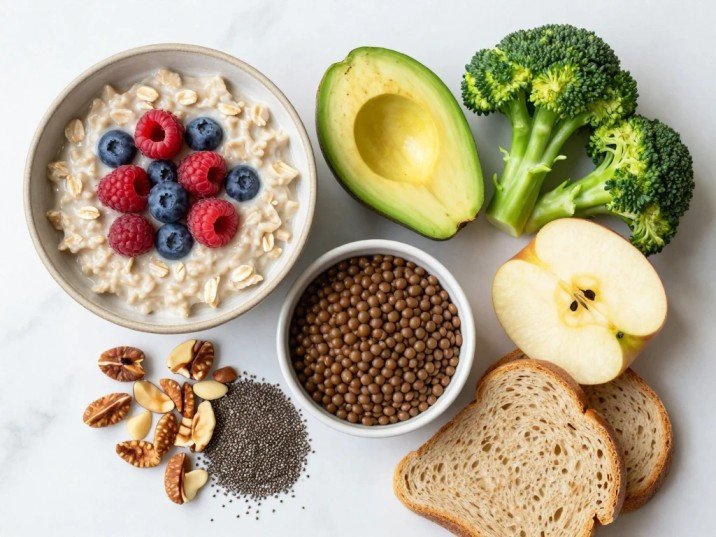
The foundation is simple: eat more plants in their least processed form. Whole grains instead of refined white flour. Beans and lentils instead of processed protein bars. Fruit with its skin on instead of fruit juice. Vegetables cooked lightly rather than boiled to mush.
A high-fiber diet plan is one of the simplest and most effective ways to support digestion, regulate blood sugar, and keep you feeling full longer — and most people can accomplish this by eating foods that already exist in their kitchen. Berrystreet
The goal of this guide is to give you a complete, actionable plan — not a list of vague suggestions. Every section is specific, practical, and grounded in peer-reviewed research.
How Much Fiber Do You Actually Need Per Day? (By Age and Sex)
This is where most high fiber diet content gets frustratingly vague. Here are exact targets by age and sex, based on current U.S. Dietary Guidelines:
Current guidelines suggest that people age 2 and older consume 14 grams of fiber for every 1,000 calories in the daily diet. Mayo Clinic
For practical planning, here is the breakdown:
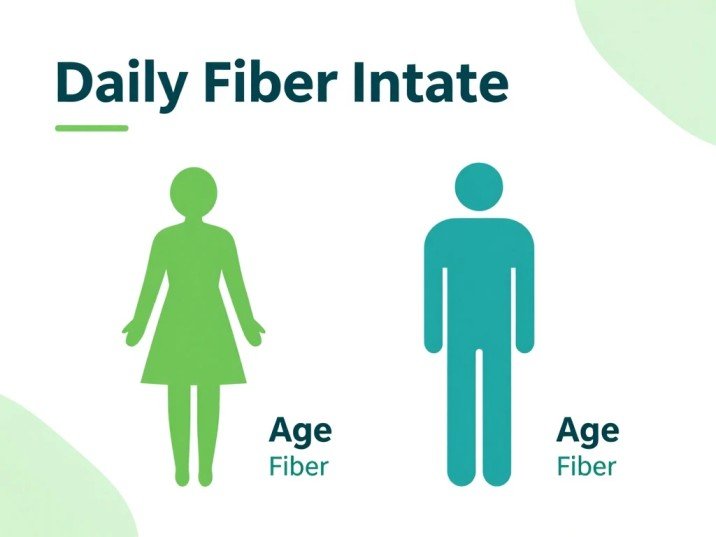
Women 19–50: 25 grams per day Women 51 and older: 21 grams per day Men 19–50: 38 grams per day Men 51 and older: 30 grams per day Pregnant women: 28 grams per day Children ages 4–8: 19–25 grams per day
Most adults currently get only about 15 grams of fiber per day — less than half the recommended intake for men and well below the target for women. Liv Hospital
Closing that gap does not require a dramatic lifestyle change. Adding one cup of lentils to dinner gives you roughly 15 grams. Swapping white rice for quinoa adds about 3 grams per serving. A handful of almonds with an apple adds another 6 grams. Small decisions compound fast.
Calorie and Nutrition Calculator —”track your daily intake“
Soluble vs. Insoluble Fiber — Why You Need Both
Not all fiber works the same way. Most people think of fiber as a single thing — the stuff that makes you regular. In reality, fiber is a family of compounds with different structures, different behaviors in the body, and different health effects.
Understanding the two main types is the first step to choosing the right foods for your specific goals.
What Is Soluble Fiber?
Soluble fiber dissolves in water and forms a thick, gel-like substance inside your digestive tract. This gel slows digestion, traps cholesterol particles before they enter your bloodstream, and feeds beneficial gut bacteria.
Soluble fiber slows down sugar absorption, which helps insulin sensitivity, and also promotes good gut bacteria — making it directly relevant to blood sugar management and long-term gut health. Liv Hospital
Best food sources: oats, barley, apples, pears, citrus fruits, beans, lentils, psyllium husk, chia seeds, and flaxseeds.
What Is Insoluble Fiber?
Insoluble fiber does not dissolve in water. It moves through the digestive tract largely intact, adding physical bulk to stool and accelerating transit time through the colon.
Insoluble fiber provides bulk for stool formation, helps prevent constipation and straining, and reduces pressure in the colon — which is why it plays a key role in managing conditions like diverticulosis and irritable bowel syndrome. Huron Gastroenterology Assoc
Best food sources: whole wheat, wheat bran, brown rice, vegetables (especially broccoli, cauliflower, and leafy greens), nuts, and fruit skins.
The Practical Rule
Most whole plant foods naturally contain a blend of both types. This is why eating a wide variety of plants is more effective than obsessing over a single source. A daily diet that includes oats, legumes, vegetables, fruits, and nuts will cover both categories with no need for supplement tracking.
The Best High Fiber Foods: Complete Reference Table
(Note for publisher: format the following as an HTML table in WordPress using the block editor or your page builder. Rank Math’s content checks reward structured data and tables for SERP feature eligibility.)
GRAINS AND STARCHES
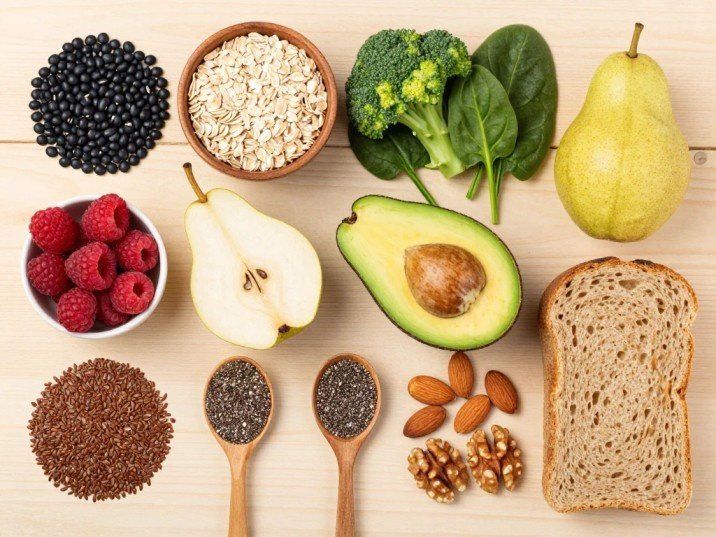
Lentils (cooked, 1 cup): 15.6g fiber Black beans (cooked, 1 cup): 15g fiber Chickpeas (cooked, 1 cup): 12.5g fiber Split peas (cooked, 1 cup): 16g fiber Kidney beans (cooked, 1 cup): 13g fiber Oats, rolled (cooked, 1 cup): 4g fiber Quinoa (cooked, 1 cup): 5g fiber Brown rice (cooked, 1 cup): 3.5g fiber Barley (cooked, 1 cup): 6g fiber Whole wheat bread (1 slice): 2g fiber
VEGETABLES
Artichoke (1 medium, cooked): 10g fiber Green peas (cooked, 1 cup): 9g fiber Broccoli (cooked, 1 cup): 5g fiber Brussels sprouts (cooked, 1 cup): 4g fiber Sweet potato (1 medium, baked): 4g fiber Carrots (1 cup, raw): 3.5g fiber Kale (cooked, 1 cup): 2.6g fiber Spinach (cooked, 1 cup): 4g fiber
FRUITS
Raspberries (1 cup): 8g fiber Pear (1 medium, with skin): 5.5g fiber Apple (1 medium, with skin): 4.5g fiber Avocado (½ fruit): 5g fiber Banana (1 medium): 3g fiber Orange (1 medium): 3g fiber Dried figs (2 medium): 3g fiber Blueberries (1 cup): 3.5g fiber
NUTS AND SEEDS
Chia seeds (2 tablespoons): 10g fiber Flaxseeds, ground (2 tablespoons): 4g fiber Almonds (1 ounce): 3.5g fiber Walnuts (1 ounce): 2g fiber Sunflower seeds (1 ounce): 3g fiber Pumpkin seeds (1 ounce): 1.7g fiber
Dried beans and peas, used as a meat substitute, deliver 5 to 8 grams of fiber per serving — making them the single most cost-effective way to dramatically raise daily fiber totals. The Gastro Clinic
High Fiber Diet Benefits Backed by Science
Improved Digestion and Bowel Regularity
A high-fiber diet produces a large, soft, bulky stool that passes through the bowel more easily and quickly — helping to prevent, stop, or even reverse some digestive tract disorders, while reducing pressure in the colon. Huron Gastroenterology Assoc
This is the most immediate and measurable benefit for most people. Within days of increasing fiber intake, bowel movements become more predictable, easier to pass, and less uncomfortable.
Sustained Weight Loss Without Starvation
The POUNDS Lost Study found that higher fiber intake correlated directly with greater weight loss — with eating 30 grams of fiber daily linked to weight loss, lower blood pressure, and better insulin control, even without other dietary changes. Liv Hospital
Fiber achieves this without willpower. It expands in the stomach, stimulates stretch receptors that signal fullness to the brain, slows the rate food leaves the stomach, and reduces post-meal blood sugar spikes — all of which combine to lower total caloric intake without counting a single calorie.
Blood Sugar Regulation and Insulin Sensitivity
Soluble fiber forms a viscous gel in the gut that literally traps glucose molecules and slows their absorption into the bloodstream. This blunts the post-meal blood sugar spike that drives insulin secretion, hunger cycles, and fat storage.
High-fiber meals have been shown to reduce blood glucose concentrations after eating by up to 11% compared to low-fiber meals — a meaningful effect that compounds over time in people managing insulin resistance or type 2 diabetes. clinicaltrials
Reduced Risk of Heart Disease
A diet rich in dietary fiber has been linked to lower levels of heart disease — with soluble fiber specifically associated with reduced LDL cholesterol, as it binds cholesterol particles in the digestive tract and removes them from the body before absorption. Mayo Clinic
Oats and barley are the most studied sources for this effect, owing to their high beta-glucan content — a particularly effective soluble fiber for cholesterol reduction.
Colon Cancer Prevention
Fruits and vegetables high in fiber are also rich sources of phytochemicals, which have been found to boost immunity, increase resistance to disease, and decrease the incidence of colon cancer. The Gastro Clinic
The combination of faster bowel transit time (less time for carcinogens to contact the colon wall) and prebiotic feeding of protective bacteria makes a fiber-rich diet one of the most evidence-supported dietary strategies for colorectal cancer prevention.
The Gut Microbiome Connection Most Articles Miss
This is the section almost no competitor covers in depth — and it may be the most important reason to eat more fiber.
Your gut contains approximately 38 trillion bacteria. These microorganisms regulate digestion, produce vitamins, train your immune system, influence inflammation, and communicate with your brain through the vagus nerve. The primary food source for your most beneficial gut bacteria is dietary fiber — specifically a type called microbiota-accessible carbohydrates (MACs).
A 2-week dietary intervention targeting 40–50 grams of fiber per day significantly altered gut microbiome composition, including measurable increases in known fiber-degrading microbes such as Bifidobacterium and Lactobacillus. nih
These two bacterial families — Bifidobacterium and Lactobacillus — are the same strains found in most probiotic supplements. The difference is that consuming them in a capsule does not guarantee they survive and colonize the gut. Feeding the bacteria that already live there through dietary fiber is a far more reliable strategy.
Low-fiber diets have been associated with reduced richness of the gut microbiome, disruption of the symbiotic relationship between gut microbiota and the intestine, and an increased risk of chronic diseases — while high-fiber diets have been used to shift the microbiota composition toward improved health outcomes. PubMed Central
The practical implication: eat a wide variety of fiber sources — not just one or two. Different fiber structures feed different bacterial species. Rotating oats, legumes, vegetables, fruits, and seeds creates a more diverse and resilient gut microbiome than eating the same foods every day.
7-Day High Fiber Meal Plan (With Fiber Gram Counts)
Every day below is designed to hit 30+ grams of dietary fiber through real, accessible meals. Fiber counts are estimates based on USDA data. Snacks are listed separately and can be mixed between days based on preference.
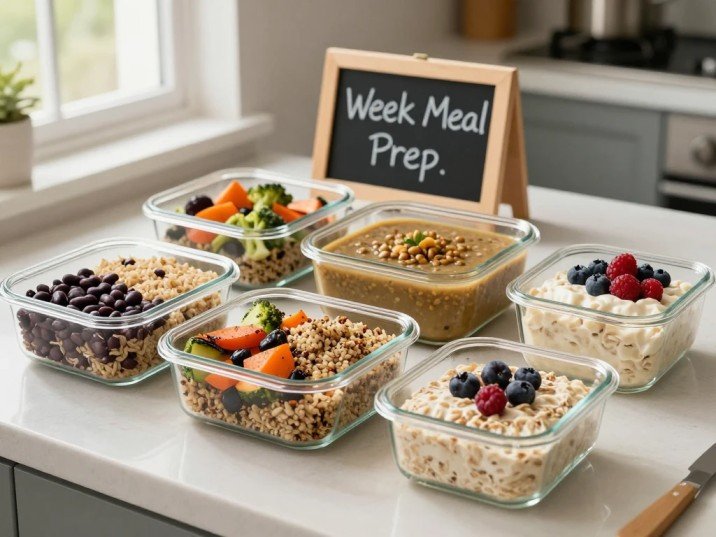
DAY 1 — MONDAY Theme: Easy Start — Familiar Foods, Big Fiber Gains
Breakfast: Rolled oats (cooked in water or almond milk) topped with fresh raspberries, one tablespoon of chia seeds, and a sliced banana Fiber: ~13g
Lunch: Lentil and vegetable soup (lentils, carrots, celery, onion, vegetable broth) with one slice of whole grain toast Fiber: ~15g
Dinner: Brown rice bowl with black beans, roasted broccoli, half an avocado, and salsa Fiber: ~12g
Snack: Apple with one tablespoon almond butter Fiber: ~4.5g
Day Total: ~44.5g ✅
DAY 2 — TUESDAY Theme: Plant Protein Power
Breakfast: Avocado toast on whole wheat bread with ground flaxseed, sliced tomato, and a pinch of chili flakes Fiber: ~9g
Lunch: Quinoa and chickpea bowl with diced cucumber, roasted red pepper, parsley, and a tahini-lemon dressing Fiber: ~13g
Dinner: Baked salmon fillet with steamed Brussels sprouts and roasted sweet potato Fiber: ~10g
Snack: A medium pear (with skin) and a small handful of walnuts Fiber: ~7g
Day Total: ~39g ✅
DAY 3 — WEDNESDAY Theme: Gut-Friendly and Anti-Inflammatory
Breakfast: Greek yogurt parfait layered with mixed berries, chia seeds, and slivered almonds Fiber: ~8g
Lunch: Whole wheat wrap filled with hummus, shredded spinach, roasted chickpeas, and sliced cucumber Fiber: ~11g
Dinner: Slow-cooker turkey chili with kidney beans, butternut squash, diced tomatoes, and onion Fiber: ~15g
Snack: Carrot sticks with two tablespoons of hummus Fiber: ~4g
Day Total: ~38g ✅
DAY 4 — THURSDAY Theme: Leftover-Smart Planning
Breakfast: Overnight oats (rolled oats, almond milk, peanut butter, sliced banana, ground flaxseed — prepared the night before) Fiber: ~12g
Lunch: Leftover turkey chili over brown rice (from Day 3 dinner) Fiber: ~15g
Dinner: Farro salad with white cannellini beans, roasted zucchini, cherry tomatoes, fresh basil, and olive oil Fiber: ~12g
Snack: A small orange and a tablespoon of sunflower seeds Fiber: ~4g
Day Total: ~43g ✅
DAY 5 — FRIDAY Theme: Quick Prep, High Return
Breakfast: Green smoothie — frozen spinach, mixed frozen berries, banana, one tablespoon ground flaxseed, oat milk Fiber: ~9g
Lunch: Black bean tacos in corn tortillas with shredded purple cabbage, avocado slices, and fresh salsa Fiber: ~14g
Dinner: Stir-fried edamame, broccoli, snap peas, and bell peppers in a light sesame-ginger sauce, served over brown rice Fiber: ~11g
Snack: Bran muffin and a small bunch of grapes Fiber: ~4g
Day Total: ~38g ✅
DAY 6 — SATURDAY Theme: Satisfying Weekend Meals
Breakfast: Baked banana oatmeal cups with walnuts, cinnamon, and a drizzle of honey Fiber: ~10g
Lunch: Spinach salad with roasted beetroot, quinoa, toasted pumpkin seeds, and a simple apple cider vinaigrette Fiber: ~10g
Dinner: Baked chicken thighs with a side of lentil pilaf and steamed cauliflower florets Fiber: ~13g
Snack: Plain Greek yogurt with one tablespoon of chia seeds stirred in Fiber: ~5g
Day Total: ~38g ✅
DAY 7 — SUNDAY Theme: Prep for the Week Ahead
Breakfast: Two slices of whole grain toast with mashed avocado, sliced tomato, and two poached eggs Fiber: ~8g
Lunch: Minestrone soup loaded with cannellini beans, kale, carrots, diced tomatoes, and whole wheat pasta Fiber: ~14g
Dinner: Grilled white fish with a side of quinoa and roasted vegetable medley (courgette, aubergine, bell pepper), plus a green side salad Fiber: ~11g
Snack: A handful of mixed nuts and dried apricots Fiber: ~5g
Day Total: ~38g ✅
High Fiber Meal Prep Guide: How to Set Up Your Week in 90 Minutes
Consistency is the biggest challenge with any diet change. The solution is not more motivation — it is less friction. When high-fiber food is already prepared and easy to grab, it wins every time against convenience food.
Here is the Sunday prep sequence that makes the 7-day plan above work:
Step 1 — Cook your grains in bulk (30 minutes, hands-off). Cook a large pot of brown rice, quinoa, or farro. Store in the fridge in an airtight container. This covers four to five days of lunch and dinner bases with zero additional prep.
Step 2 — Prepare your legumes (20 minutes active, if using canned). Rinse two or three cans of beans — black beans, chickpeas, lentils. If using dried lentils, simmer a large batch for 25 minutes. Portion into containers.
Step 3 — Wash, chop, and store vegetables (20 minutes). Pre-chopped broccoli, carrots, bell peppers, and spinach stored in airtight containers last three to five days. The barrier of having to chop vegetables is removed — you just grab and cook.
Step 4 — Batch-cook one soup or stew (15 minutes active, simmers while you do other tasks). The turkey chili from Day 3 covers two dinners and one lunch across the week.
Step 5 — Pre-portion snacks (10 minutes). Portion almonds, walnuts, or sunflower seeds into small bags. Pre-cut fruit and store in containers. Prepare overnight oats for Monday morning.
Batch cooking large pots of grains like brown rice and quinoa, roasting vegetables in advance, and preparing bean or lentil soups that reheat well are the three highest-leverage meal prep habits for sustaining a fiber-rich diet long term. Liv Hospital
High Fiber Diet for Specific Goals (Weight Loss, Diabetes, Heart Health)
High Fiber Diet for Weight Loss
Fiber drives weight loss through multiple mechanisms simultaneously. It increases physical fullness by expanding in the stomach. It triggers satiety hormones that tell the brain to stop eating. It slows gastric emptying, extending post-meal satisfaction. And it reduces the caloric density of meals without reducing their volume — meaning you eat the same amount of food for fewer calories.
Soluble fiber turns into a gel in your stomach, slowing digestion and making you feel full for longer — while fiber-rich foods also require more chewing, which gives satiety signals more time to register before you overeat. Liv Hospital
The most fiber-efficient weight loss foods: lentils, black beans, split peas, oats, raspberries, artichokes, and avocado. All of these are high-volume, low-calorie, and extremely filling.
High Fiber Diet for Type 2 Diabetes and Blood Sugar Control
Soluble fiber is the priority here. Its gel-forming effect directly slows glucose absorption, which reduces post-meal blood sugar spikes and improves long-term insulin sensitivity. Oats, barley, and legumes are the most clinically studied sources for blood sugar management.
People managing diabetes should introduce fiber increases especially gradually and monitor their blood sugar response during the transition. Consult a registered dietitian for a personalized plan if you take medication that affects blood sugar.
High Fiber Diet for Heart Health
A diet rich in dietary fiber is linked to lower rates of heart disease — and soluble fiber specifically helps reduce LDL cholesterol by binding cholesterol-carrying bile acids in the digestive tract and removing them from the body before they can be absorbed. Mayo Clinic
The target for a cardioprotective effect is at least 5–10 grams of soluble fiber daily, which is achievable through one bowl of oat porridge, one serving of beans, and a piece of fruit.
High Fiber Diet for IBS and Digestive Disorders
The right approach depends on the type of IBS. For IBS-C (constipation-predominant), soluble fiber supplements like psyllium husk and foods like oats and flaxseed are well-tolerated and effective. For IBS-D (diarrhea-predominant), large increases in insoluble fiber can worsen symptoms in the short term. Introduce changes slowly, track your individual responses, and work with a gastroenterologist or dietitian.
High Fiber Diet on a Budget: Eating Well Without Spending More
The misconception that healthy eating is expensive is particularly wrong when it comes to high-fiber foods. The most fiber-dense foods available are also the cheapest.
Dried lentils: Roughly $1.50–2.00 per pound, delivering 16 grams of fiber per cooked cup. There is almost nothing more fiber-dense per dollar in existence.
Rolled oats: Around $1.50–2.50 for a large container, providing 4 grams of fiber per cooked cup plus beta-glucan for cholesterol reduction.
Canned beans: $0.80–1.20 per can, providing 12–15 grams of fiber per can. Keep chickpeas, black beans, and kidney beans permanently stocked.
Frozen vegetables: Peas, broccoli, edamame, and spinach are flash-frozen at peak ripeness and nutritionally equivalent to fresh — at half the price. Frozen edamame in particular delivers 8 grams of fiber per cup.
Seasonal fruit: Bananas, apples, and oranges are available year-round at low cost. Raspberries and blueberries, which are among the highest-fiber fruits, are significantly cheaper frozen than fresh.
When buying package
Common Mistakes That Sabotage a High Fiber Diet
d foods labeled as high in fiber, always check the nutrition facts label to confirm adequate fiber per serving — marketing language can be misleading, and some products labeled “high fiber” deliver as little as 2–3 grams per serving. Liv Hospital
Relying on supplements instead of food. Psyllium, inulin, and methylcellulose supplements raise fiber counts on paper, but they do not deliver the phytochemicals, vitamins, minerals, or microbial diversity that whole food fiber sources provide. Use supplements as a bridge when travel or schedule makes food-based fiber difficult — not as a primary strategy.
Eating the same fiber sources daily. Microbial diversity in the gut requires dietary diversity as input. If you eat oats and apples every single day and nothing else, you feed only the bacteria that digest oat and apple fiber. Rotating grains, legumes, vegetables, and fruits feeds a broader ecosystem of beneficial microbes.
Loading fiber only at dinner. Many people eat a low-fiber breakfast and a moderate-fiber lunch, then try to hit their daily target at dinner. This creates digestive discomfort and misses the blood sugar benefits of morning fiber. Front-loading at least 8–10 grams of fiber at breakfast changes how your body handles blood sugar for the entire day — researchers call this the “second meal effect.”
Ignoring water entirely. Fiber without water is not just ineffective — it can actively worsen constipation. Insoluble fiber needs water to create soft, bulky stool. Soluble fiber needs water to form its protective gel. Hydration and fiber are inseparable partners.
Peeling everything. Apple skins add roughly 2 grams of fiber per fruit. Potato skins deliver more fiber than the flesh. Zucchini skin, cucumber skin, and even kiwi skin are all edible, nutritious, and meaningfully fibrous. Peeling out of habit quietly reduces daily fiber totals by 5–8 grams.
The Gut-Brain Connection: Fiber and Mental Health
This angle appears in almost no high fiber diet content. The research behind it is growing rapidly and matters enormously for real-world decision-making.
Your gut and brain communicate continuously through the vagus nerve, a bidirectional highway of nerve signals and chemical messengers. The gut is the primary site of serotonin production — approximately 90% of the body’s serotonin is made in the gastrointestinal tract, with production influenced by gut bacteria.
The bacteria that fiber feeds most robustly — Bifidobacterium and Lactobacillus — are directly involved in producing neurotransmitters including serotonin, GABA, and dopamine precursors. A fiber-depleted gut that fails to support these bacteria produces fewer of these chemical signals, which research increasingly links to higher rates of anxiety, depression, and impaired cognitive function.
A diverse, high-fiber, plant-based dietary intervention has been shown to improve not only gut microbiome composition but also reported gut symptoms, energy levels, and hunger regulation in healthy adults — outcomes that extend well beyond the digestive system. medrxiv
This is not a claim that fiber treats mental health disorders. It is a recognition that what you eat shapes the chemical environment of both your gut and your brain — and that feeding your gut well is one of the most accessible ways to support overall wellbeing.
Final Takeaway and Next Steps
The research on dietary fiber is among the most consistent in all of nutritional science. More fiber means better digestion, a healthier gut microbiome, lower heart disease risk, improved blood sugar control, and more sustainable weight management. The gap between where most people are — around 15 grams of fiber per day — and where the evidence says they should be is entirely bridgeable through ordinary food.
You do not need a high fiber diet plan that is complicated. You need one that is consistent.
Start with one swap this week. Oats instead of a processed breakfast cereal. Lentil soup instead of a sandwich. Brown rice instead of white. Add an apple or a handful of raspberries to your next meal. These decisions feel small, but they compound quickly — and your gut bacteria, your blood sugar, and your waistline will all respond.
The 7-day meal plan above is your roadmap. The food table is your shopping guide. The transition tips protect you from the bloating that stops most people. Use this high fiber diet plan as a starting point, not a rigid prescription, and adjust it to your schedule, budget, and preferences.
Final Takeaway and Next Steps
What is a high fiber diet plan and how does it work?
A high fiber diet plan is a structured eating approach centered on fiber-rich whole foods — primarily fruits, vegetables, whole grains, legumes, nuts, and seeds. Fiber works by slowing digestion, feeding beneficial gut bacteria, reducing cholesterol absorption, blunting blood sugar spikes, and increasing satiety signals. Together, these effects support digestion, weight management, heart health, and blood sugar control simultaneously.
How much fiber should I eat per day to see results?
The general targets are 25 grams per day for women and 38 grams per day for men, though most adults currently consume only around 15 grams. Even increasing to 25–30 grams daily — 10–15 grams above the average baseline — produces measurable improvements in bowel regularity, gut bacteria, and blood sugar within two to four weeks.
What foods are highest in fiber?
The highest-fiber foods per serving are split peas (16g per cup), lentils (15.6g per cup), black beans (15g per cup), chickpeas (12.5g per cup), chia seeds (10g per two tablespoons), artichokes (10g per medium), raspberries (8g per cup), and green peas (9g per cup). Legumes and seeds consistently outperform grains and vegetables for fiber density.
Can a high fiber diet cause bloating?
Yes — especially during the first one to three weeks when you increase fiber intake too quickly. The solution is gradual escalation: add 5 grams per week rather than jumping to 35 grams overnight. Increasing water intake simultaneously is equally important. Most people find that bloating resolves completely once their gut bacteria population adapts to higher fiber intake.
Is a high fiber diet good for weight loss?
Yes, and the evidence is robust. Higher fiber intake is consistently associated with greater weight loss in dietary intervention studies. The mechanism is multifactorial: fiber increases satiety, reduces caloric density of meals, blunts blood sugar spikes that drive hunger cycles, and feeds gut bacteria that influence appetite hormones. Many people lose weight eating more on a high-fiber plan simply because they feel full enough to eat fewer calories naturally.
What is the difference between soluble and insoluble fiber?
Soluble fiber dissolves in water and forms a gel that slows digestion, traps cholesterol, and feeds gut bacteria. Found primarily in oats, barley, apples, beans, and chia seeds. Insoluble fiber does not dissolve and moves through the gut intact, adding bulk to stool and speeding transit time. Found primarily in whole wheat, vegetables, and nuts. Both types are essential and most whole plant foods contain a mix of both.
How long does it take for a high fiber diet to work?
Bowel regularity typically improves within three to seven days of consistent fiber intake. Gut microbiome composition shifts measurably within two weeks. Blood sugar improvements emerge after four to eight weeks. Cholesterol changes are generally measurable after six to twelve weeks of sustained dietary change. The gut-brain connection effects — improved mood and energy — are reported anecdotally within two to four weeks, though formal research timelines vary.
Can I eat too much fiber?
Extremely high intake — above 70 grams daily — can interfere with mineral absorption, particularly iron, zinc, and calcium, by binding to these minerals before they are absorbed. At normal dietary levels (25–50 grams daily), this is not a concern for most healthy adults. If you take mineral supplements, space them two hours away from high-fiber meals as a precaution.
Is a high fiber diet suitable for people with IBS?
It depends on the IBS subtype. IBS-C (constipation-dominant) generally responds well to gradual increases in soluble fiber — psyllium, oats, and flaxseed are well-tolerated and evidence-based for this type. IBS-D (diarrhea-dominant) may worsen with rapid fiber increases. IBS-M (mixed) requires careful individual monitoring. Always introduce fiber changes slowly and ideally with guidance from a registered dietitian or gastroenterologist.
What is the best time of day to eat high-fiber foods?
Spreading fiber evenly across all three meals is more effective than concentrating it at one time. Including at least 8–10 grams at breakfast is particularly valuable because of the “second meal effect” — morning fiber intake blunts blood sugar spikes after lunch and dinner, extending glycemic benefits throughout the day. Avoid consuming very high-fiber meals immediately before strenuous exercise, as digestive activity can cause discomfort during intense physical effort.